
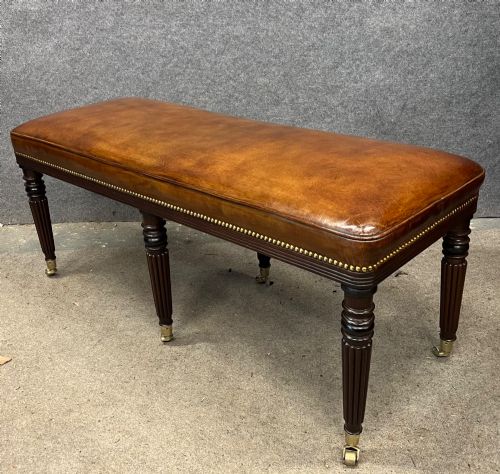
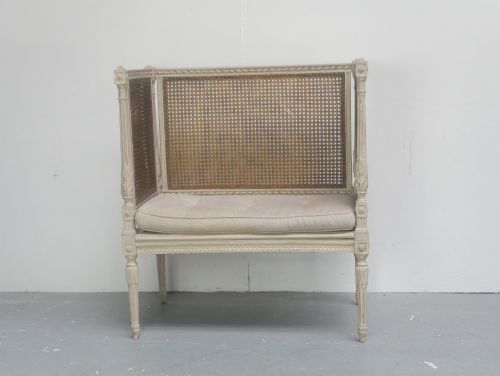
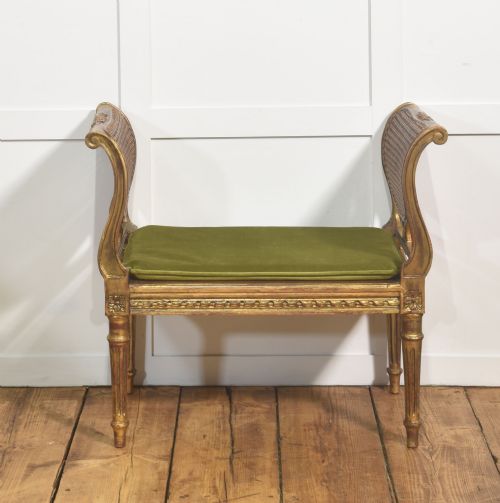
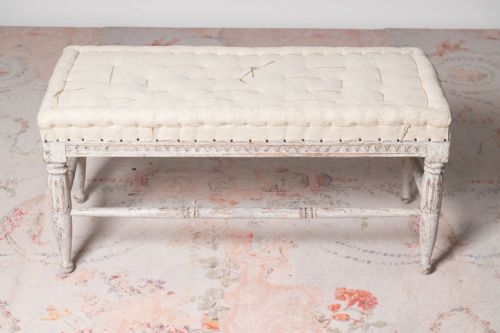





Fluted Leg Window Seat
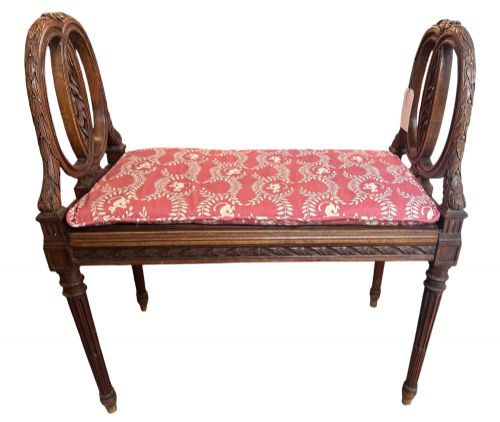
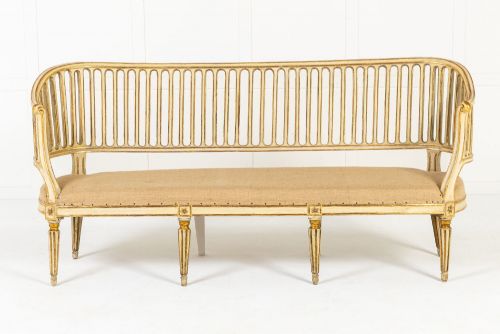
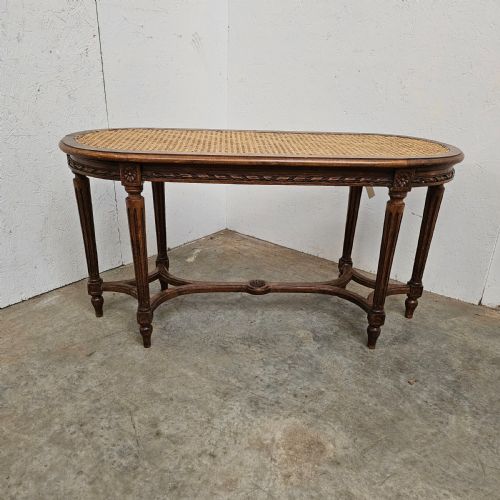
These fluted leg window seat examples combine practical seating with classical proportion, offering a refined architectural presence for hallways and bays.
Fluted Leg Window Seat
A fluted leg window seat brings together long seating forms and classical channelled supports drawn from periods spanning the eighteenth century through to the early twentieth century. Buyers seeking this specific form encounter pieces shaped by Georgian, Regency, and Victorian traditions alongside continental interpretations.
The selections on this page encompass various bench formats, from narrow hall seats to long mahogany stools and cane-backed banquettes. French Neoclassical, Louis XVI style, and Gustavian influences appear frequently among the listed examples.
Makers and makers' workshops adopted these forms for domestic interiors requiring slender, rectilinear seating beneath large panes of glass or along narrow passageways. The integration of fluting provides a vertical emphasis that lightens heavy timber frames.
How they were made
Cabinetmakers constructed the structural frames of these seats using dense hardwoods such as mahogany, walnut, beech, and giltwood, carving the characteristic vertical flutes directly into the timber legs. Joinery relies on traditional pegged mortise and tenon joints to ensure rigidity across the long spans of benches and settees.
Upholstery techniques varied according to period and regional style, incorporating traditional stuffing materials beneath outer coverings of leather, linen, and woven fabric. Cane panels appear woven into beech or giltwood frames, providing a lighter alternative to fully upholstered surfaces.
Some seats retain tight woven cane intended to keep seventeenth-century nobility cool during long speeches.
What varies in quality
The refinement of the hand-carved fluting on the legs dictates much of the visual merit, distinguishing crisp, deep channels from softer, worn profiles. Timber selection also defines the tier, with figured mahogany and finely grained walnut commanding greater attention than secondary painted woods.
Proportion and the integrity of the original frame construction separate standard joinery from superior cabinetmaking. Pieces retaining their early upholstery webbing or original gilding demonstrate higher degrees of preservation.
The Fluted Leg Window Seat Glossary
- Fluting
- A series of shallow, parallel concave grooves cut vertically into the shaft of a column or furniture leg. This decorative technique derives from classical architecture and lightens the appearance of heavy supports.
- Giltwood
- Timber that has been coated with a thin layer of gold leaf or gilt composition. It appears frequently on decorative frames from the eighteenth and nineteenth centuries.
- Cane
- Woven material made from the peeled bark of rattan palms. It provides a resilient, breathable surface for seat panels and backs.
- Banquette
- A long upholstered bench or settee, often associated with French seating forms. These pieces combine backrests with padded seats for extended sitting.
Fluted Leg Window Seat: Frequently Asked Questions
Where do you put a window seat?
These pieces suit narrow architectural spaces such as hallways, landings, and deep window bays where standard chairs would obstruct movement.
Their slender profiles and low backs allow them to sit beneath windows without blocking light or views.
How do I date a window seat?
Dating relies on examining the timber species, joinery methods, and stylistic cues present in the carved details. Georgian and Regency pieces display distinct classical restraint, while later Victorian and turn-of-the-century examples often emulate earlier French styles.
Changes in upholstery techniques and secondary woods further clarify the manufacturing period.
What is the difference between a bench and a settee?
A bench generally consists of a simple seat supported by legs without a backrest, though some feature arms or ends. A settee incorporates a structured backrest designed for upright sitting.
Both forms appear with fluted legs across various eighteenth and nineteenth-century traditions.
Can these seats be used daily?
Most historic frames possess robust hardwood construction suitable for regular seating when properly maintained. Consideration should be given to the condition of vintage upholstery and cane panels.
Period leather and sturdy linen coverings often withstand normal domestic use.