


Antique Leather Window Seat
An antique leather window seat brings low, long seating to a room, pairing timber frames with firm hides designed for light and views.
Antique Leather Window Seat
When you search for an antique leather window seat, you encounter long benches, duet stools and low ottomans built to sit beneath sills or at the foot of beds. These pieces span the nineteenth century into the Edwardian era, carrying the structural hallmarks of Regency, Victorian and Edwardian design.
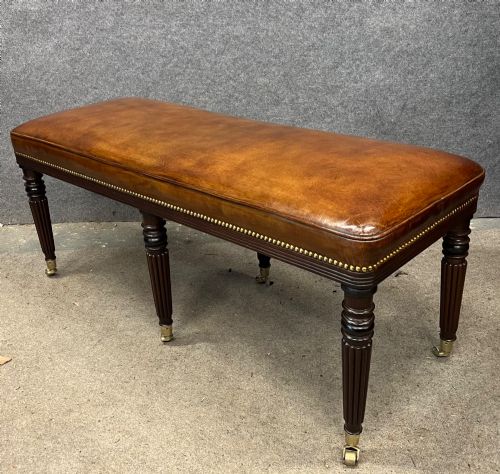
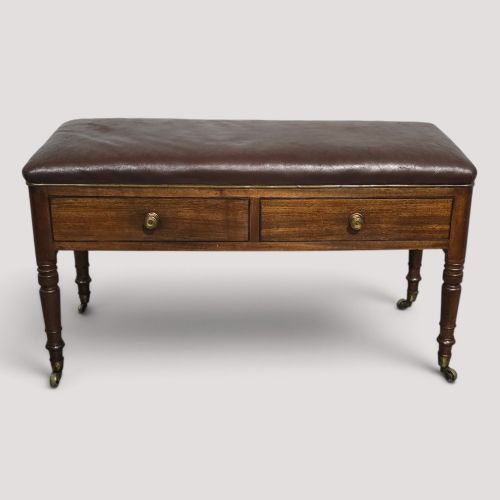
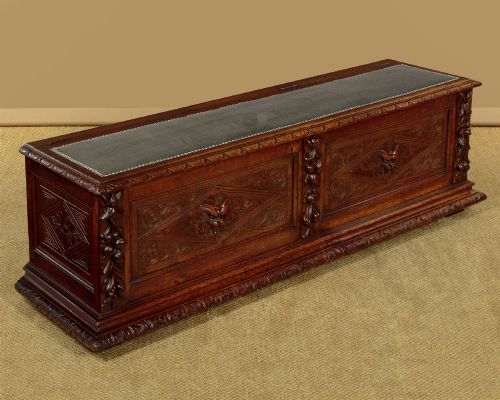
The versions most commonly met on this page pair mahogany, oak or painted hardwood frames with leather upholstery. They arrive in forms ranging from simple fluted leg benches to carved oak ottoman box seats and waisted upholstered stools.
Makers such as James Shoolbred produced distinct examples during the nineteenth century, while other pieces remain anonymous products of English cabinet makers. Each item serves its traditional purpose of accommodating one or more sitters while keeping a low profile below glazing.
How they were made
Frames rely on timbers like mahogany, oak and general hardwood, shaped through turning, carving and joining to create long benches and stools. Joinery techniques secure these structures to support the weight of sitters over long periods.
Upholstery incorporates leather, sometimes tan, fastened to the frames alongside brass fixings and occasional tapestry elements. Craftsmen fitted these hides over padded seat foundations to ensure firm support beneath the window.
Listings feature periods from the nineteenth century, Regency, 1870, 1890, Edwardian and 1920.
What varies in quality
The distinction between ordinary and superior pieces rests on the handling of the timber frame and the precision of the carving. Crisp fluted legs and sharply defined mahogany or oak joinery separate workshops of higher ambition from simpler production.
The treatment of the leather upholstery and the integrity of the underlying structure dictate the refinement of the piece. Well-fitted hides and balanced proportions reveal the hand of skilled cabinet makers rather than utilitarian joinery.
James Shoolbred
The Antique Leather Window Seat Glossary
- Regency
- A British design style spanning the early nineteenth century, characterised by classical restraint and mahogany frames. Pieces from this period often feature fluted legs and clean structural lines.
- Duet stool
- A long seat designed for two people to sit side by side, frequently utilised at pianos or windows. These forms provide extended horizontal seating within compact heights.
- Ottoman
- A low upholstered seat or box without a back, sometimes incorporating internal storage beneath the lid. In window settings, this form combines seating with practical containment.
- Fluted leg
- A vertical support carved with parallel vertical grooves, commonly seen on Regency furniture. This decorative detail lightens the appearance of heavy hardwood legs.
- Upholstery
- The padded and covered construction of a seat, utilising leather or fabric over internal stuffing. In antique window seats, this layer defines the comfort and visual texture of the top.
Antique Leather Window Seat: Frequently Asked Questions
Where do you put an antique window seat?
These pieces fit naturally beneath low windows, hallways or at the end of a bedroom bed where long, low seating is practical. Their proportions allow them to sit against walls without obstructing light or views.
They also function well in dressing rooms or studies, providing convenient surface space for resting items or accommodating guests briefly.
What is the difference between a window seat and a stool?
Window seats are generally longer and proportioned specifically to span the width of a window recess or provide multi-person seating. Stools tend to be more compact and square or round in footprint.
Both forms share low heights, but window seats often incorporate arms or specific length ratios suited to architectural niches.
Can you use an ottoman box seat for storage?
Certain examples, particularly carved oak ottoman box seats from the late nineteenth century, include hinged lids opening to internal compartments. This allows them to store blankets or small household items while serving as a bench.
Not all window seats have this feature, as standard frame benches rely on solid or upholstered underframes without cavities.