
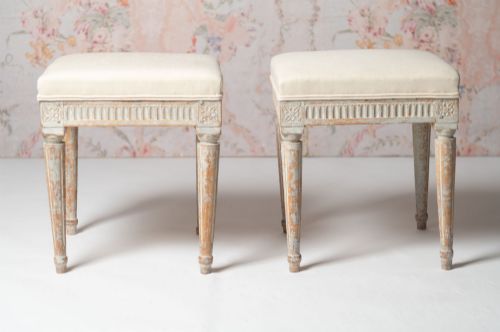
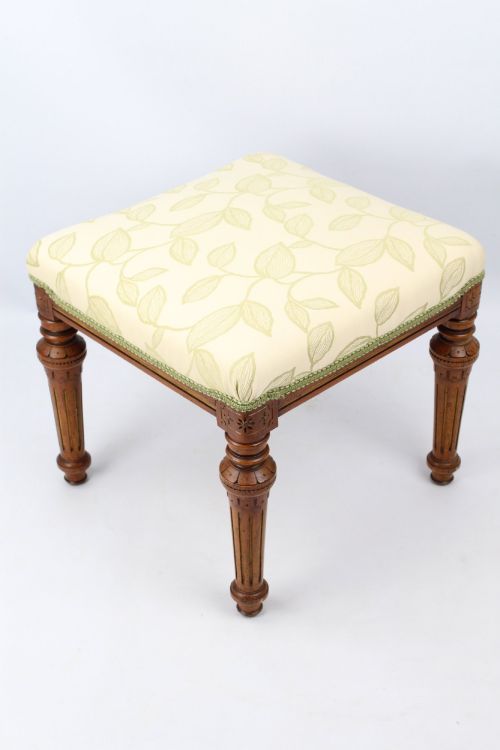
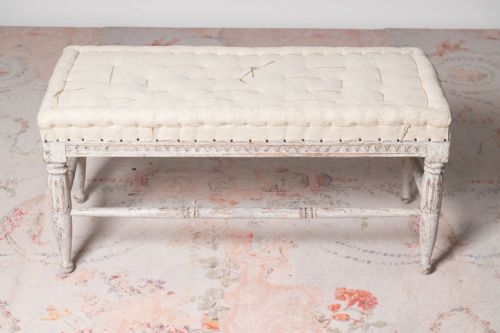


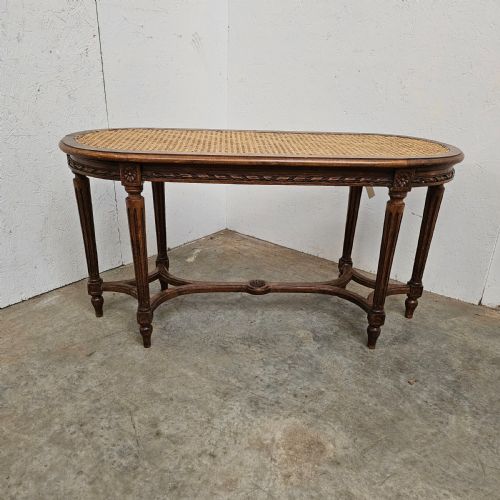


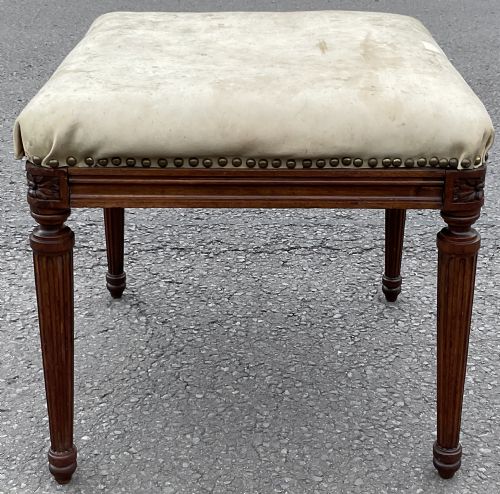


Fluted Leg Dressing Stool
These fluted leg dressing stool examples bring period seating into a room, offering practical elegance for a dressing table or vanity.
Fluted Leg Dressing Stool
A fluted leg dressing stool serves as a practical seat for a dressing table, combining utility with distinct period design. When exploring this selection, buyers encounter pieces originating primarily from the nineteenth century, alongside Georgian and Regency examples.
The assortment spans diverse regional styles, featuring Swedish Gustavian forms, French Neoclassical influences, and traditional British cabinet-making traditions. Stools often appear alongside related seating forms such as footstools, benches, and piano stools.
Makers and workshops utilised various aesthetic movements, ranging from Victorian interpretations to Edwardian Neoclassical and Louis XVI styles. Each piece reflects the specific interior taste of its era, from painted wood finishes to rich mahogany frames.
Materials and construction
Makers relied heavily on solid hardwoods such as mahogany, walnut, beech, and oak to build durable frames capable of supporting daily use. Selected pieces incorporate parcel gilt or simulated rosewood finishes alongside traditional painted wood surfaces.
Upholstery traditionally utilised quality fabrics, linen, and leather, supported by internal stuffing and occasionally brass detailing. Carved woodwork and cane panels demonstrate the precise joinery and decorative techniques employed by period craftsmen.
The selection includes pieces spanning the Georgian, Regency, and Victorian eras alongside nineteenth-century Swedish Gustavian designs.
Markers of quality
Quality rests upon the crispness of the carved detail on the wooden frame and the structural integrity of the joints. Finer examples display harmonious proportions, superior timber selection, and meticulous hand-carving that remains sharp across the legs and rails.
The execution of decorative treatments, from the precision of gilded surfaces to the retention of original paint finishes, distinguishes standard production from exceptional craftsmanship. Upholstery execution and the selection of appropriate period textiles further separate ordinary output from distinguished examples.
Jas Shoolbred·Gillows
The Fluted Leg Dressing Stool Glossary
- Fluted leg
- A pillar or leg decorated with parallel vertical grooves. This classical detail appears frequently on furniture from Georgian, Regency, and Neoclassical periods.
- Gustavian
- The Swedish interpretation of French Louis XVI style, characterised by restrained neoclassical lines and often pale or painted wood finishes. It brings a bright simplicity to period interiors.
- Giltwood
- Wood that has been treated with gold leaf or a gold-coloured finish. It provides a reflective, ornate surface seen on many formal Victorian and French style pieces.
- Serpentine
- A furniture outline that curves inward and outward in a continuous wave. This shape requires advanced woodworking skill and usually denotes higher status pieces.
- Banquette
- A long upholstered bench or stool designed for domestic seating. These pieces often feature exposed wooden frames and decorative cane or carved work.
Fluted Leg Dressing Stool: Frequently Asked Questions
How are period dressing stools used today?
These stools fit easily beneath bedroom dressing tables, providing a comfortable and appropriate seat for daily routines.
They also serve effectively as occasional low seating in living spaces or hallways when floor space is at a premium.
How do I identify a Regency period stool?
Regency pieces often draw inspiration from classical antiquity, featuring dark woods like mahogany or simulated rosewood finishes.
Look for restrained classical motifs, sabre legs, or finely turned elements that reflect early nineteenth-century British design.
What is the difference between Gustavian and Victorian styles?
Gustavian pieces originate from Sweden and favour light, painted surfaces with subtle neoclassical carvings inspired by French designs.
Victorian examples tend to employ heavier timbers like mahogany or oak, often displaying more exuberant carving and varied upholstery choices.
Are these stools suitable for everyday seating?
Period stools are constructed from solid hardwoods designed for regular household use.
Ensuring the frame remains stable and the upholstery supports weight properly will keep the piece functional for daily life.