
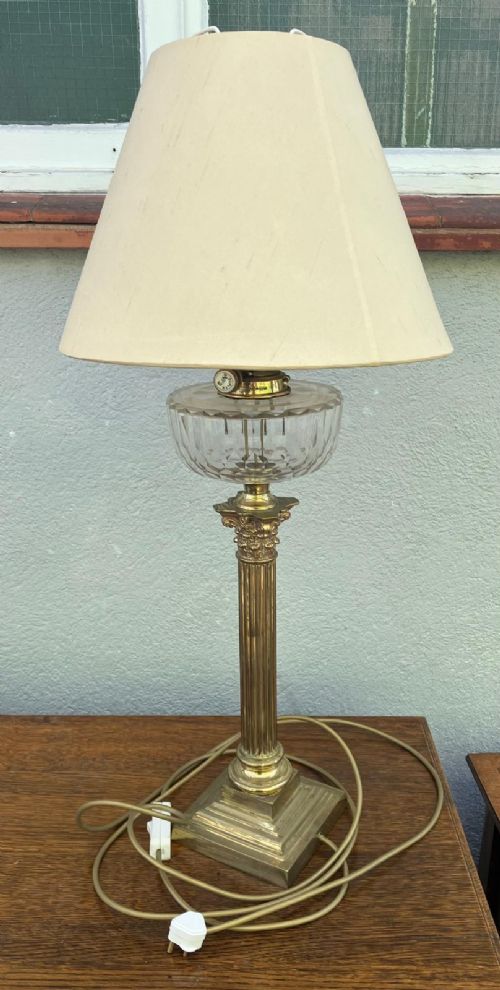
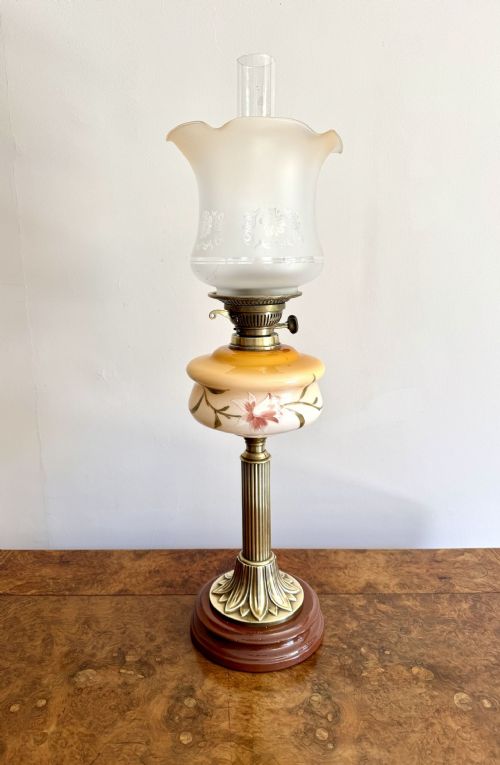
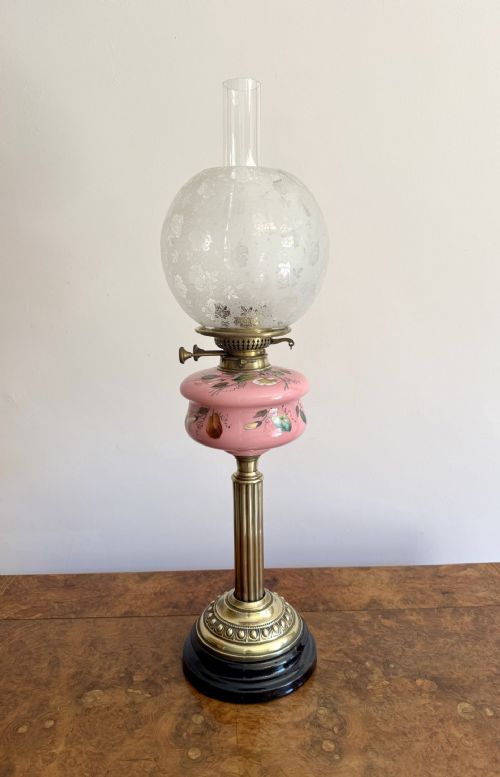


Fluted Glass Oil Lamp
A fluted glass oil lamp brings genuine period weight and warmth to a room through tactile brass and textured glass.
Fluted Glass Oil Lamp
A fluted glass oil lamp is a functional lighting piece originating primarily from the nineteenth century and the Edwardian era. You will frequently encounter tall Corinthian column brass designs paired with glass reservoirs and shades during your search.
The selection on this page centres heavily upon Victorian examples alongside Edwardian pieces. These items combine utilitarian origins with decorative presence, often integrating ceramic components or black glass bases alongside the core metalwork.
How they were made
Makers constructed these lamps using durable brass for the primary columns and mounts, frequently combining them with cast bronze or ceramics. Reservoirs and shades utilised pressed, cut, or blown glass in clear, opaline, or cranberry variants.
Workshops applied classical revival styles, notably Neoclassical column forms, shaping metal and glass into sturdy structures designed to house oil burners safely. Fabric elements occasionally completed the finished lighting assembly.
Some columns are so tall they demand respect, while others wear frilled cranberry glass like a Victorian Sunday bonnet.
What varies in quality
The distinction between standard production and superior pieces lies in the crispness of the brass casting and the depth of the cut glass. Sharply defined fluting on a Corinthian column demonstrates careful attention during manufacture.
Proportion and scale also separate ordinary lamps from exceptional items. Taller columns, substantial metal weight, and well-matched opaline or cranberry glass shades indicate higher workshop standards.
JOSEPH HINKS·Messenger
The Fluted Glass Oil Lamp Glossary
- Corinthian column
- A classical architectural column style featuring ornate acanthus leaf capitals, frequently emulated in the brass stems of these lamps.
- Opaline glass
- An opaque, milky glass type popular in the nineteenth century for globes and shades, diffusing light softly.
- Cranberry glass
- A rich red-pink transparent glass created by adding gold chloride to the molten mixture, often seen in frilled Victorian shades.
- Reservoir
- The lower glass or metal container holding the lamp oil beneath the burner mechanism.
Fluted Glass Oil Lamp: Frequently Asked Questions
How do I date a brass and glass lamp?
Examine the construction methods, the style of the metal casting, and the type of glass used in the reservoir or shade. Victorian pieces often favour heavy brass columns and specific coloured glass variants.
Compare the proportions and decorative motifs, such as Corinthian capitals, against known production periods from the nineteenth and early twentieth centuries.
Can these old lamps still burn oil safely?
Most antique lamps found today are treated as decorative objects or converted for modern electrical use. Burning oil in historic burners requires careful inspection of the internal wick mechanisms and seals.
Consult a specialist before attempting to use period fuel burners in a domestic setting.
What is the difference between Victorian and Edwardian lamps?
Victorian examples tend to feature heavier brass casting, ornate classical revival details like Corinthian columns, and rich coloured glass such as cranberry. Edwardian pieces often lean towards simpler lines.
Both periods utilise similar materials, but Edwardian lighting frequently incorporates refined opaline shades and slightly more restrained proportions.
How should I clean a glass shade?
Wash glass components gently in lukewarm water using mild soap, taking care with fragile edges like frilled rims. Avoid submerging metal fittings or antique brass bases to protect their patination.
Dry thoroughly with a soft cloth before reassembling the lamp structure.