
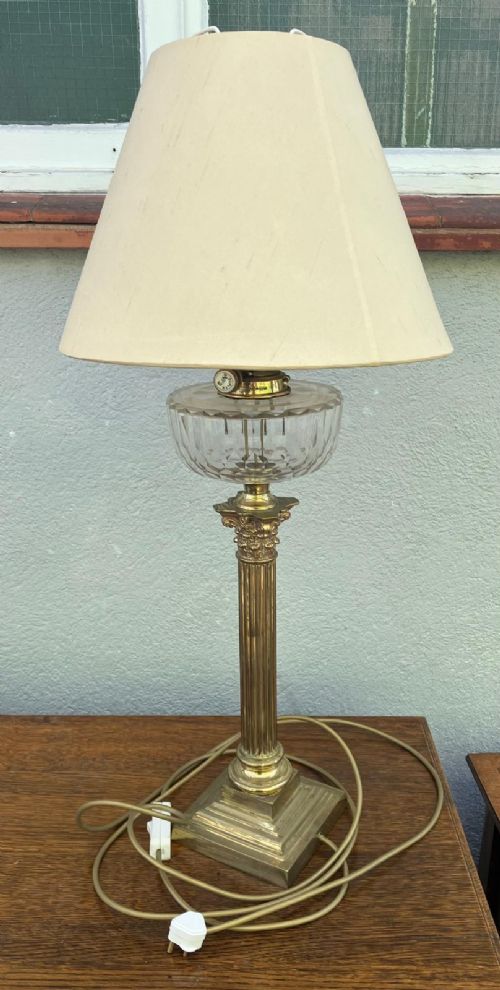
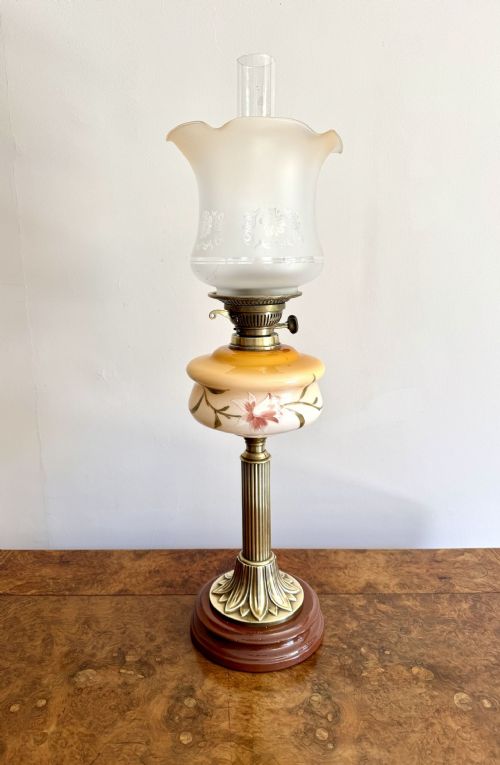
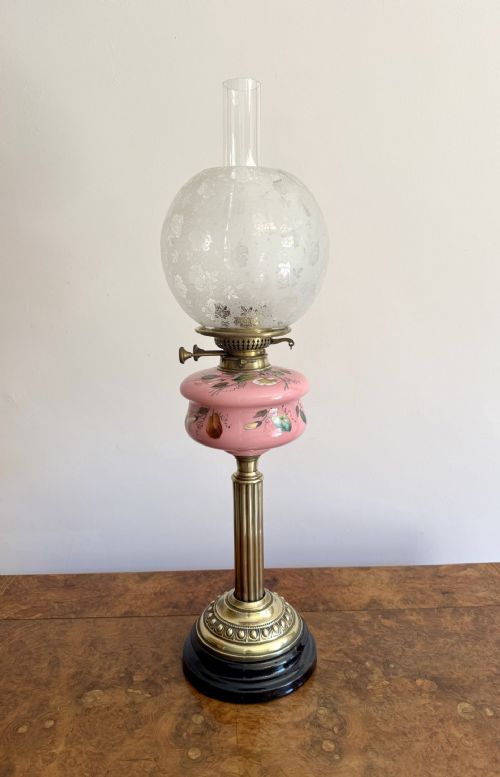


Fluted Glass Column Lamp
A fluted glass column lamp brings height, weight and clear reflection to a room, drawing the eye upwards through its slender, faceted profile.
Fluted Glass Column Lamp
A fluted glass column lamp relies on vertical grooves cut or moulded into its shaft to catch and refract light. When searching for a fluted glass column lamp, buyers encounter pieces spanning the nineteenth century and the Edwardian period, often standing on heavy metal bases.
Many examples begin life as domestic oil lamps before conversion to electricity, retaining their original proportions and structural metal mounts. Standard lamps and smaller table lamps appear alongside pairs, offering symmetrical lighting options for side tables or larger rooms.
Origins include Victorian and Edwardian English workshops alongside French classical designs. The combination of glass reservoirs, opaline shades or brass Corinthian capitals defines the predominant forms found in this selection.
Materials and construction
Makers combine clear, cut or opaline glass columns with cast brass, ormolu and bronze mountings. Metal collars secure the glass shafts to heavy weighted bases, ensuring stability for tall proportions.
Surface treatment involves precise wheel-cutting on glass reservoirs and columns to create sharp facets. Brass components frequently exhibit cast Neoclassical details such as acanthus leaves and classical fluting.
Some tall columns hide their heavy brass internal rods behind fragile glass sleeves.
Distinctions in craftsmanship
Quality rests upon the crispness of the glass cutting and the weight of the metal mounts. Deeper fluting and heavier gauge brass separate superior decorative pieces from simpler domestic lighting.
Proportion and scale dictate the visual impact of each piece, with taller monumental formats requiring precise engineering to remain plumb and secure. The clarity of the glass and the integration of components reveal the skill of the original maker.
JOSEPH HINKS·Messenger
The Fluted Glass Column Lamp Glossary
- Corinthian column
- A classical architectural order featuring an ornate capital decorated with carved acanthus leaves. This style translates frequently onto the brass capitals of nineteenth century lamps.
- Opaline glass
- An opaque, milky glass popular during the Victorian period. It diffuses light softly and appears in both lamp bodies and paired shades.
- Ormolu
- Gilded bronze applied to metal mounts and bases. It provides a warm, golden finish characteristic of French classical and revival pieces.
- Reservoir
- The upper glass or metal vessel designed to hold fuel in original oil lamps. On converted pieces, it remains a primary decorative feature beneath the burner.
Fluted Glass Column Lamp: Frequently Asked Questions
How do I convert an oil lamp?
Conversion typically involves running electrical wiring safely through the central collar without altering the original metal or glass body.
Professional electricians ensure the vintage burner assembly accommodates modern lamp fittings securely.
Are these lamps stable?
Most pieces incorporate heavy cast brass or bronze bases designed to anchor the tall glass column above.
Heavier weighted bases prevent tipping, making them suitable for table and standard floor placement.
How do I clean antique glass?
Warm soapy water and a soft cloth clean glass columns safely without harming adjacent brass components.
Harsh chemical abrasives damage historic patinated finishes on metal mounts and should be avoided entirely.
Can I date a column lamp?
Stylistic clues such as brass capital designs and glass coloration indicate whether a piece originates in the Victorian or Edwardian era.
Maker marks stamped onto metal burner components often provide more precise chronological markers.