


Fluted Garden Urns
Fluted garden urns bring classic garden lines to a terrace, and the ones here run from nineteenth century iron pairs to stone and lead.
Fluted Garden Urns
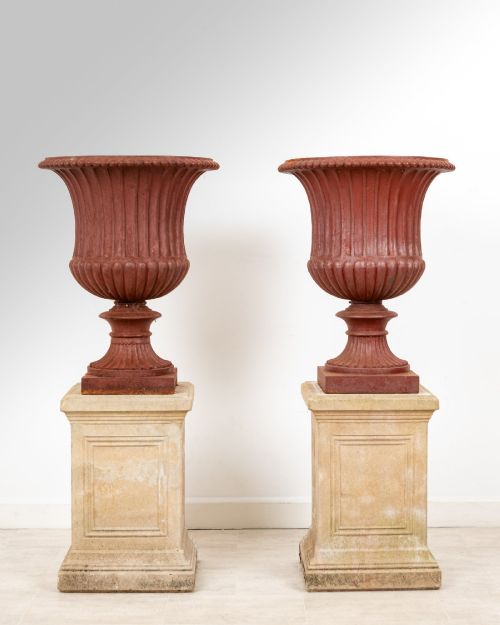
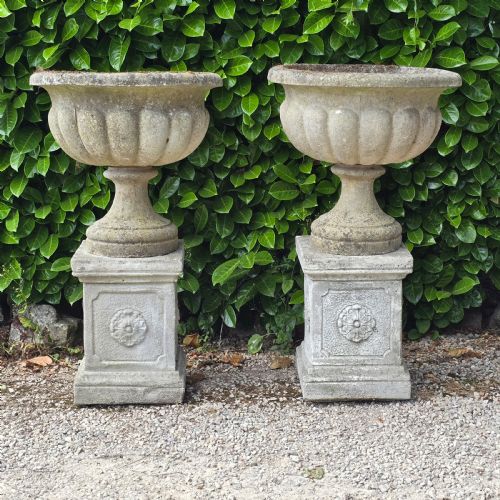
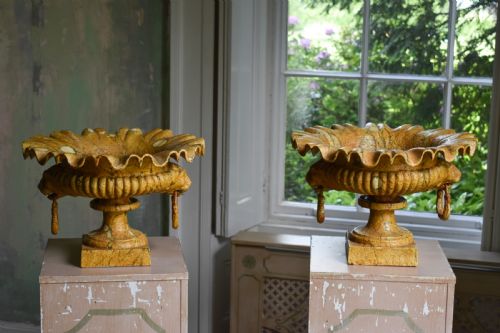
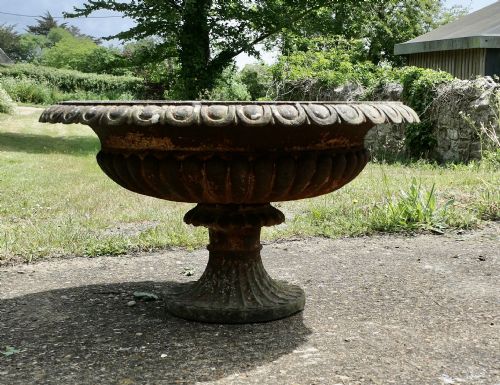
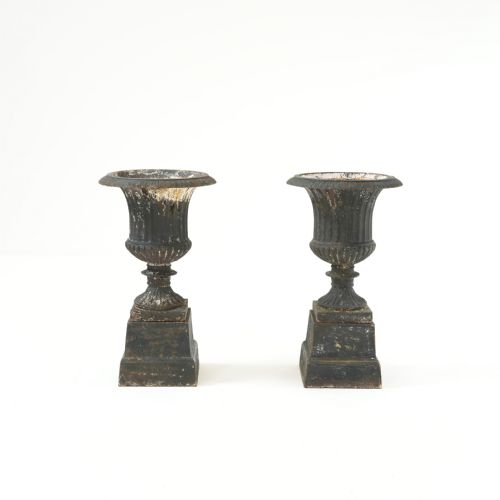
When you search for fluted garden urns, you encounter robust vessels designed for outdoor display, most frequently cast in iron from the nineteenth century. These pieces often arrive as matched pairs mounted on stone pedestals or plinths, combining classical form with practical planting depth.
The selection ranges across Victorian, Regency, and French classical styles, alongside later twentieth century examples in reconstituted stone. Forms span campana shapes, tazza urns, and low jardinieres, offering options suited to formal lawns and paved courtyards alike.
How they were made
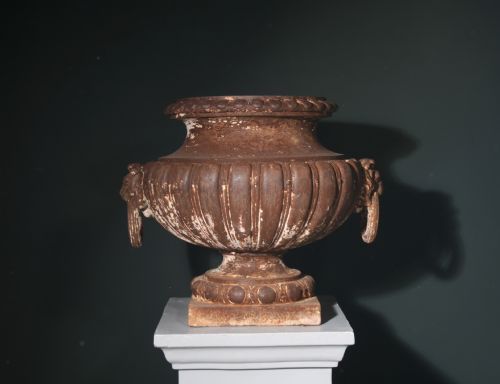
Foundries produced these heavy vessels primarily using cast iron, pouring molten metal into moulds to create sharp fluting and classical ornament. Other examples utilise carved white marble, cast stone, lead, or terracotta, reflecting the diverse material preferences of nineteenth and twentieth century makers.
Many iron surfaces retain layers of historic paint or exhibit natural weathering developed over decades of outdoor exposure. Stone and reconstituted stone versions rely on aggregate moulding techniques, while lead pieces show traditional sheet or cast construction.
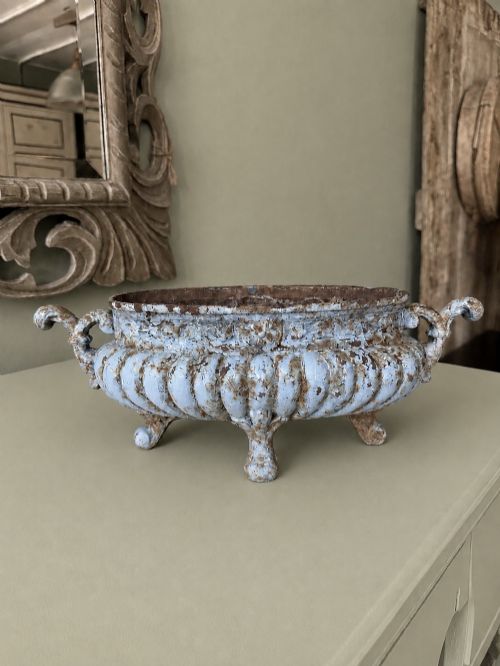
Several iron urns preserve decades of garden history beneath layers of historic green and white paint.
What varies in quality
Quality rests in the crispness of the casting and the depth of the classical detail, distinguishing finely rendered nineteenth century foundry work from simpler later forms. Weight and thickness of the metal also separate substantial courtyard centerpieces from lighter domestic planters.
The presence of matching original plinths or pedestals elevates a piece, as does the integrity of the material across iron, stone, or marble. Surface patina, whether through weathered paint or aged bronze-like oxidation, adds character to superior examples.
VAL D'OSNE FOUNDRY·Andrew Handyside
The Fluted Garden Urns Glossary
- Campana urn
- A bell-shaped garden vessel with an everted rim, widely produced in cast iron during the Victorian period.
- Plinth
- A heavy base block or pedestal that elevates an urn above ground level to create presence on a terrace.
- Tazza
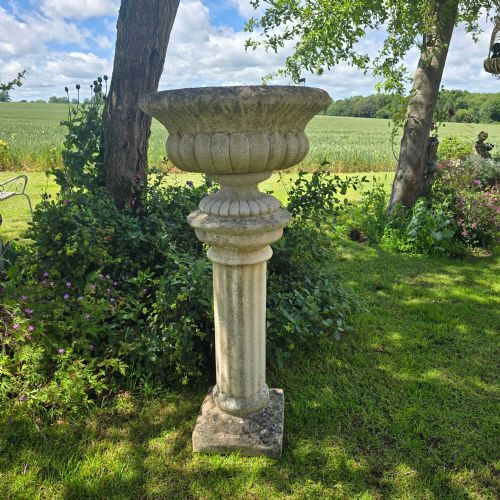
- A shallow bowl-shaped vessel on a standard or foot, often carved from marble or cast in metal.
- Jardiniere
- An ornamental pot or planter designed specifically to hold growing plants or flowers in a garden setting.
Fluted Garden Urns: Frequently Asked Questions
Can these urns stay outside all year?
Cast iron and stone versions withstand winter weather well, especially when drainage holes remain clear.
Heavier pieces require solid positioning on level stone or plinths to prevent movement during freezing conditions.
How heavy are cast iron urns?
Nineteenth century iron pieces carry substantial weight that usually demands two people and proper equipment to position safely.
Their mass keeps them stable on terraces and lawns without needing permanent fixing.
Do these urns come with pedestals?
Many listings include matched pairs mounted on stone or iron plinths to raise the height for garden display.
Individual urns designed to sit directly on the ground also appear across the selection.
How do I identify a Victorian urn?
Victorian examples typically feature robust cast iron construction with classical campana shaping and defined fluting.
Foundry marks and heavy weathering further point towards nineteenth century production dates.