




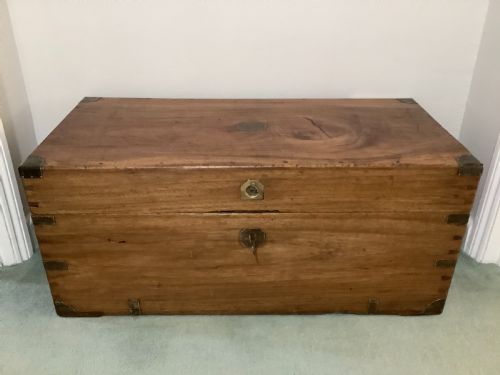


Flush Handle Wooden Box
These flush handle wooden box pieces are robust transportable containers designed for officers on the move, combining durability with practical storage.
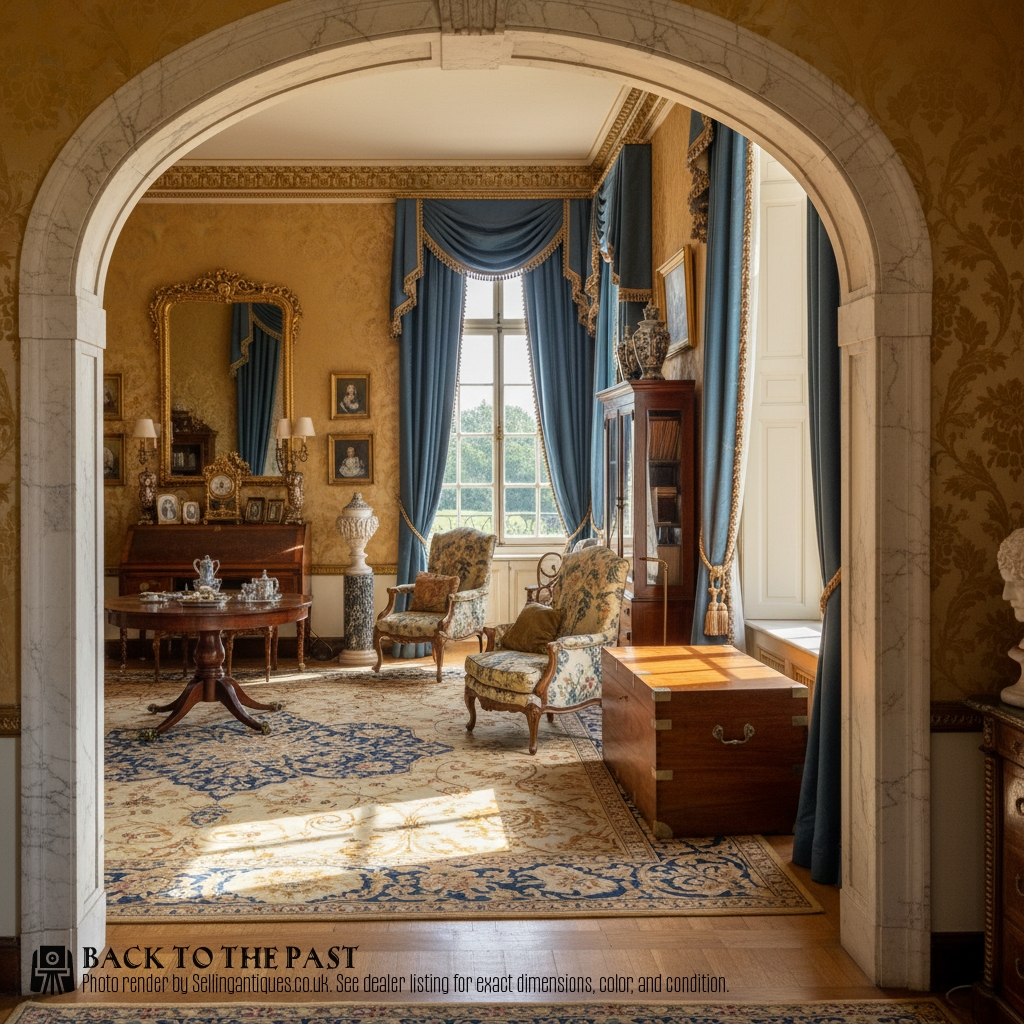
Flush Handle Wooden Box
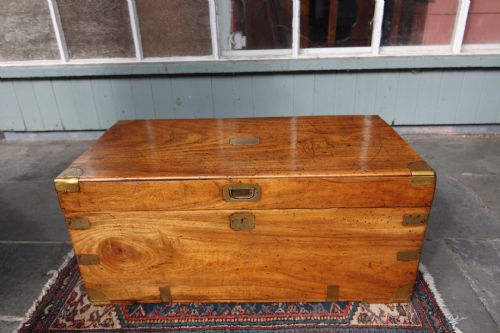
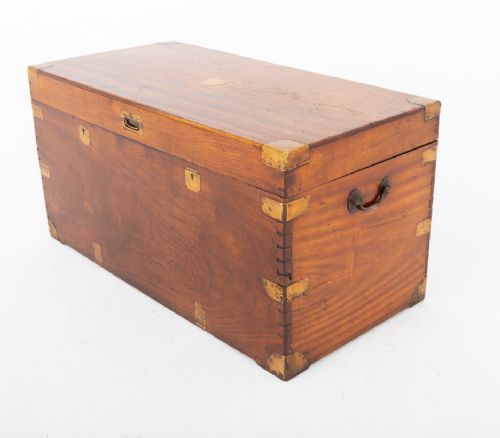
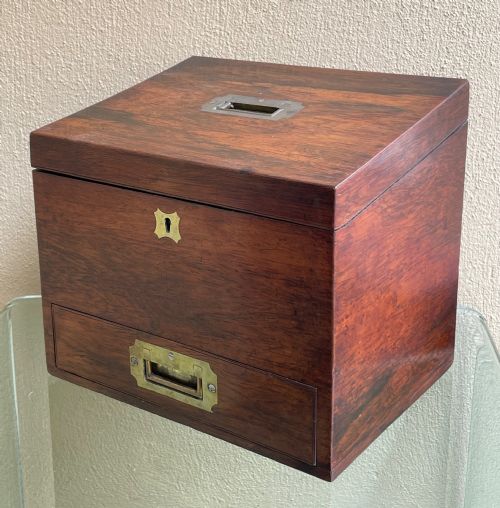
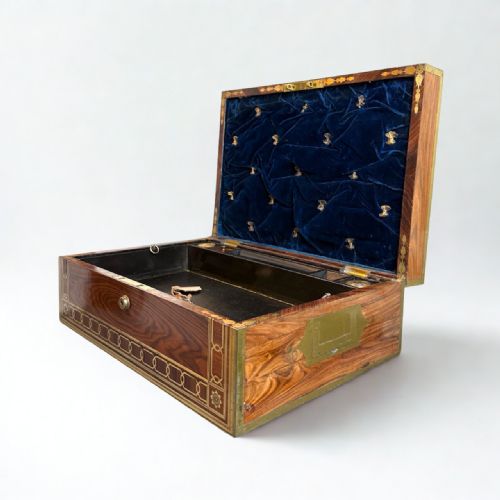
A flush handle wooden box is typically encountered on this page as a nineteenth century campaign chest, trunk, writing slope, or correspondence box. These portable containers served travellers and military officers throughout the Victorian period, originating from utilitarian origins in the nineteenth century.
The primary forms include large camphor wood and teak trunks alongside smaller rosewood and mahogany writing boxes. Trunks and chests dominate the current selection, offering substantial storage capacity whilst retaining the portability required for transit.
Origins span British military campaigns and colonial postings, alongside Chinese export workshops producing huanghuali writing boxes. Pieces frequently display the robust structural hallmarks associated with Victorian military equipment.
Materials and construction
Construction relies heavily on dense timbers such as camphor wood, teak, mahogany, and rosewood, selected for their resistance to splitting and warping during travel. Camphor wood was particularly favoured for chests due to its natural aromatic properties.
Hardware consists of brass fittings, including flush handles and corner brackets, designed to sit level with the wooden surfaces to prevent snagging during transport. Iron is also utilised for structural reinforcement on heavy trunks.
Joinery techniques focus on resilience, employing reinforced corners and sturdy framing to withstand the rigours of military campaigns and long sea voyages.
Camphor wood trunks retain their distinct natural scent through the decades, offering a lingering reminder of nineteenth century sea voyages.
Distinctions in quality
Quality diverges between utilitarian transit containers and refined officers' pieces, the latter often exhibiting superior timber grain and sophisticated interior compartments for writing slopes. Superior examples integrate secret drawers and finely fitted stationery sections.
The execution of brass hardware and the tightness of the flush fitting indicate the level of craftsmanship involved. Well-made pieces maintain flush alignment of handles and straps even after decades of environmental changes.
The Flush Handle Wooden Box Glossary
- Flush handle
- A recessed metal grip set level with the wooden surface to avoid projection during transport. This design prevents the handle from catching on other cargo.
- Campaign trunk
- A portable storage chest built for military use during the nineteenth century. These trunks often feature brass corners and split into sections for easier carriage.
- Writing slope
- A portable slant-topped box containing compartments for ink, pens, and paper. When opened, the sloping lid provides a firm surface for writing.
- Camphor wood
- An aromatic timber native to Asia, utilised for trunks to deter insects and protect contents during colonial travel. The wood retains a distinct natural fragrance.
Flush Handle Wooden Box: Frequently Asked Questions
What is a flush handle wooden box?
A flush handle wooden box is a nineteenth century portable container, such as a campaign chest or writing slope, fitted with recessed metal grips.
These pieces were constructed from durable timbers like camphor wood and teak to withstand the demands of military travel.
How do I identify a campaign trunk?
Campaign trunks are characterised by sturdy timber construction, brass corner brackets, and recessed flush handles designed for transit.
They frequently separate into modular sections and utilise dense woods such as mahogany, teak, or camphor wood.
Where were these wooden boxes made?
These items originated in nineteenth century British military contexts, colonial postings, and Chinese export workshops.
Many pieces reflect the functional requirements of Victorian officers operating overseas.
How do I care for camphor wood?
Camphor wood requires stable humidity levels and minimal exposure to direct sunlight to prevent timber movement.
Occasional light conditioning helps maintain the natural finish without masking the wood's inherent aroma.