

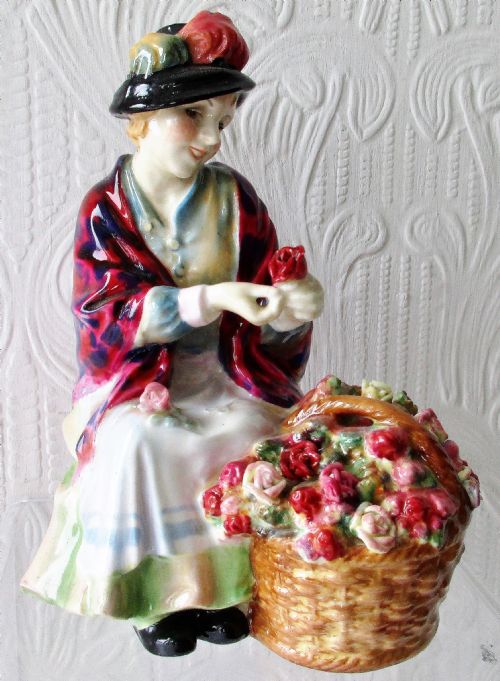
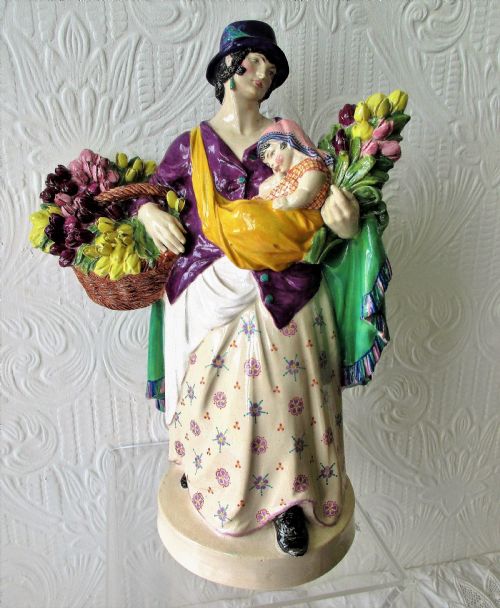
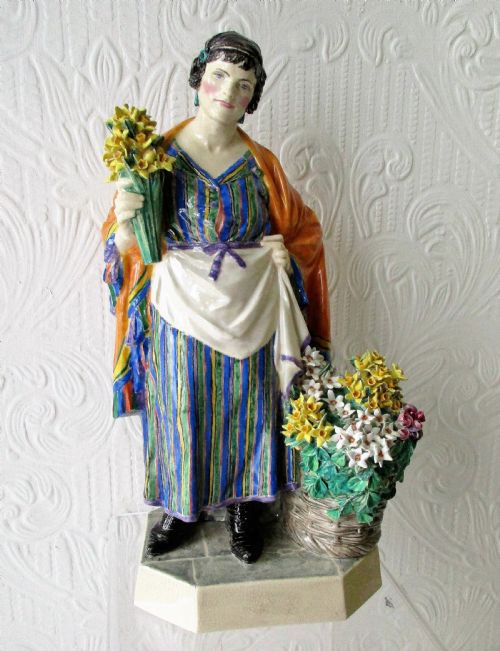
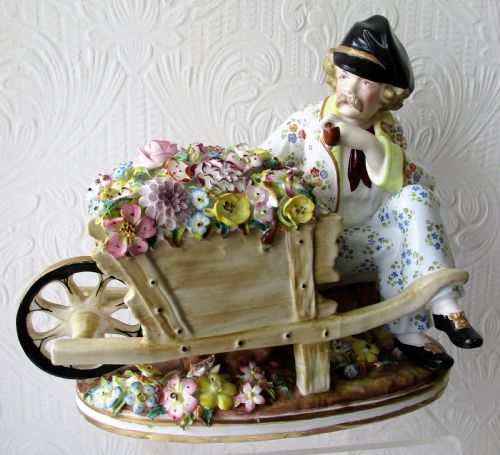



Flower Seller Figurine
A flower seller figurine brings centuries of domestic charm into a room, capturing street vendors in porcelain, earthenware and carved wood.
Flower Seller Figurine
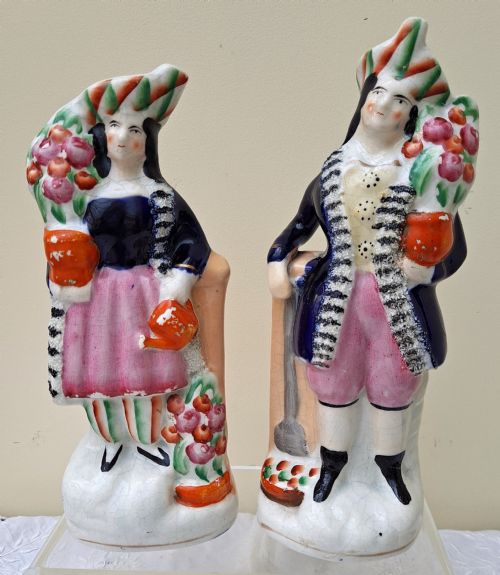
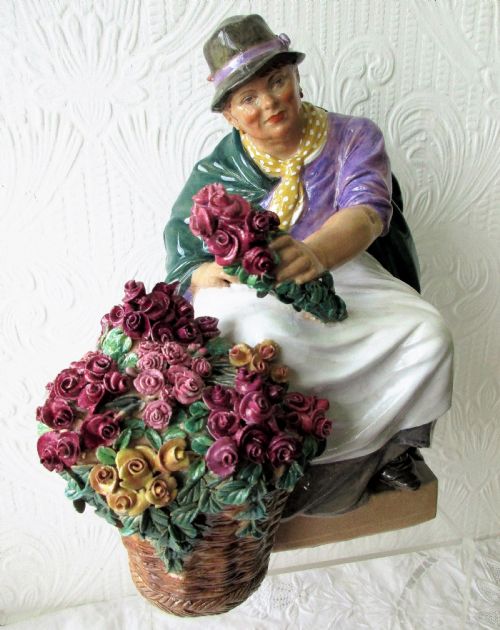
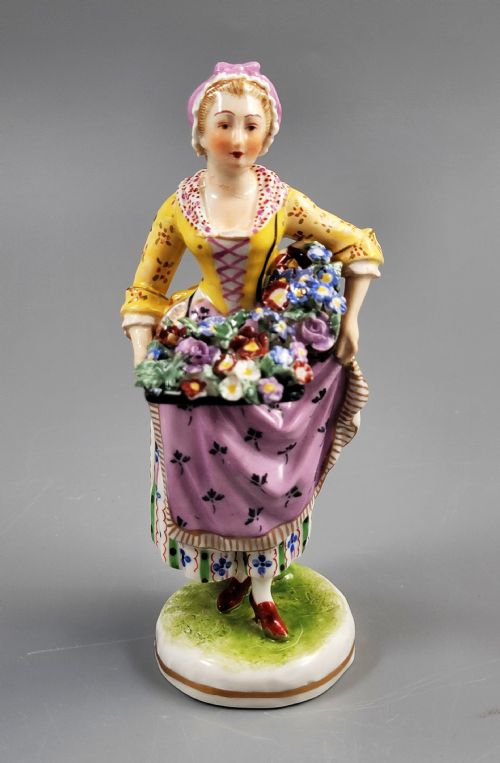
A flower seller figurine depicts traditional street vendors carrying baskets of blooms, capturing social history in ceramic and wood forms. When you search for a flower seller figurine, you encounter pieces spanning from the eighteenth century to the twentieth century.
The selection ranges from early Georgian Derby figures and Victorian porcelain by makers such as John Bevington to twentieth-century studio pottery by Charles Vyse. European factories, including Meissen and French makers like Samson, also contribute to the diverse range of figurines found on this page.
Forms include single figures and matched pairs, modelled either as standalone sculptures or mounted on porcelain brackets. These figures reflect various stylistic movements, from Georgian Rococo and Victorian ornamentation to Art Deco and European Folk Art.
How They Were Made
Makers shaped these figures from porcelain, earthenware and studio pottery, often enhancing the surfaces with ceramic glaze and overglaze enamel. Detail was applied through careful hand-painting of polychrome pigments to render garments and baskets of flowers.
Selected highlights feature applications of gold leaf and gilding to accent bases and clothing details. Certain pieces, such as Regency examples, utilise carved wood finished with polychrome paint rather than ceramic materials.
Flower Seller Figurine Retail Price Guide 2026
Typical asking prices for flower seller figurine among the pieces listed under this phrase on Sellingantiques today, from the lower quarter to the upper quarter. They describe what is for sale here now, not the wider market.
The listings combine British studio pottery from the 1920s and 1930s with 19th-century English Victorian porcelain and 18th-century Georgian figures.
What Varies in Quality
The sophistication of the glaze and the restraint in applying gold leaf or gilding differentiate standard production pieces from masterworks created by established potteries and studio artists.
Charles Vyse·Royal Doulton·John Bevington·Derby·Dressel Kister And Cie·Samson·Meissen
The Flower Seller Figurine Glossary
- Overglaze enamel
- Pigments applied on top of a fired ceramic glaze and fired again at a lower temperature. This technique allows for a wider range of bright colours on porcelain figures.
- Gilding
- The application of gold leaf or gold dust to ceramic or wooden surfaces. It is typically used to highlight decorative borders or garment trims.
- Polychromed
- Decorated in multiple colours. Painted wooden or ceramic figures use this treatment to render realistic clothing and floral details.
Flower Seller Figurine: Frequently Asked Questions
How do I identify early figures?
Early figures from the Georgian period often feature unglazed bases, distinct potting characteristics and hand-modelled floral elements rather than mass-produced slip castings. Examining the paste and the style of the overglaze enamel painting helps distinguish eighteenth-century work from later nineteenth-century revivals.
Studying factory marks, where present, provides further context, though many early figures relied on characteristic modelling styles rather than stamped ciphers for attribution.
Were these figures made as pairs?
Makers frequently produced figures as matched pairs representing male and female vendors, designed to sit symmetrically on mantelpieces or console tables. These pairs often share identical base treatments and complementary poses.
Single figures were equally common, produced either as standalone models or as survivors from disbanded sets.
How should I display porcelain figures?
Display these pieces in stable display cabinets or on secure surfaces away from direct sunlight and high-traffic areas where they might be knocked. Ensuring proper support prevents accidental tipping, particularly for taller ceramic or wooden sculptures.
Keep them away from extreme temperature fluctuations to protect delicate overglaze enamels and applied gold leaf over time.
What is the difference between earthenware and porcelain?
Earthenware is an opaque, porous ceramic body fired at lower temperatures, often used in Staffordshire figures and studio pottery. Porcelain is a vitrified, denser material fired at higher temperatures, producing a more refined finish.
Porcelain pieces often allow for finer, thinner modelling of delicate flower petals and facial expressions compared to earthenware.