
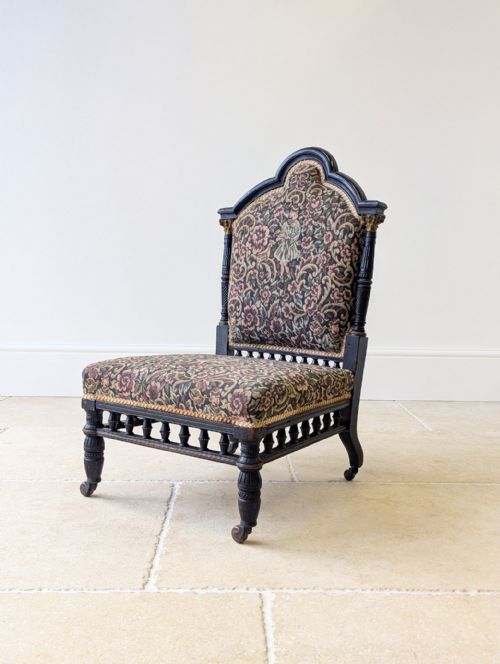
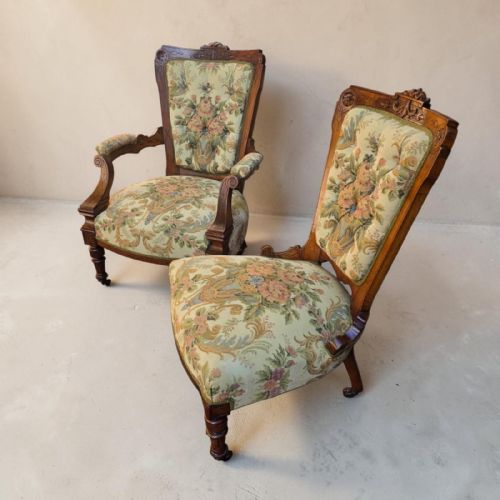


Floral Tapestry Slipper Chair
A floral tapestry slipper chair offers low-slung comfort and period charm, combining rich textile upholstery with sturdy timber frames.
Floral Tapestry Slipper Chair
The floral tapestry slipper chair category encompasses low seats designed for bedrooms and parlours during the Victorian, William IV, and Edwardian eras. Buyers searching for a floral tapestry slipper chair frequently encounter low-slung nursing chairs, boudoir seats, and salon chairs clothed in textile upholstery.
These pieces emerge across the nineteenth and early twentieth centuries, spanning walnut, mahogany, oak, and ebonised frames. Styles range from Victorian Rococo Revival and Aesthetic Movement to French and William IV influences.
Makers utilised various alternative designations for similar low seating forms, including bedroom chairs, accent chairs, and side chairs. Most examples on this page date from the mid-nineteenth century up to the nineteen-twenties.
Materials and construction
Frames rely upon traditional cabinet timbers including walnut, mahogany, and oak, occasionally finished with ebonising or detailed carving. Joinery supports compact proportions intended for domestic chambers and dressing rooms.
Upholstery incorporates textile tapestry fabric and brass detailing, with some pieces retaining original floral tapestry coverings. Frames accommodate varying heights, featuring low seats paired with high or low padded backs.
Listings feature walnut, mahogany, and oak frames paired with tapestry upholstery across Victorian, Edwardian, and William IV periods.
Assessing quality and finish
Quality reveals itself in the crispness of timber carving, the structural integrity of walnut or mahogany frames, and the preservation of original textile upholstery. Higher-grade examples display refined proportions and substantial hardwood construction.
The sophistication of the tapestry work and the presence of documented makers or distinct regional styles elevate specific pieces. Plain commercial frames stand apart from finely detailed Aesthetic Movement or revival specimens.
R Whytock of Edinburgh·Gillows
The Floral Tapestry Slipper Chair Glossary
- Slipper chair
- A low-seated bedroom chair traditionally used for changing shoes or dressing. These seats sit close to the floor.
- Nursing chair
- A low Victorian armchair designed originally for nursing infants. They feature padded backs and low seats.
- Tapestry
- A form of heavy textile fabric woven with decorative designs. Used extensively for nineteenth-century upholstery.
- Aesthetic Movement
- A late nineteenth-century design style emphasising artistic visual qualities. It favoured ebonised finishes and refined lines.
- Rococo Revival
- A mid-nineteenth-century revival style featuring exuberant carved ornament. It draws inspiration from eighteenth-century French design.
Floral Tapestry Slipper Chair: Frequently Asked Questions
What is a slipper chair used for?
These low seats were traditionally placed in bedrooms or dressing rooms to provide comfort while changing shoes. Their compact proportions made them versatile for smaller private spaces.
Over time, these versatile pieces transitioned into general domestic seating, valued today as accent chairs in living rooms and halls.
How do I date these chairs?
Dating relies on identifying timber choices, frame construction methods, and stylistic cues from periods such as Victorian, William IV, or Edwardian. Walnut and mahogany were favoured during the mid-nineteenth century.
Subtle shifts in upholstery thickness and carving motifs also help distinguish an eighteen-fifties piece from a nineteen-twenties Edwardian example.
Are original tapestries common?
Some pieces retain their original floral tapestry fabric, displaying period textile techniques and authentic wear. These survive alongside examples that have been re-upholstered over the decades.
Original textiles provide insight into nineteenth-century interior decoration and colour preferences.
How do I care for antique upholstery?
Preserving textile upholstery requires gentle vacuuming with a soft brush attachment and protection from direct sunlight. Minimising friction helps protect fragile vintage threads.
Wooden frames benefit from occasional dusting and maintenance appropriate for polished walnut or mahogany surfaces.