





Floral Painted Miniatures
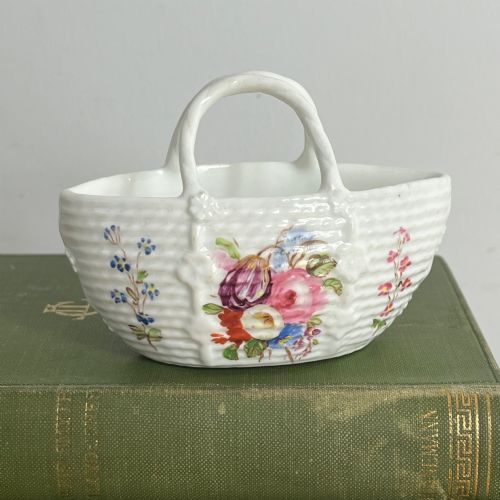
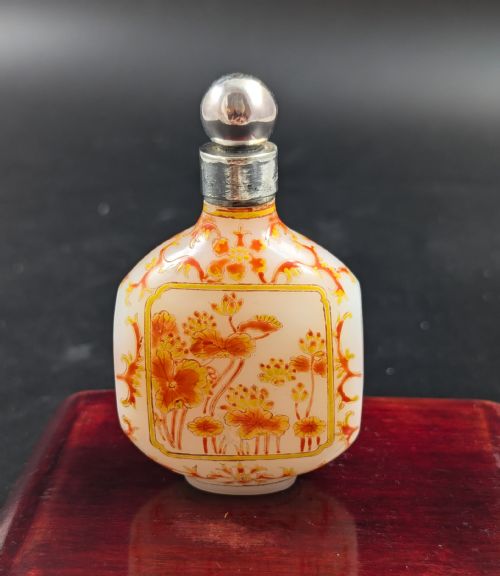
These floral painted miniatures range from delicate porcelain baskets to glass snuff bottles, offering fine craftsmanship in remarkably small scales.
Floral Painted Miniatures
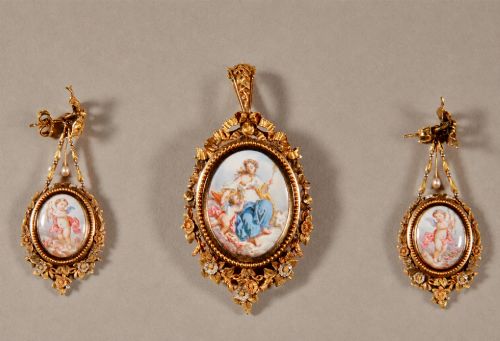
Floral painted miniatures encompass small-scale decorative objects and paintings adorned with floral motifs, spanning the Regency era, the nineteenth century, and the early twentieth century. Buyers seeking floral painted miniatures encounter a diverse array of forms, including vases, bowls, small teapots, timepieces, and framed gouache still life paintings.
The objects originate from various European and Japanese traditions, showcasing regional approaches to small-scale floral decoration. British porcelain factories, French painters, German ceramic works, and Japanese Satsuma and Kutani workshops all contribute to this category.
Vases and decorative ceramics form the most common iterations on this page, often featuring hand-painted botanical details executed on porcelain, earthenware, or enamel. These pieces provide concentrated examples of period styles such as Edwardian, Art Nouveau, and French Empire.
What varies in quality
Quality in floral painted miniatures rests upon the precision and fluidity of the brushwork within the floral decoration. Superior pieces exhibit confident, detailed hand-painting where petals and leaves possess distinct shading and depth, distinguishing them from mechanical or hurried transfers.
The integrity of the underlying material and the refinement of the form also dictate the tier of the piece. Well-balanced proportions, intact gilding, and crisp factory marks or artist signatures elevate a miniature object above standard production work.
Floral Painted Miniatures Retail Price Guide 2026
Typical asking prices for floral painted miniatures among the pieces listed under this phrase on Sellingantiques today, from the lower quarter to the upper quarter. They describe what is for sale here now, not the wider market.
Listings feature 19th Century, Regency, Edwardian, and Art Nouveau periods, executed in porcelain, enamel, glass, and gouache.
Flight Barr And Barr·Moorcroft·Kotobuki Do·Doulton Lambeth·Spode·Guyue Xuan·Royal Worcester·Hutschenreuter
The Floral Painted Miniatures Glossary
- Gouache
- An opaque water-based paint used for detailed miniature paintings on paper or card. It dries to a smooth, matte finish that allows for fine botanical rendering.
- Tyg
- A multihandied drinking vessel, which appears in miniature form within certain English porcelain productions. These small ceramic pieces retain the traditional multiple handles of their larger predecessors.
- Demitasse
- A small cup used for serving strong black coffee or espresso. They often feature delicate hand-painted decoration suited to their diminutive scale.
- Koro
- A Japanese incense burner, typically fitted with a lid and resting on small feet. Examples in this category often feature intricate painted floral panels.
- Enamel
- A glassy substance fused to metal, glass, or ceramic through firing to provide a smooth, coloured surface. It serves as a durable ground for painted floral details.
Floral Painted Miniatures: Frequently Asked Questions
What are miniature teapots used for?
These small vessels, often called toy teapots, served as cabinet specimens, child's playthings, or factory samples rather than functional kitchenware.
Their small scale allowed porcelain painters to demonstrate their skill with floral motifs on a compact canvas.
How do I identify Regency period pieces?
Regency items typically display characteristic early nineteenth-century porcelain bodies, classical forms, and specific floral painting styles associated with that era.
Maker attribution and recorded pattern numbers further help confirm the date of manufacture.
What is Kutani ware?
Kutani ware is a style of Japanese porcelain traditionally known for its expressive painted decoration and vibrant colour palettes.
Miniature bowls from this tradition combine fine ceramic shaping with detailed surface painting.
How should I display miniature ceramics?
These small pieces suit enclosed cabinets, mantelpieces, or dedicated display shelves where their fine floral details can be viewed closely.
Keeping them out of direct sunlight helps protect delicate enamel and gouache pigments from fading.