

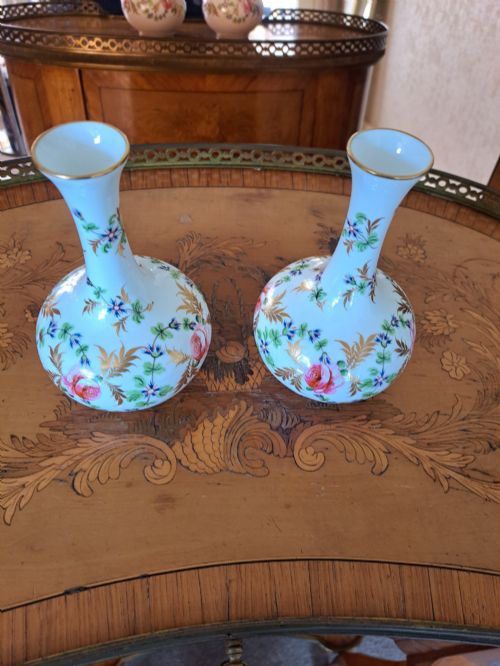


Small Hand Painted Vases
Small hand painted vases bring concentrated colour and miniature detail to a room, offering cabinets and mantelpieces focused points of interest.
Small Hand Painted Vases
Small hand painted vases gather delicate vessels from the late nineteenth and early twentieth centuries, alongside earlier transitional pieces and Victorian wares. Collectors encounter bud vases, miniature jars, and cabinet pieces shaped in porcelain, earthenware, and glass.
Japanese imari and satsuma wares appear frequently alongside British makers like Royal Worcester, Doulton Lambeth, and Moorcroft. These pieces range from restrained cobalt porcelain to vibrant enamel decorations on traditional ceramic bodies.
Makers utilised diverse forms, from bulbous jars to slender bud vases, often finished with gilding or gold leaf. The selection spans distinct periods including the Victorian, Edwardian, and Meiji eras.
Materials and techniques
Potters shaped these vessels using bone china, earthenware, and porcelain, applying glazes and enamel before firing. Artisans then executed hand painted details over or under the glaze, sometimes incorporating gold leaf and gilding.
Glassmakers created specialist pieces such as Burmese ware and art glass, manipulating heat and colour before adding hand painted motifs. Makers employed distinct pigment mixtures, utilising iron red, cobalt, and green enamel to achieve vivid surface patterns.
Small Hand Painted Vases Retail Price Guide 2026
Typical asking prices for small hand painted vases among the pieces listed under this phrase on Sellingantiques today, from the lower quarter to the upper quarter. They describe what is for sale here now, not the wider market.
Listings feature items from the seventeenth century through to the 1930s, spanning porcelain, earthenware, and glass.
Assessing quality
Quality rests upon the precision of the brushwork and the clarity of the painted detail across the ceramic or glass body. Finer examples display confident artistry from named decorators, where hand painted scenes remain crisp and balanced.
The refinement of the underlying body, whether porcelain, earthenware, or glass, dictates the piece's structural elegance. Superior pieces integrate gilding and enamel harmoniously without obscuring the form or ceramic ground.
Moorcroft·Crown Derby·Royal Worcester·Doulton Lambeth·Meissen·Thos. Webb And Sons
The Small Hand Painted Vases Glossary
- Imari
- A style of Japanese porcelain decorated in underglaze blue and iron red, with supplementary gold and enamel colours. These wares were widely exported and later emulated by European potteries.
- Satsuma
- Japanese earthenware featuring a crackle glaze and ornate polychrome enamel paintings often heightened with gold leaf. The style developed significantly during the Meiji period for international markets.
- Enamel
- Opaque or translucent glass paste applied to ceramic or metal surfaces and fired until fused. It provides the vivid, raised colour details seen across many small decorative vases.
- Gilding
- The application of gold leaf or gold dust to the surface of ceramics or glass. This technique highlights rims, handles, and painted motifs.
- Carrara Ware
- A fine white ceramic developed by Doulton Lambeth to mimic Italian marble. It served as a smooth ground for delicate hand painted floral garlands.
Small Hand Painted Vases: Frequently Asked Questions
How do I clean small hand painted vases?
Dust these delicate vessels gently with a dry, soft brush to protect fragile enamel and gold leaf decorations. Avoid immersing antique pieces in water, particularly those with overglaze painting or delicate glass surfaces.
For glazed ceramic bodies that require washing, use lukewarm water and mild soap without scrubbing painted areas. Dry thoroughly with a lint-free cloth immediately afterwards.
Where should I display miniature vases?
Place these compact vessels inside glass-fronted cabinets or on mantelpieces where their fine details can be appreciated at close range. Positioning them away from direct sunlight protects vulnerable enamel and painted pigments from fading.
Ensure they sit on stable, level surfaces out of high-traffic zones to prevent accidental knocks. Grouping pieces by period or palette creates an effective cabinet display.
How do I identify a Meiji period vase?
Meiji period Japanese vases typically display dense imari or satsuma decoration with intricate hand painted motifs and gilding. Look for traditional motifs such as figures, flora, and Buddhistic lions rendered in rich enamel colours.
Many pieces from this era bear workshop marks or signatures on the base, though attribution often relies on stylistic execution and ceramic body characteristics.