

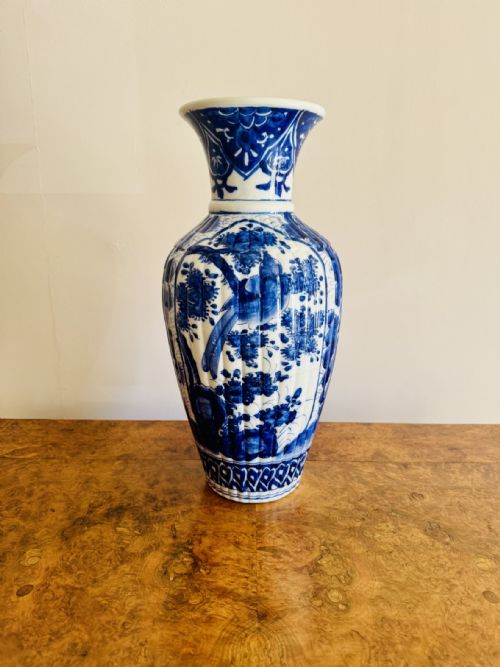
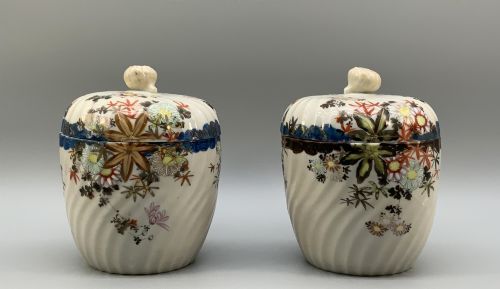
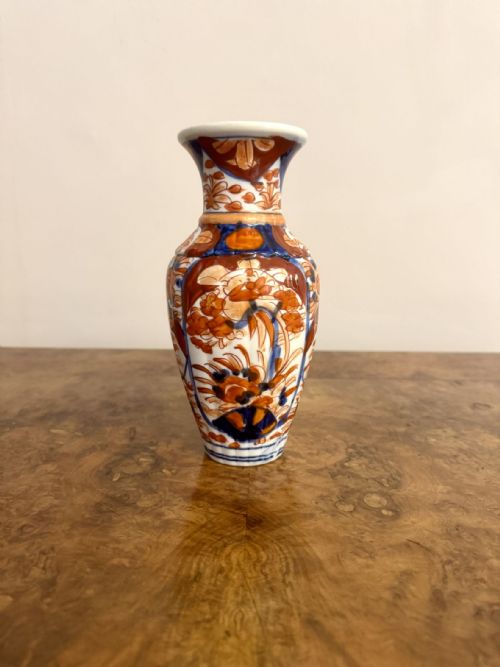
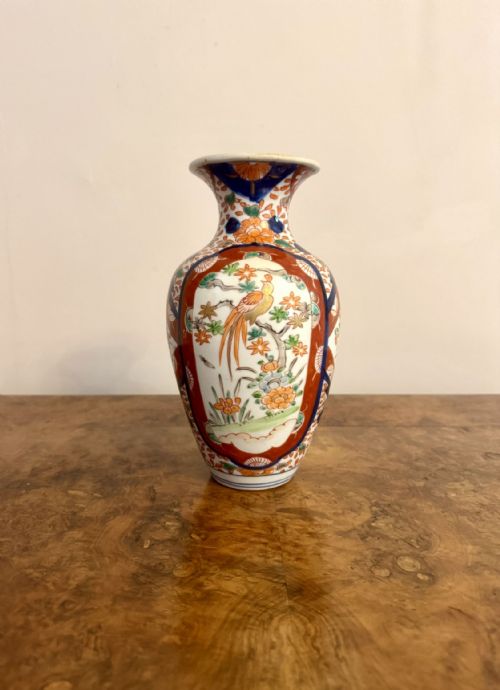


Floral Painted Japanese Jars
These floral painted japanese jars bring historic Arita porcelain, Imari patterns, and Satsuma work directly into your rooms.
Floral Painted Japanese Jars
Floral painted japanese jars encompass a rich variety of vessels spanning from the 18th century through the Edwardian period, with the 19th century and Meiji period heavily represented. You will find lidded ginger jars, double gourd vases, and covered pots bearing traditional Japanese decoration.
The forms range from large floor-standing lidded vases to smaller ginger jars and pots designed for display. Many pieces originate from Arita, showcasing the enduring styles of Japanese Imari and Satsuma ware.
How they were made
The makers utilised porcelain and earthenware as the primary ceramic bodies, shaping them into fluted bodies and double gourd forms. These vessels were finished with glaze, enamel, and gold leaf to create rich surface decoration.
Specialised techniques include intricate hand-painted floral motifs executed in cobalt blue, iron red, and gilt. Metal components in brass and copper appear alongside cloisonne construction on select lidded ginger jars.
Floral Painted Japanese Jars Retail Price Guide 2026
Typical asking prices for floral painted japanese jars among the pieces listed under this phrase on Sellingantiques today, from the lower quarter to the upper quarter. They describe what is for sale here now, not the wider market.
Listings feature porcelain and earthenware pieces decorated with glaze, enamel, and gold leaf, spanning the 18th, 19th, and Edwardian periods.
What varies in quality
Quality rests upon the crispness of the hand-painted floral decoration and the precision of the enamel work. Finer examples display meticulous brushwork and balanced compositions across the porcelain surface.
The application of gold leaf and the depth of the glaze also distinguish standard production from superior pieces. Preservation of the original lids on ginger jars and vases adds substantially to the integrity of the object.
Kinkozan
The Floral Painted Japanese Jars Glossary
- Imari
- A traditional Japanese porcelain style characterised by a palette of underglaze blue, iron red, and gilt highlights. These pieces were widely produced in Arita for both domestic use and export.
- Ginger jar
- A ceramic vessel originally used for storing spices, featuring a wide body and a fitted lid. In decorative contexts, these jars are prized for their balanced proportions and painted surfaces.
- Meiji Period
- The era in Japanese history spanning from 1868 to 1912, noted for significant artistic production and export to Western markets. Pieces from this time often exhibit highly refined craftsmanship.
- Satsuma ware
- A type of Japanese earthenware featuring a crackled ivory glaze decorated with polychrome enamels and gilt. It became exceptionally popular during the late 19th century.
- Double gourd
- A ceramic vase shape formed by two bulbous sections stacked vertically, resembling a traditional water container. This auspicious form is frequently encountered in Imari porcelain.
Floral Painted Japanese Jars: Frequently Asked Questions
What are Japanese ginger jars?
Japanese ginger jars are ceramic vessels originally made to store spices and herbs. Over time, they evolved into purely decorative items valued for their symmetrical shapes and detailed painted surfaces.
Most surviving examples feature fitted lids and sit on flat bases. They were produced in large quantities during the 19th century for international export.
How do I identify Imari porcelain?
Imari porcelain is instantly recognisable by its distinct colour palette. The combination of cobalt blue underglaze and iron red overglaze, often enriched with gold leaf, defines the style.
Designs typically incorporate floral patterns and panels of natural scenery. The porcelain body itself tends to be heavy and dense.
Where were these jars made?
Many of these vessels originated in the town of Arita, the historic centre of Japanese porcelain production. Kilns in this region supplied wares for the domestic market and later for European trade.
Different workshops and potteries contributed specific decorative styles, ranging from classic blue and white to elaborate polychrome enamels.
How do I style them at home?
These jars work well as standalone focal points on mantelpieces, sideboards, or open shelving. Their strong colours and patterns anchor a room and add historic character.
Pairing a matched pair of lidded jars creates symmetry on a sideboard, while individual vases can introduce a splash of traditional pattern to contemporary interiors.