
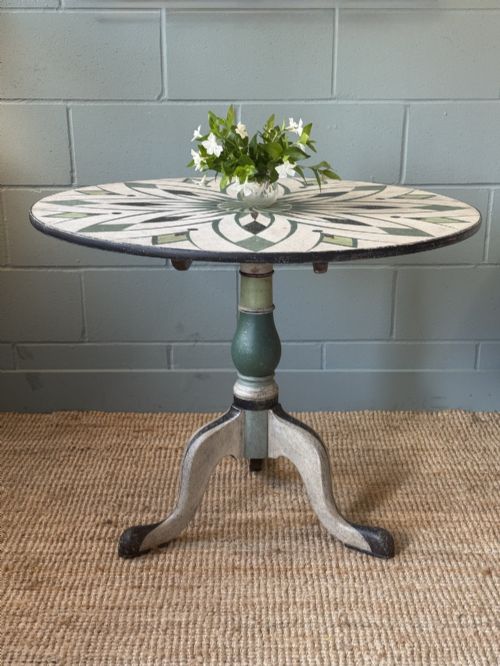


Floral Painted Accent Table
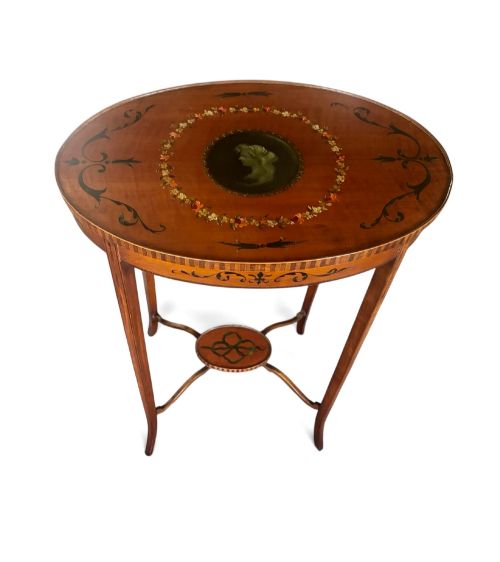
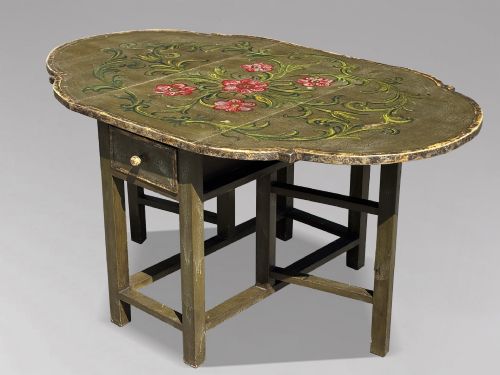
A floral painted accent table brings colour and hand-rendered detail to a room, spanning Edwardian satinwood pieces and Victorian occasional tables.
Floral Painted Accent Table
A floral painted accent table combines functional small-scale furniture with decorative floral surface artwork. Buyers searching for a floral painted accent table typically encounter occasional tables, side tables, and Pembroke tables originating from the nineteenth and early twentieth centuries.
Forms range from drop-leaf and tilt-top tables to tray top designs and small gypsy tables. These pieces function primarily as decorative surfaces or lamp tables within domestic interiors.
How they were made
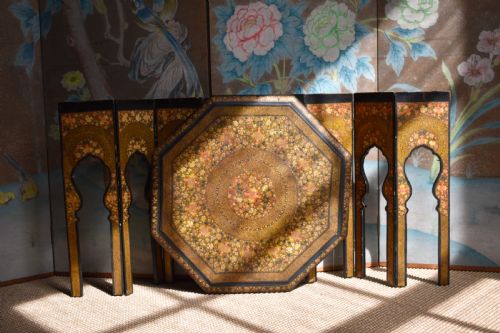
Construction relies upon traditional cabinet timbers including mahogany, satinwood, and ebonised wood, alongside papier-mache on specific tilt-top pieces. Artisans formed these supports using standard joinery techniques appropriate to the period.
Surface decoration involves direct hand painting or lacquer work applied to wood substrates. Many pieces utilise contrasting light woods like satinwood as a ground for detailed floral compositions.
Finishing methods include protective clear coats over painted motifs, with some items incorporating inlaid wood borders or gilt highlights alongside the central painted decoration.
Listings span multiple eras from the mid-nineteenth century through the nineteen-twenties, incorporating wood, paint, satinwood, lacquer, and papier-mache.
What varies in quality
The distinction between tiers rests upon the execution and permanence of the surface art. Superior examples display refined brushwork and detailed botanical or ornamental composition integrated harmoniously into the wood ground.
Timber selection and cabinetmaking standards also differentiate the range. Pieces utilising fine-grained satinwood or mahogany with precise structural joinery represent higher production levels than simpler utility items.
The Floral Painted Accent Table Glossary
- Satinwood
- A durable, light yellow timber with a natural sheen, frequently used as a canvas for painted decoration in late nineteenth and early twentieth-century furniture. It provides a pale backdrop that enhances vibrant floral pigments.
- Pembroke table
- A small rectangular table featuring drop leaves on two opposing sides and a drawer. Eighteenth and nineteenth-century cabinetmakers designed these versatile pieces for light use in sitting rooms.
- Sheraton Revival
- A late nineteenth-century design movement inspired by the lightness and neoclassical motifs of Thomas Sheraton. Furniture in this style often incorporates delicate hand-painted floral swags and satinwood veneers.
- Chinoiserie
- European decorative style reflecting Chinese artistic traditions, featuring hand-painted motifs such as landscapes, figures, and floral elements on lacquered surfaces.
Floral Painted Accent Table: Frequently Asked Questions
Where should I place an accent table?
These small tables suit corners, hallways, or beside seating where surface space is required without heavy visual weight.
Their compact dimensions allow them to function easily as lamp tables or display surfaces in sitting rooms and bedrooms.
How do I clean a painted surface?
Dust gently with a dry, soft cloth to prevent accumulation without abrasive contact.
Avoid chemical polishes and moisture, which can damage historic paint layers and protective varnishes.
What is satinwood?
Satinwood is a hard timber prized for its lustrous golden appearance and smooth grain.
It became the preferred ground for painted decorative tables during the Edwardian and Sheraton Revival periods.
How do I distinguish Edwardian pieces?
Edwardian items often feature lighter timbers, refined satinwood veneers, and delicate neoclassical painted motifs.
They reflect the lighter proportions popular at the turn of the twentieth century.