


Floral Occasional Table
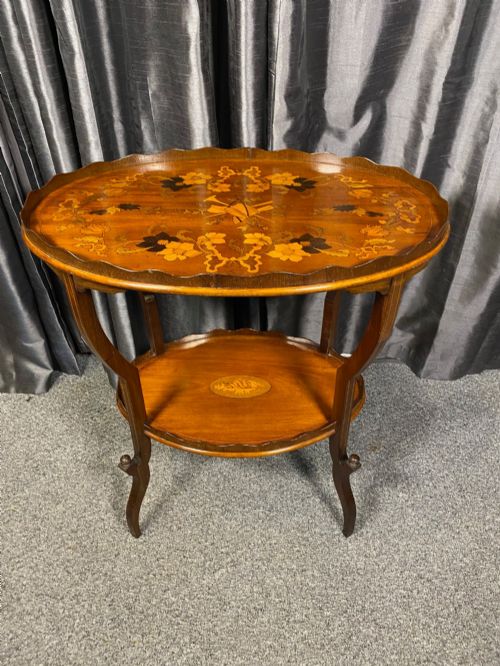
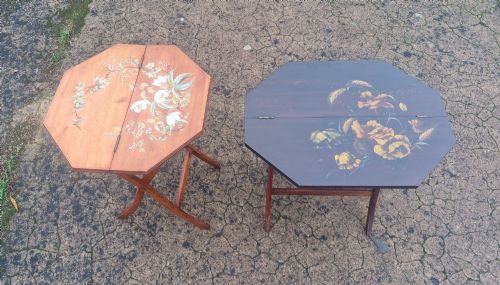
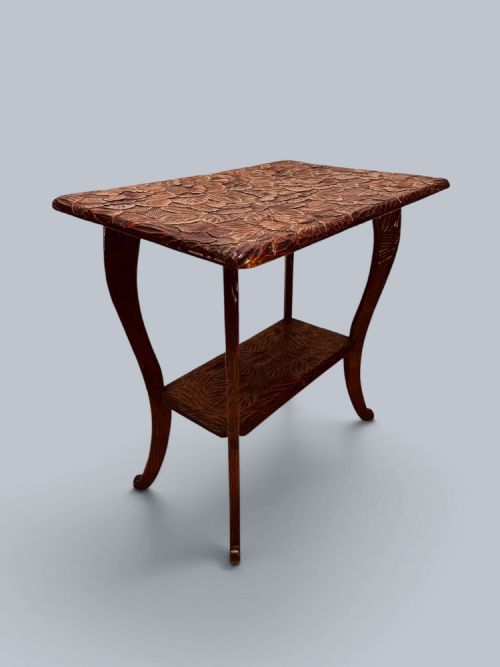
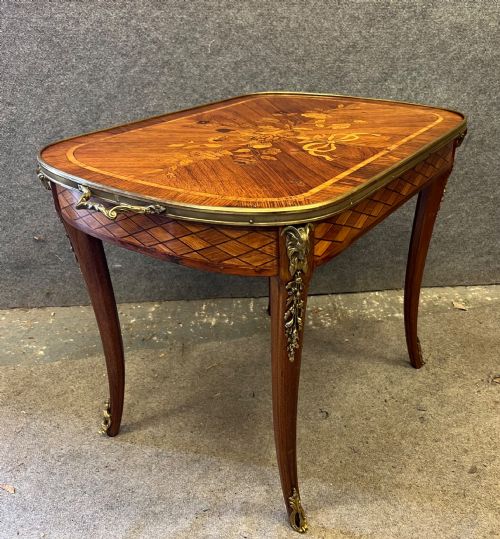
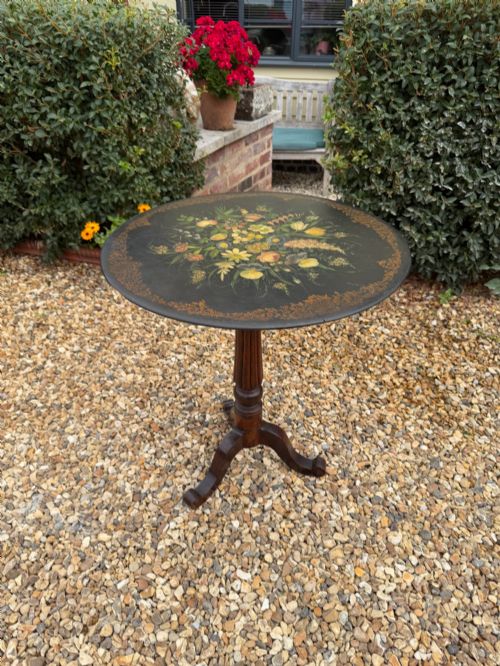
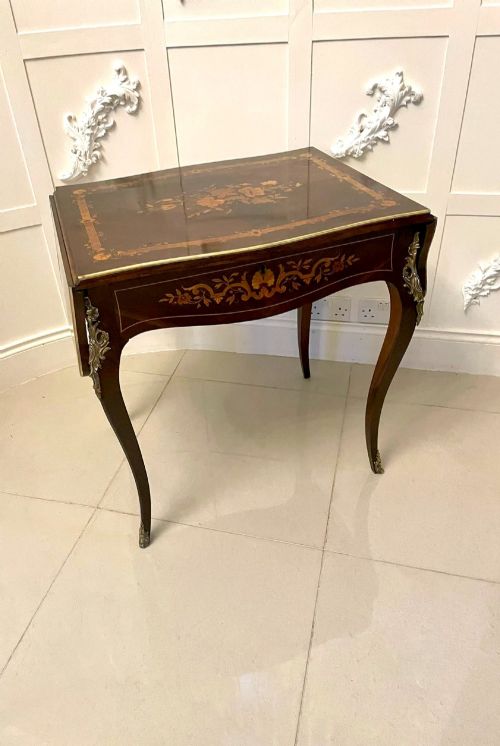
A floral occasional table brings hand-cut marquetry botanical scenes and delicate hand-painted blooms into a sitting room.
Floral Occasional Table
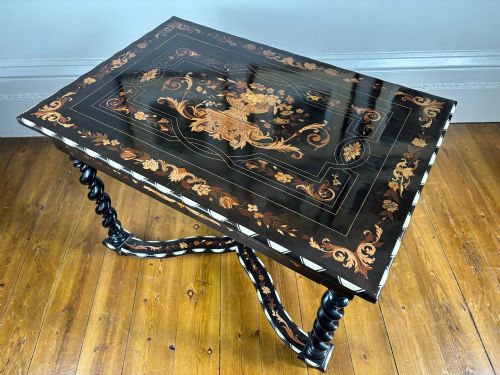
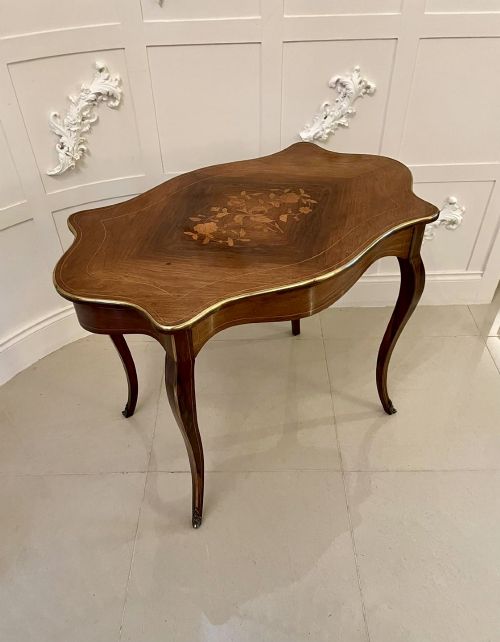
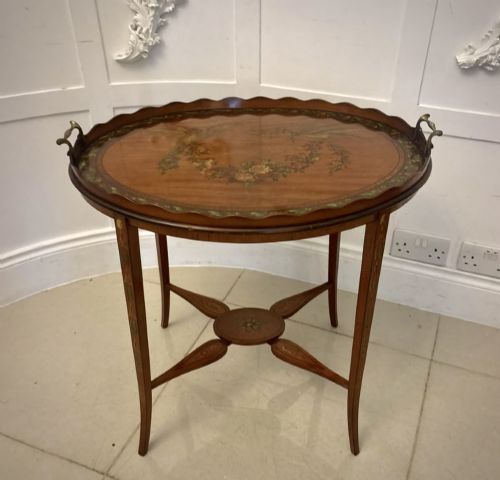
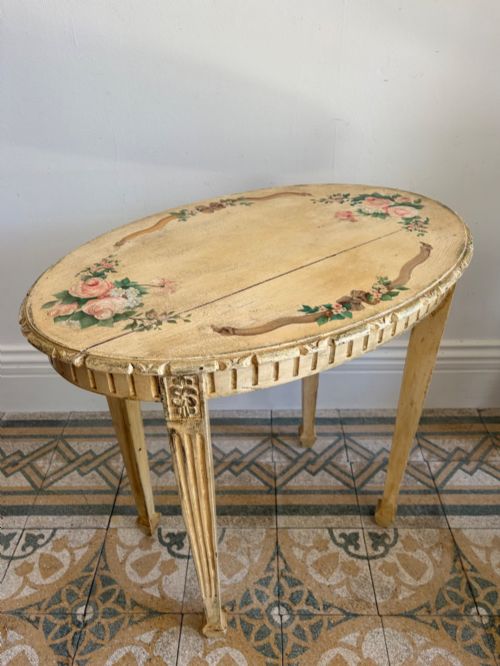
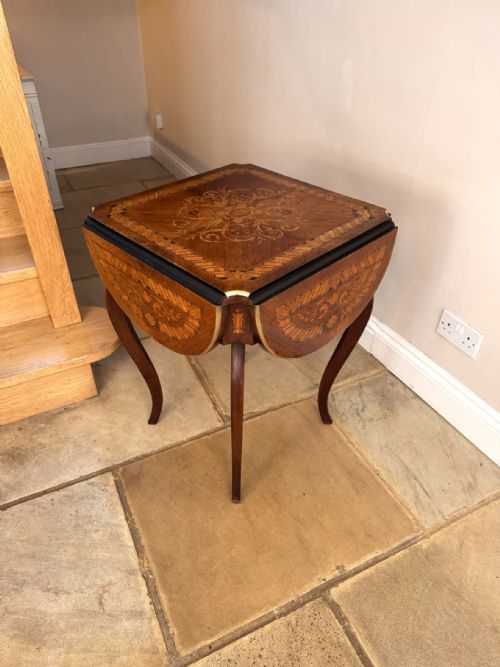
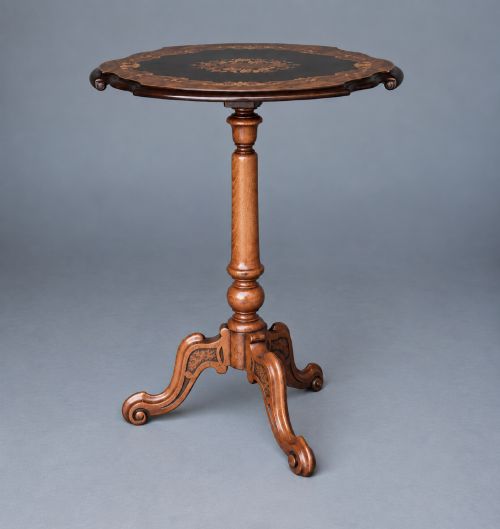
A floral occasional table brings intricate floral marquetry, hand-painted botanical decoration, and decorative bird motifs into domestic spaces. These pieces span compact wine tables, drop-leaf surfaces, multi-tiered etageres, and substantial Victorian centre tables designed for flexible placement in reception rooms.
The selection ranges widely across nineteenth-century European workshop traditions, including French Louis XV revival models, Dutch marquetry pieces, and Sheraton revival satinwood designs. Makers such as Liberty and Co and Edwards & Roberts also contributed distinct stylistic interpretations to this form.
How they were made
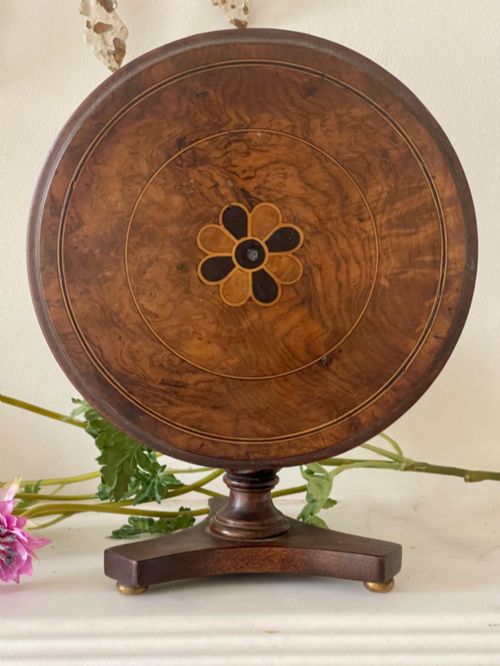
Cabinetmakers utilised dense timbers like walnut, kingwood, rosewood, and mahogany as foundations for elaborate contrasting veneer work. Artisans cut multiple fine woods and bone to construct floral marquetry motifs across table tops and tiers.
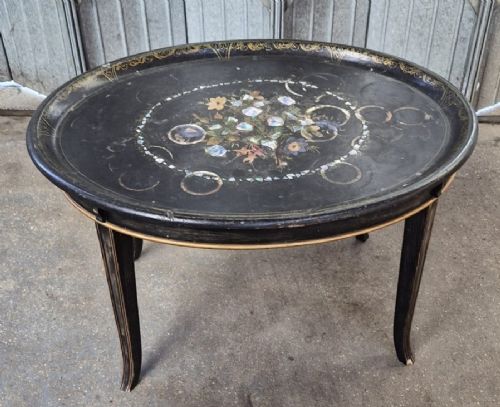
Surface ornamentation also involved hand-painted decoration on satinwood, papier mache, and later applied polychrome finishes. Ormolu mounts, brass details, and carved edges frequently completed the construction of these decorative tables.
Floral Occasional Table Retail Price Guide 2026
Typical asking prices for floral occasional table among the pieces listed under this phrase on Sellingantiques today, from the lower quarter to the upper quarter. They describe what is for sale here now, not the wider market.
Some tables double as sewing boxes, proving that nineteenth-century artisans believed even darning needed a decorative floral backdrop.
What varies in quality
Quality rests primarily in the precision of the marquetry and the choice of timbers selected for the veneer ground. Finely cut botanical inlays demonstrate crisp definition and careful shading using various wood species, whereas lesser pieces rely on simpler painted surfaces or repetitive patterns.
Structural refinement also separates standard production from superior examples. Well-executed tables feature balanced proportions, integrated brass or ormolu mounts, and stable timber frames that show careful attention from cabinet workshops.
Liberty & Co·Edwards & Roberts
The Floral Occasional Table Glossary
- Marquetry
- The art of forming decorative patterns by fitting together veneer pieces of various woods, metals, or bone. This technique creates the floral tabletop scenes found on many period occasional tables.
- Étagère
- A piece of furniture consisting of open shelves for displaying small objects or ornaments. Multiple tiers allow these tables to provide display space while maintaining a compact footprint.
- Ormolu
- Gilded bronze mounts applied to furniture edges and legs during the eighteenth and nineteenth centuries. These metallic accents enhance the decorative outline of French revival pieces.
- Satinwood
- A durable exotic timber with a lustrous yellow sheen often used for high-status Sheraton and Edwardian furniture. It provides a pale, reflective background for hand-painted floral decoration.
- Tilt top
- A table mechanism allowing the surface to pivot upright when not in use. This clever engineering saved domestic space in period drawing rooms.
Floral Occasional Table: Frequently Asked Questions
Where should I place an occasional table?
These compact tables suit living spaces beside armchairs, sofas, or empty corners where they hold lamps and decorative objects.
Their varied forms allow them to function as central display surfaces or flexible side pieces within a room.
How do I care for antique marquetry?
Protect delicate wood veneers and inlaid surfaces by keeping tables away from direct sunlight and strong heat sources.
Regular polishing with appropriate wax maintains the lustre of the timber without damaging historical finishes.
How do I identify French revival pieces?
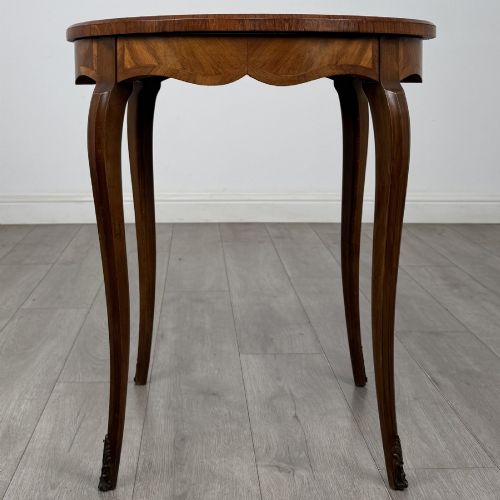
French revival tables often display elaborate floral marquetry, curved cabriole legs, and cast ormolu mounts.
These characteristics mirror the ornate aesthetic of eighteenth-century court furniture adapted by later nineteenth-century makers.