


Floral Needlepoint Ottoman
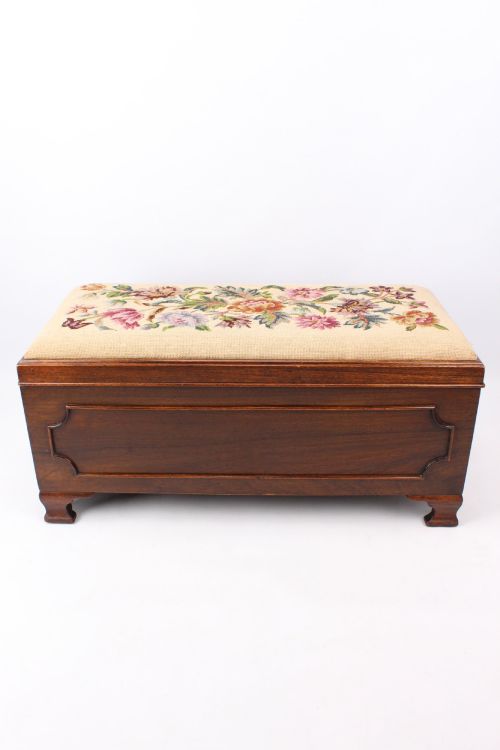
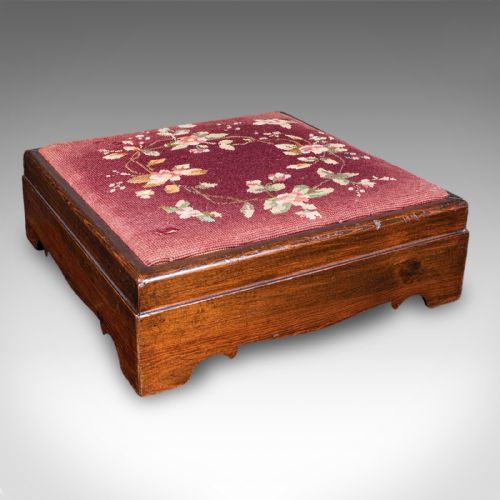
A floral needlepoint ottoman offers a practical seat or footrest, bringing textured wool upholstery and traditional craftsmanship into a room.
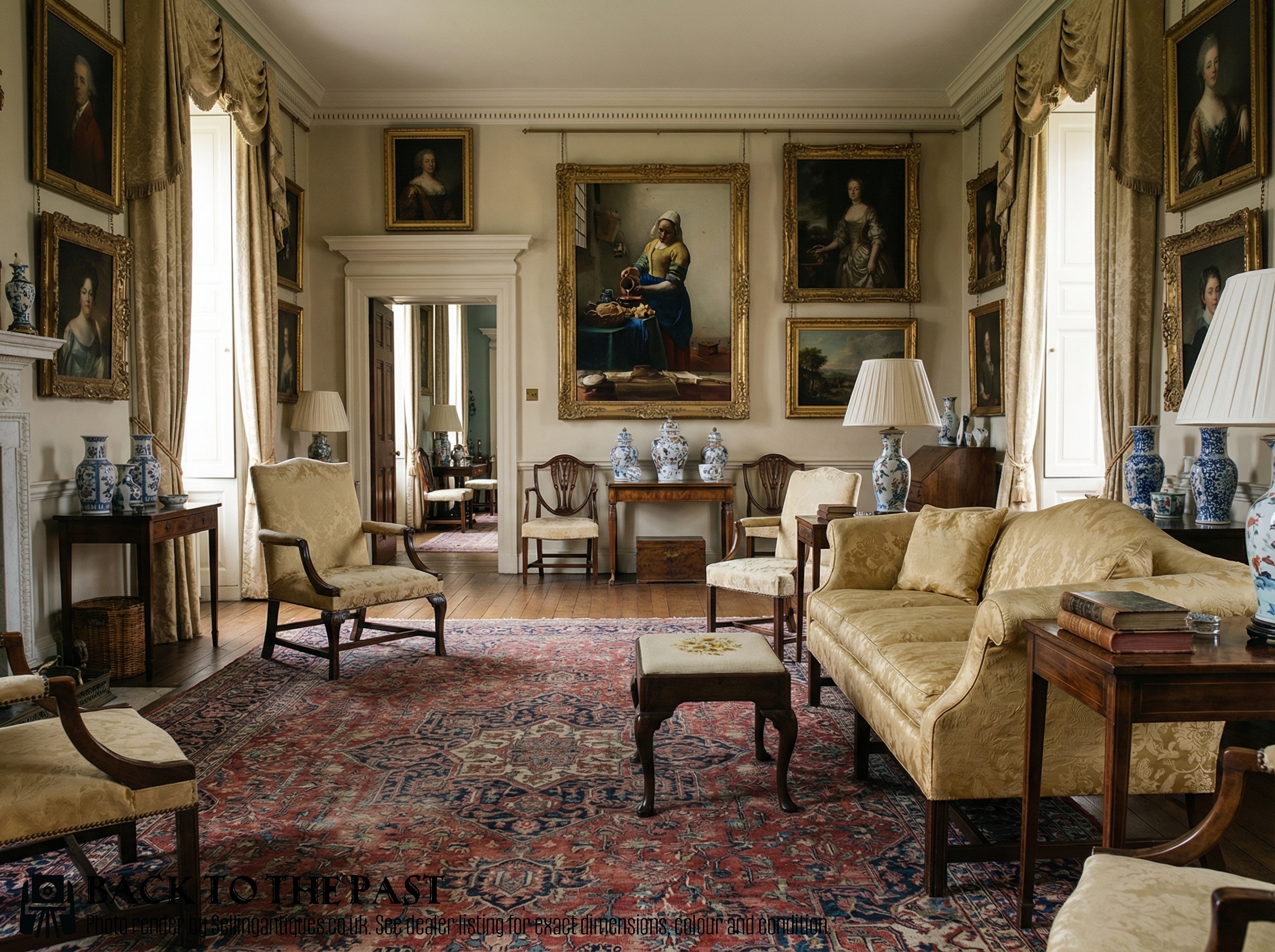
Floral Needlepoint Ottoman
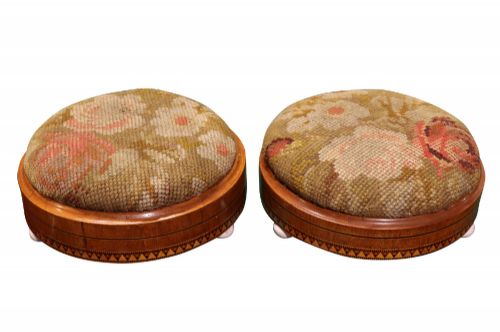
A floral needlepoint ottoman encompasses a range of seating forms designed for resting the feet or sitting near the fire. Buyers searching for a floral needlepoint ottoman will encounter items spanning the Victorian, Edwardian, and Regency periods, alongside pieces dated through the nineteenth and early twentieth centuries.
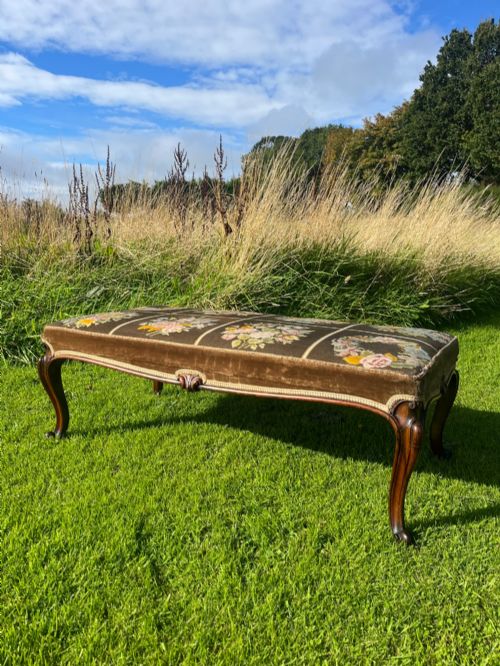
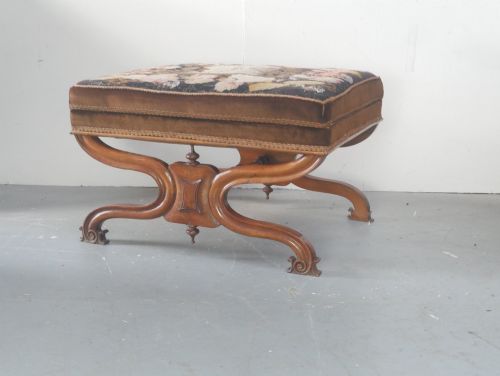
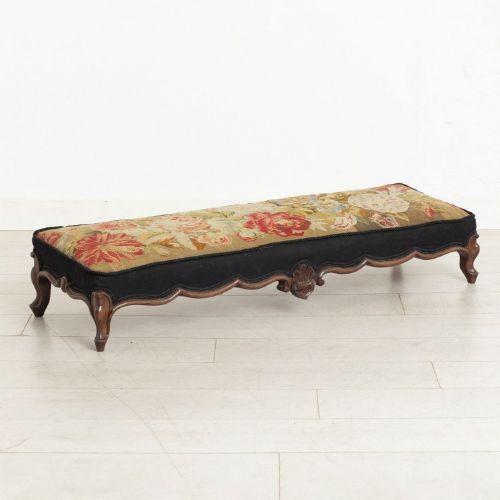
The objects take many forms, including footstools, dressing stools, centre stools, and long ottomans. Walnut, mahogany, rosewood, oak, and pitch pine form the structural wooden bases, paired with textile seats worked in tapestry and wool.
How they were made
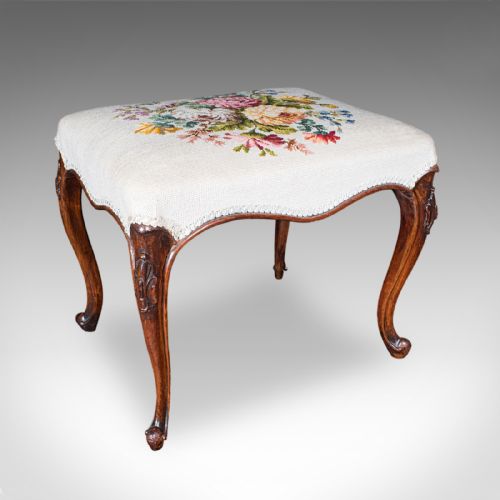
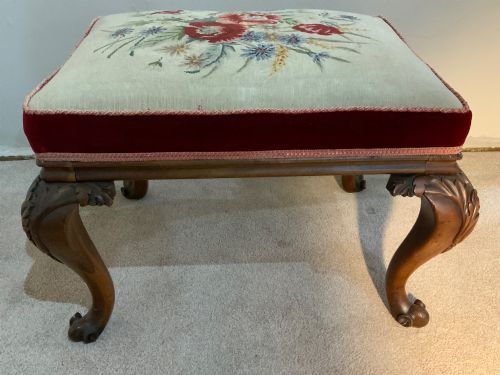
Makers utilised hardwoods such as walnut, mahogany, and rosewood for frames, often incorporating carved details, brass accents, or turned cabriole legs. Painted finishes appear on selected English and continental pieces, while ebonised wood and inlaid details provide further variety.
Seats feature hand-worked wool tapestry and needlepoint textiles, sometimes described as upholstery or tapestry. These textile panels are fixed over padded foundations supported by timber frames.
Several footstools managed to survive a century or more of resting feet while keeping their floral wools entirely bright.
What varies in quality
The execution of the woodwork establishes the baseline of a piece, distinguishing standard turned frames from intricately carved or inlaid examples. Timber selection, such as figured rosewood or dense walnut, marks out finer workshops.
The needlework itself dictates much of the visual character, separating simple geometric borders from densely stitched floral compositions. The retention of original fabric and period-appropriate frames adds significant weight to a piece.
Whytock and Reid
The Floral Needlepoint Ottoman Glossary
- Needlepoint
- A type of canvas work embroidery executed with wool yarn, forming the floral patterns seen on these seat tops. This technique creates a dense, durable surface suitable for daily use.
- Cabriole leg
- A furniture leg that curves out and then narrows in, typical of revived eighteenth-century styles seen on Victorian seating. This form imitates animal limbs with a graceful sweep.
- Ottoman
- A low, upholstered seat without arms or a back, used as a footstool or bench. It provides versatile seating and support within domestic interiors.
- Rosewood
- A dense, heavily figured timber favoured during the Regency and Victorian periods for high-status furniture. Its deep reddish-brown colour and dark grain make it easily recognisable.
- Tapestry
- A hand-woven or needle-worked textile panel depicting pictorial or floral designs. In these listings, the term describes the decorative fabric covering the stools.
Floral Needlepoint Ottoman: Frequently Asked Questions
What periods do these ottomans come from?
The listings span from the early nineteenth century through the Victorian and Edwardian eras up to the nineteen-twenties. Pieces reflect prevailing design revivals of their respective decades.
Maker attribution and structural details help clarify the date of manufacture when explicit marks are absent.
Where were these stools used?
These items functioned primarily as fireside footstools, dressing table seats, and low centre stools in period homes. Their compact size allowed them to move easily between rooms.
Larger versions served as ottomans or long benches at the foot of a bed or beside reception room seating.
How do I identify the wood?
Common timbers include dark mahogany, figured walnut, and heavy rosewood, alongside oak and pitch pine. Each wood has distinct grain patterns and natural colour variations.
Polished finishes and patination accumulated over time help distinguish between softer pine frameworks and dense hardwoods.
Are the needlework tops original?
Many pieces retain their period wool tapestry or needlepoint covers, while others have been reupholstered. Descriptions note when original fabric survives on the wooden frame.
Inspecting the needlework texture and canvas backing reveals whether the embroidery dates to the construction period of the stool.