
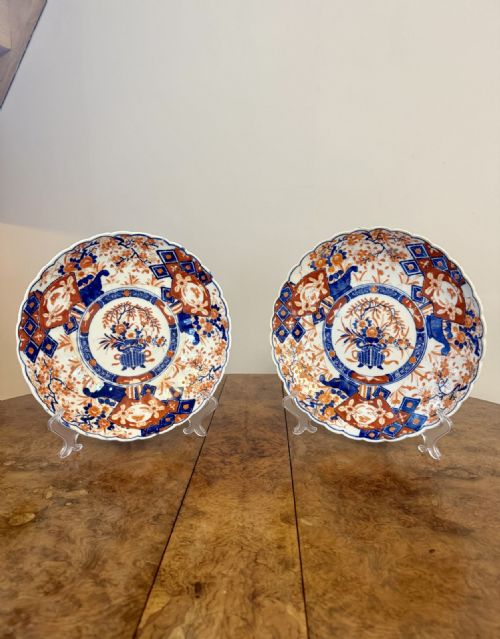


Floral Motif Imari Plate
These floral motif imari plate examples bring rich iron-red and cobalt decoration to a room, offering a traditional aesthetic collectors appreciate.
Floral Motif Imari Plate
A floral motif imari plate brings together traditional ceramic forms with distinctive painted decoration seen across various periods. Buyers examining this page encounter pieces ranging from nineteen-hundreds production to earlier examples.
The selection includes Japanese imari ware alongside Chinese export pieces and Victorian items. Forms vary from scalloped edge plates to chargers and platters.
Dating spans from the eighteenth century Edo period through the nineteenth century up to nineteen-twenty. These items function as decorative dishes and display pieces.
How They Were Made
These items utilise porcelain and ceramic as the primary base materials for shaping plates and chargers. Artisans applied glaze and enamel to create the colourful surface designs.
Gold leaf accents frequently appear alongside cobalt blue and iron-red enamel pigments on the ceramic body. Firing techniques fixed these colours onto the porcelain substrate during production.
Periods represented span from the eighteenth century Edo era through the nineteenth century to nineteen-twenty.
What Varies In Quality
The sophistication of the painted floral motif separates standard decorative dishes from superior examples. Precision in the application of enamel and gold leaf indicates the skill of the original workshop.
Form and shape also influence the standing of a piece, with unusual configurations and scalloped edges demanding closer attention. Age contributes to desirability, particularly when pieces originate from the Edo period.
The Floral Motif Imari Plate Glossary
- Imari
- A style of ceramic decoration originating in Japan, characterised by a palette of cobalt blue, iron-red, and gold. This style heavily influenced export wares.
- Charger
- A large decorative plate used historically for service or display on a sideboard. These pieces measure larger than standard dining plates.
- Edo Period
- A historical division in Japanese history spanning from sixteen-0-three to eighteen-68. Ceramics from this era are particularly sought by collectors.
- Enamel
- Opaque glass fused to the surface of porcelain during secondary firing. This technique provides the vibrant colours found on these plates.
- Tonquin China
- A nineteenth-century designation found in trade records for specific ceramic imports. These dessert plates reflect period manufacturing standards.
Floral Motif Imari Plate: Frequently Asked Questions
What is a floral motif imari plate?
These items are ceramic and porcelain dishes decorated with traditional Japanese or Chinese export designs.
They combine cobalt blue, enamel, and gold leaf in distinct patterns.
How old are these plates typically?
The selection ranges from eighteenth century Edo period pieces to nineteenth and early twentieth century examples.
Most items date around nineteen-hundred or nineteen-twenty.
Were these plates used for dining?
Many larger examples function as chargers and decorative dishes intended for display rather than daily service.
Smaller plates served desserts or functioned as part of larger tableware sets.
How do I identify Edo period pieces?
Dating relies on stylistic markers, materials, and historical attribution recorded in the item details.
Eighteenth century examples show distinct characteristics compared to nineteen-hundreds production.