




Floral Mother of Pearl
Floral mother of pearl pieces combine shimmering iridescent shell with dark lacquered surfaces and carved wood, bringing tactile texture and pattern to interior spaces.
Floral Mother of Pearl
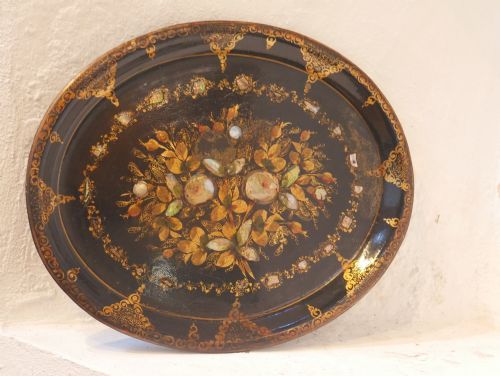
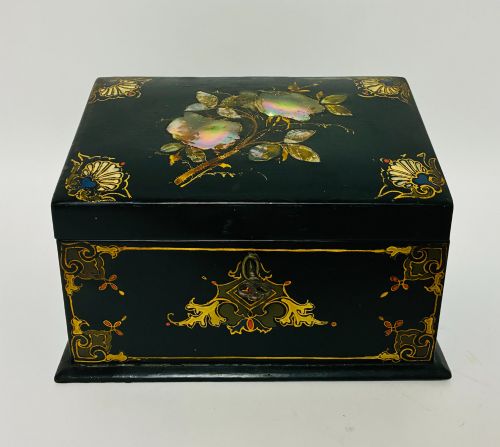
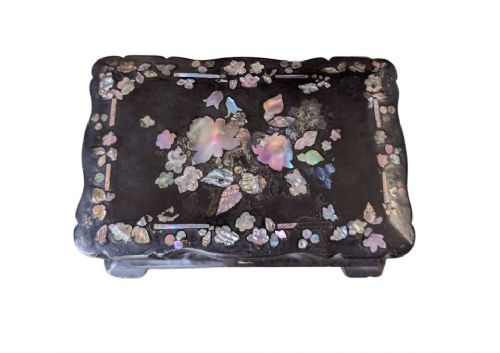
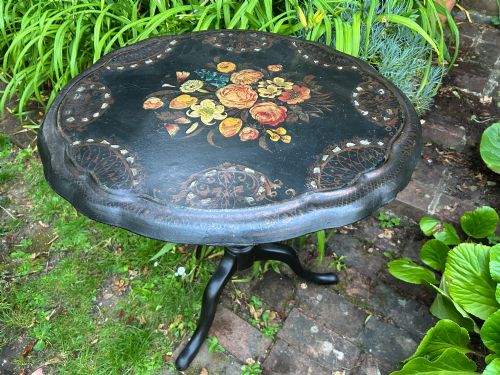
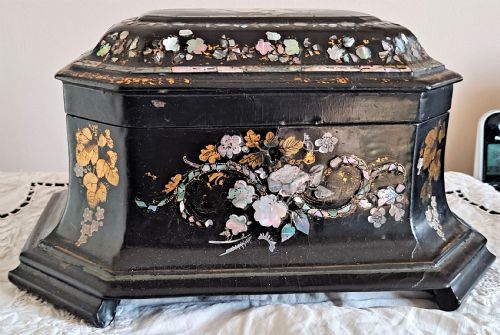
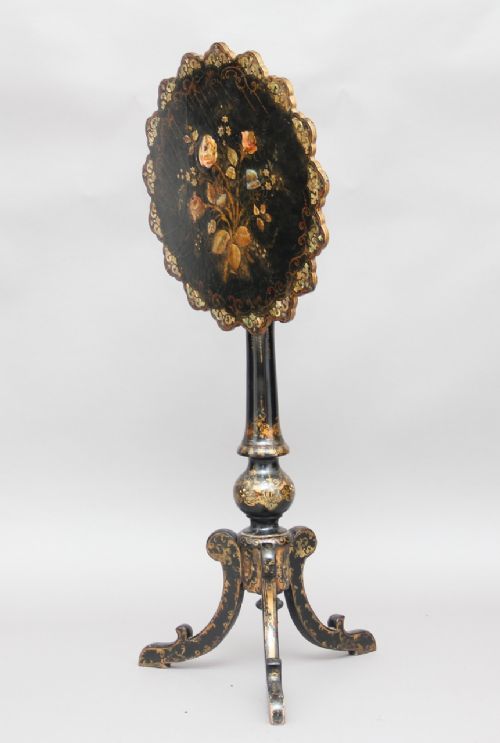
When you search for floral mother of pearl, you encounter nineteenth-century trays, tea caddies, card cases, boxes, and occasional tables. These items frequently display Victorian papier-mâché construction embellished with iridescent shell inlay forming botanical motifs.
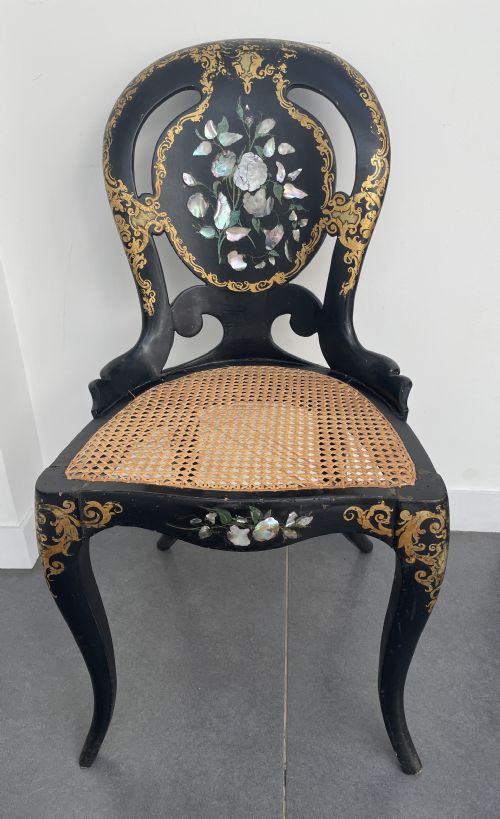
The objects span the nineteenth century, including Victorian pieces alongside examples from the Meiji period, Edwardian era, and Chinese Export workshops. Trays, side chairs, and wine tables dominate the selection, often finished with lacquer or gilt details.
Materials and construction
Maker utilise papier-mâché, lacquer, and wood as foundations, applying mother of pearl shell cut thin for inlay. Brass, gold leaf, and tortoise-shell appear alongside the shell elements to build contrast and structure.
Surface decoration involves hand-applied lacquer finished with engraved or painted botanical details. Shell sections sit flush into the prepared ground, secured with adhesives and finished to a smooth polish.
Judging quality and execution
Execution separates standard utility items from finer studio output, visible in the precision of the shell cutting and the depth of the lacquer. Hand-engraved detail on the mother of pearl indicates higher artisan involvement than plain glued segments.
The structural integrity of the papier-mâché or timber foundation dictates longevity. Surviving items retain stable lacquer coats without extensive crazing, and inlay remains secure within the surrounding material.
The Floral Mother of Pearl Glossary
- Papier-mâché
- A composite material made from paper pulp or layers of paper mixed with glue, pressed and dried into sturdy forms for furniture and boxes. It provides a smooth surface for dark lacquer and shell inlay.
- Mother of pearl
- The iridescent inner layer of certain mollusc shells, utilised for decorative inlay across nineteenth-century boxes, trays, and card cases. It reflects light in shifting tones of pink, green, and silver.
- Shibayama
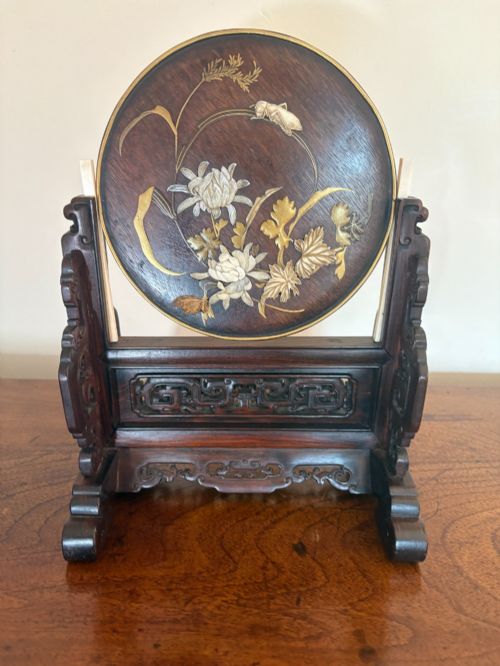
- A decorative technique originating in Japan involving delicate inlays of ivory, shell, and coral set into wood or lacquer grounds. It appears on table screens and decorative objects.
- Tea caddy
- A lidded container designed for storing loose tea leaves securely, often fitted with internal compartments. Nineteenth-century examples utilise papier-mâché and mother of pearl decoration.
Floral Mother of Pearl: Frequently Asked Questions
What is papier-mâché?
Papier-mâché is a durable composite material formed from paper pulp or layered sheets bound with glue and pressed into moulds. Makers used it to create light yet rigid trays, tables, and boxes.
Once dried and shaped, the material accepted dark lacquered finishes and inlaid mother of pearl decoration effectively.
How are these pieces dated?
Dating relies on construction methods, material choices, and stylistic markers recorded across nineteenth-century examples. Victorian papier-mâché objects often exhibit specific floral inlay patterns typical of the period.
Archive records and comparative pieces help narrow down manufacture to specific decades like the eighteen-fifties or eighteen-eighties.
Where were these items made?
Production locations include English workshops, particularly in Birmingham, alongside Japanese Meiji period makers and Chinese Export centres. Each region applied distinct lacquering and inlay techniques.
English pieces frequently feature papier-mâché trays and tea caddies, while Asian workshops produced carved hardwood stands and table screens.
How do I care for lacquer?
Lacquer surfaces require gentle maintenance away from direct sunlight and excessive moisture. Dusting with a soft, dry cloth preserves the polished finish without scratching the material.
Avoid chemical polishes and liquid cleaners that can damage the underlying layers and loosen the mother of pearl inlay.