

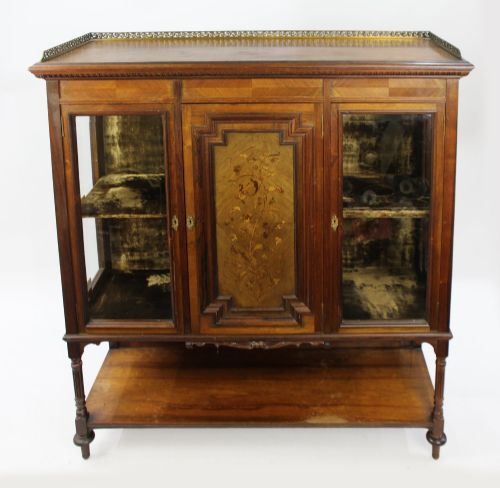


Floral Marquetry Shelf
These floral marquetry shelf pieces are decorative wooden furnishings bearing intricate inlaid botanical designs, offering refined display space for the home.
Floral Marquetry Shelf
A floral marquetry shelf brings detailed inlaid botanical decoration to domestic interiors through various forms. Buyers searching for a floral marquetry shelf will find tiered etageres, corner whatnot units, tabletop display stands, and plate or delft racks.
The pieces recorded span the nineteenth century, including Victorian and Edwardian examples alongside French Napoleon III designs. Rosewood and walnut provide the primary foundations for these decorative display surfaces.
French revival styles and nineteenth century tastes dominate the forms available. These pieces function primarily as decorative furniture designed to hold small ornaments, clocks, and collectibles.
Materials and construction
Craftsmen built these pieces using dense hardwoods such as rosewood, walnut, and mahogany as structural foundations. Satinwood and other pale timbers provided contrasting tones for the intricate floral marquetry inlay work.
Metal mounts in brass and ormolu often accented the corners, edges, and feet of the furniture. Selected clock forms integrated glass panels and specialised movement components alongside the wooden cases.
Floral Marquetry Shelf Retail Price Guide 2026
Typical asking prices for floral marquetry shelf among the pieces listed under this phrase on Sellingantiques today, from the lower quarter to the upper quarter. They describe what is for sale here now, not the wider market.
Several Victorian clock cases display inlaid poppies alongside thermometers.
Assessing quality
The refinement of the marquetry cutting and the variety of contrasting timbers determine the visual success of the piece. Crisp botanical detailing and balanced composition separate standard examples from superior works.
The integration of cast brass or ormolu mounts and the selection of cabinet timbers such as figured rosewood influence the overall character. Original structural integrity and well-preserved surface polishes maintain the distinction of better examples.
Henry Marc·Savory and Fils A Paris·Malecot of Paris
The Floral Marquetry Shelf Glossary
- Marquetry inlay
- The technique of applying small pieces of veneer to a structure to form decorative patterns. This method creates the floral designs seen across the surfaces.
- Etagere
- A set of open shelves for displaying small objects. These tiered units provide multiple surfaces within a compact footprint.
- Ormolu
- Gilded bronze mounts applied to furniture. This material decorates the edges and feet of French nineteenth-century pieces.
- Whatnot
- A piece of furniture consisting of shelves for books or ornaments. These multi-tiered stands include corner variations.
- Satinwood
- A durable tropical timber with a lustrous yellowish sheen. Cabinetmakers utilised this wood for contrasting details in inlay work.
Floral Marquetry Shelf: Frequently Asked Questions
What is a floral marquetry shelf?
A floral marquetry shelf is a piece of wooden furniture featuring detailed inlaid botanical designs made from contrasting wood veneers. These items serve as decorative display surfaces for small decorative objects.
The selection includes multi-tiered etageres, corner whatnots, tabletop stands, and wall-mounted plate racks dating from the nineteenth and early twentieth centuries.
How were these pieces used?
Historical interiors utilised these furnishings for displaying ornamental items, clocks, and collected curiosities in reception rooms and parlours. Tiered designs allowed multiple objects to be shown within a compact area.
Corner units and wall racks made efficient use of domestic space while adding decorative warmth through wood veneers and brass mounts.
What woods are commonly found?
Rosewood and walnut form the primary cabinet timbers for the majority of these surviving decorative furnishings. Mahogany also appears across specific nineteenth-century pieces.
Satinwood provides the lighter contrasting tones required for the intricate floral inlay work and botanical motifs.
How do I identify French styles?
French nineteenth-century and Napoleon III pieces typically incorporate rich rosewood grounds combined with cast ormolu or brass mounts. The aesthetic leans towards revival styles influenced by eighteenth-century cabinetmaking traditions.
Makers working in Paris during this period frequently signed clock movements or incorporated distinct regional decorative details.