



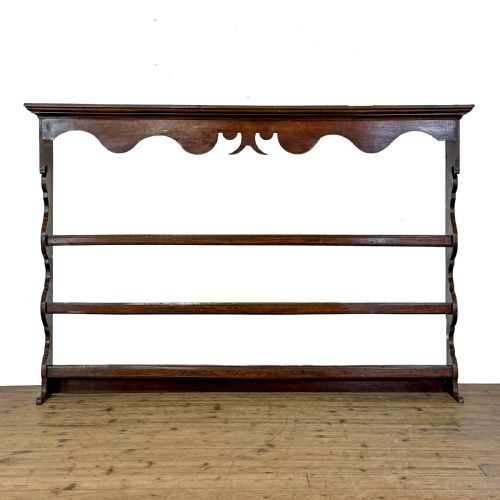
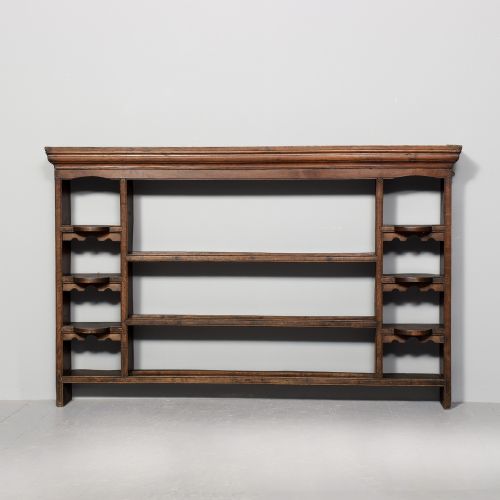


Traditional Wall Plate Rack
A traditional wall plate rack organises domestic crockery on a wall, bringing historical character and practical storage to any room.
Traditional Wall Plate Rack
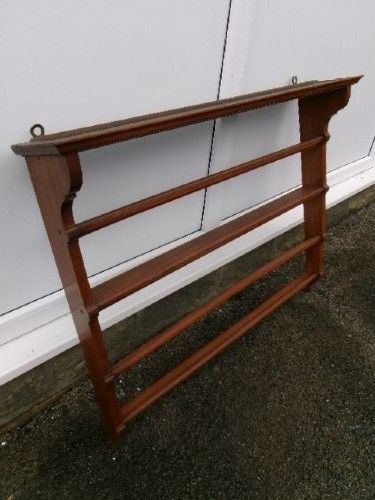
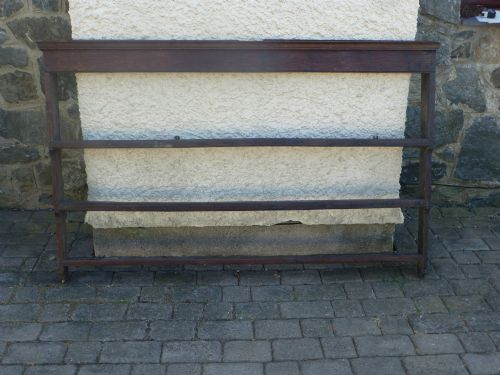
A traditional wall plate rack is a wall-mounted piece designed to display and store plates securely upright. These pieces serve as both functional kitchen storage and decorative furniture, keeping crockery accessible.
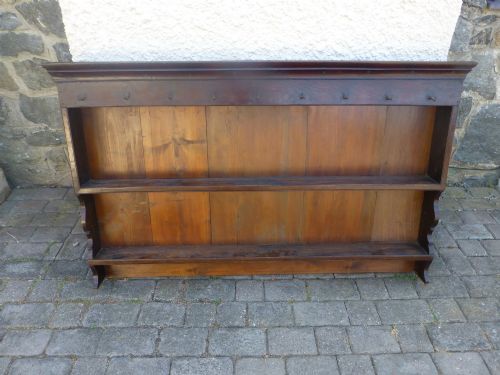
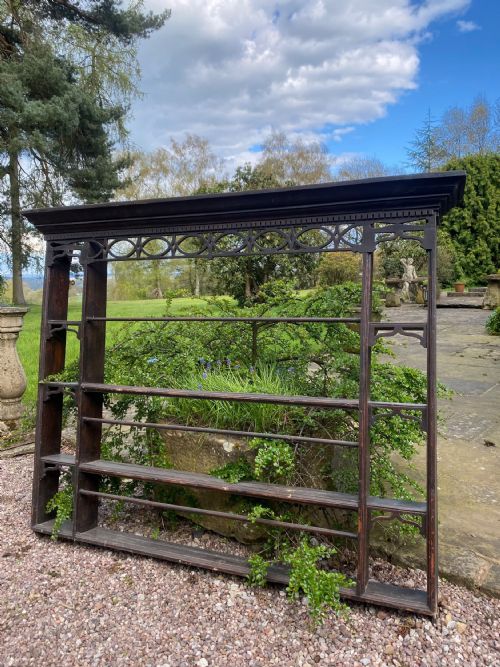
The selections available here mostly span the eighteenth and nineteenth centuries, originating from Georgian and Victorian periods. Forms range from simple open pine shelves to substantial oak dresser racks and marquetry examples.
Materials and construction methods
Carpenters constructed these racks predominantly using solid timbers such as oak, mahogany, pine, walnut, and cherry wood. Joinery techniques relied on traditional pegged joints and housing dadoes to support the weight of heavy ceramic plates.
Surface finishes include natural wax polish on hardwoods and occasional marquetry inlay work on decorative nineteenth-century examples. Iron fixings and metal brackets provide structural stability for wall mounting.
Traditional Wall Plate Rack Retail Price Guide 2026
Typical asking prices for traditional wall plate rack among the pieces listed under this phrase on Sellingantiques today, from the lower quarter to the upper quarter. They describe what is for sale here now, not the wider market.
Some eighteen-century rack owners deliberately angled their shelves forward slightly to prevent valuable porcelain sliding out during lively rural dinner parties.
Assessing quality and craftsmanship
Quality in a traditional wall plate rack is determined by the selection of timber and the fineness of the joinery. Superior examples feature well-figured oak or mahogany boards with minimal replacement timbers.
The proportion of the mouldings and the retention of original backboards distinguish finer vernacular pieces from simpler utility shelving. Age-related patina and depth of surface colour also define the desirability of earlier eighteenth-century items.
The Traditional Wall Plate Rack Glossary
- Delft rack
- A specialised wall-mounted shelving unit designed specifically to display tin-glazed earthenware plates.
- Dresser rack
- The upper section of a kitchen dresser that has been adapted or built for wall hanging.
- Marquetry
- Decorative veneer work inlaid into timber surfaces to form geometric or floral patterns.
- Vernacular furniture
- Domestic items made by local craftsmen using regional materials and traditional local styles.
Traditional Wall Plate Rack: Frequently Asked Questions
How do I hang a heavy plate rack?
Wall racks require secure fixing directly into masonry or wall studs using heavy-duty brackets. The weight of stacked ceramic plates demands robust wall anchors.
Professional installation ensures the wooden frame remains stable and safe under a full load of crockery.
What is the difference between oak and pine racks?
Oak examples are harder, denser, and were traditionally used in wealthier homes or formal farmhouse settings. Pine versions offer a lighter weight and softer grain, typical of simpler country utility pieces.
Both woods develop a distinct patina over centuries of domestic use.
Can these racks hold modern plates?
Older plate racks were built for specific historical plate depths and thicknesses. Modern heavy dinnerware might sit differently in older vertical slots.
Checking the depth of the plate grooves ensures your specific dinner service fits securely.
How do I clean an antique rack?
Dusting with a dry, soft cloth preserves the historic wax finish and accumulated patina. Avoid modern chemical cleaners or excessive moisture on unsealed timber.
Applying a traditional beeswax polish occasionally helps nourish dry historical wood.