



Floral Marquetry Secretaire
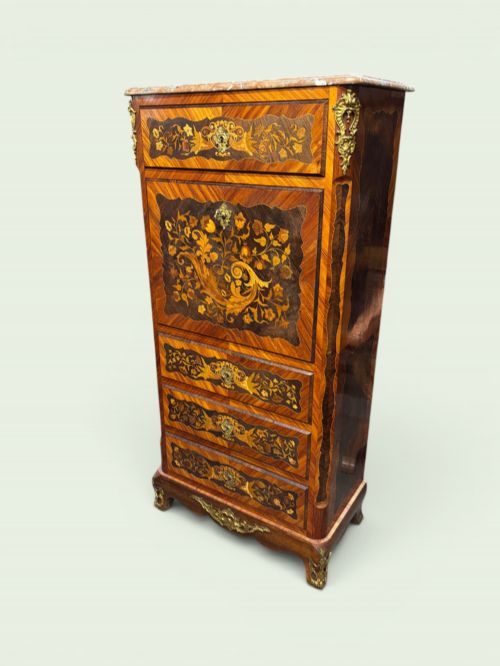
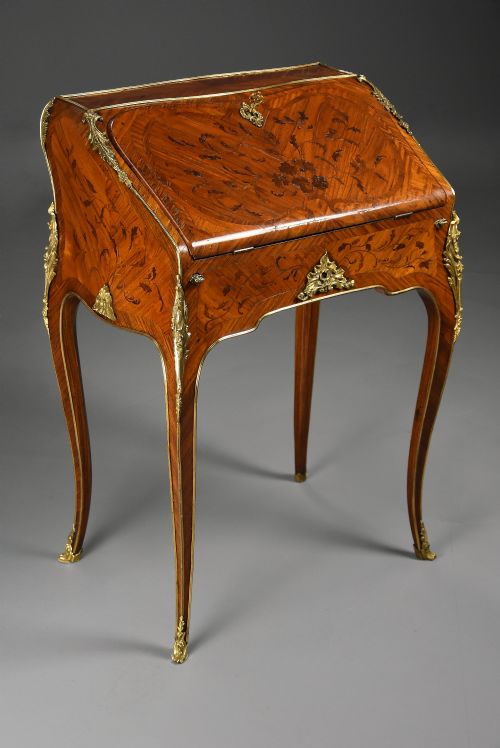
These floral marquetry secretaire pieces combine concealed writing desks with intricate timber picture panels, offering both hidden utility and decorative presence.
Floral Marquetry Secretaire
A floral marquetry secretaire is a form of writing furniture distinguished by a drop-front or drawer-contained writing surface decorated with detailed wood inlay flower patterns. These pieces range from upright secretaire cabinets and abattants to compact slope-front bureaux and chests of drawers.
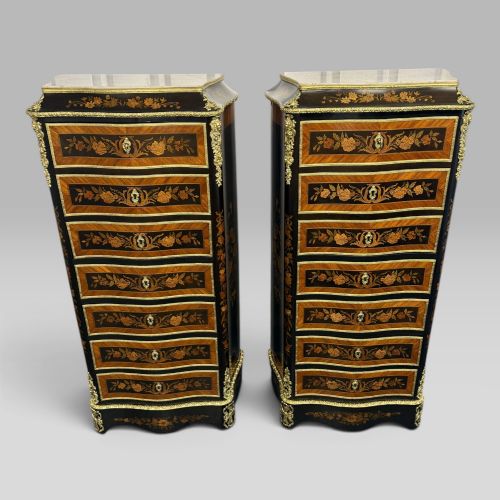
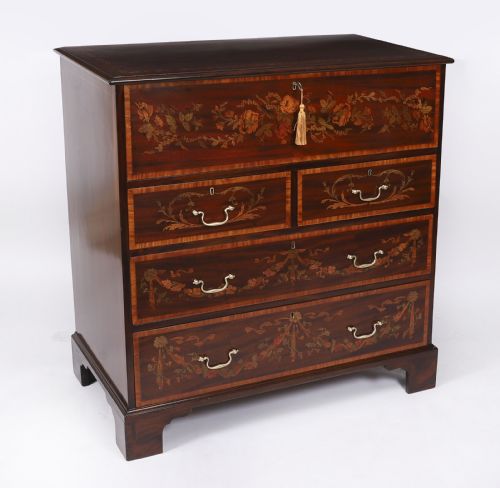
The selections span distinct periods and regional tastes, from mid-eighteenth-century Dutch and French examples to nineteenth-century revivals including Napoleon III, Louis XV, and Georgian styles. Buyers frequently encounter nineteenth-century French and Dutch interpretations alongside earlier mid-eighteenth-century forms.
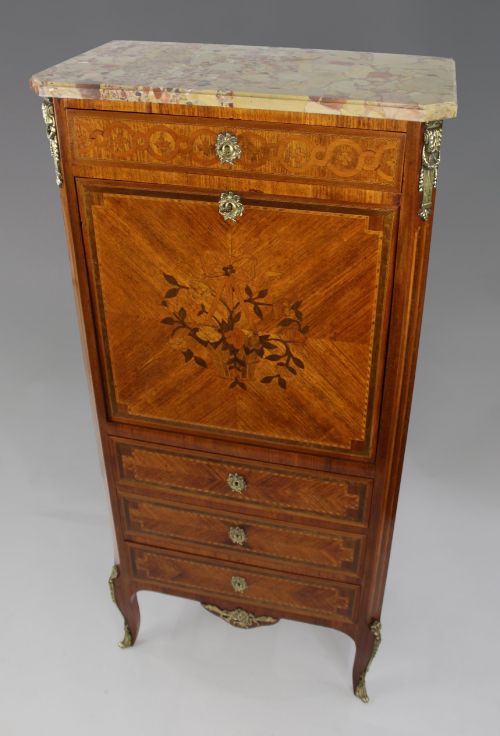
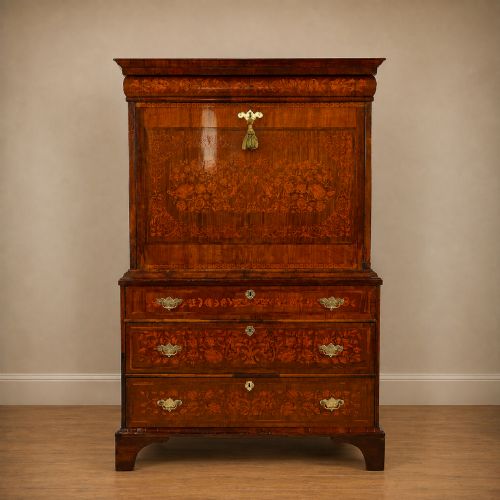
Object types include Escritoires, Secretaire Cabinets, and Bureaux, each designed to conceal writing compartments behind intricate floral wood veneers. The combination of floral imagery and practical writing furniture defines the category across all recorded periods.
Materials and construction methods
Cabinetmakers utilised exotic and domestic hardwoods such as kingwood, tulipwood, walnut, rosewood, and mahogany as the structural and veneer bases for these cabinets. Thin slices of contrasting timber were hand-cut and fitted together to form elaborate floral pictorial designs across the writing surfaces and drop fronts.
Metal mounts in ormolu and gilt bronze frequently frame the marquetry panels, particularly on French revival pieces, while marble tops provide durable working or display surfaces. Brass hardware secures the interior drawers and drop-front mechanisms within the carcase.
Floral Marquetry Secretaire Retail Price Guide 2026
Typical asking prices for floral marquetry secretaire among the pieces listed under this phrase on Sellingantiques today, from the lower quarter to the upper quarter. They describe what is for sale here now, not the wider market.
Hidden drawers inside these secretaires often required secret release springs to access miniature compartments for private letters.
Factors determining quality
The intricacy and precision of the wood inlay define the visual success of each piece, distinguishing simple repeating motifs from complex, shaded floral compositions. The choice of contrasting timbers, such as kingwood and tulipwood against darker walnut or rosewood grounds, dictates the depth of the floral imagery.
The integration of structural hardware, including cast ormolu mounts and original marble tops, separates standard production from finer cabinetwork. Superior execution is evident in the seamless alignment of the drop-front mechanism with the surrounding floral marquetry panels.
BVRB
The Floral Marquetry Secretaire Glossary
- Marquetry
- A technique where small pieces of tinted and natural wood veneer are assembled to create pictorial patterns or floral designs on furniture surfaces. This method requires precise cutting and fitting of diverse timbers.
- Secretaire a abattant
- An upright cabinet featuring a hinged fall-front writing panel that conceals a fitted interior of small drawers and pigeonholes. When closed, the panel presents a flat decorated surface.
- Ormolu
- Gilt bronze mounts applied to furniture edges, corners, and key escutcheons for decorative and protective purposes. These metal elements were cast and chased before gilding.
- Escritoire
- A writing desk or cabinet designed for correspondence and storage, often incorporating multiple small internal compartments. The term encompasses various desk forms with writing flaps.
- Kingwood
- A dense, richly figured timber featuring dark violet-brown tones with lighter golden streaks, utilised extensively in eighteenth and nineteenth-century veneer work. It provides strong contrast in floral marquetry compositions.
Floral Marquetry Secretaire: Frequently Asked Questions
What is a floral marquetry secretaire?
A floral marquetry secretaire is a piece of writing furniture featuring detailed wood veneer inlay depicting flowers on the exterior surfaces and a concealed writing compartment within.
These cabinets combine practical desk space with decorative wood panels, utilising forms such as the upright abattant or slope-front bureau.
How do I identify the period?
Period identification relies on combining the underlying furniture style, such as French Rococo Revival or Georgian, with the timber choices and construction methods recorded for the piece.
Nineteenth-century revival pieces often incorporate specific regional traits, distinguishing them from mid-eighteenth-century originals.
Where were these cabinets made?
These cabinets originate primarily from French and Dutch workshops, reflecting distinct regional approaches to floral veneer work and cabinet design during the eighteenth and nineteenth centuries.
French pieces frequently feature ormolu mounts and marble tops, while Dutch examples emphasise extensive floral coverage across the entire carcase.
How should I care for the wood surface?
Maintenance involves protecting the veneer from direct sunlight and extreme humidity fluctuations to prevent timber movement and lifting of the marquetry elements.
Regular gentle dusting preserves the polished finish of hardwoods like kingwood, rosewood, and walnut without damaging the inlaid floral details.