

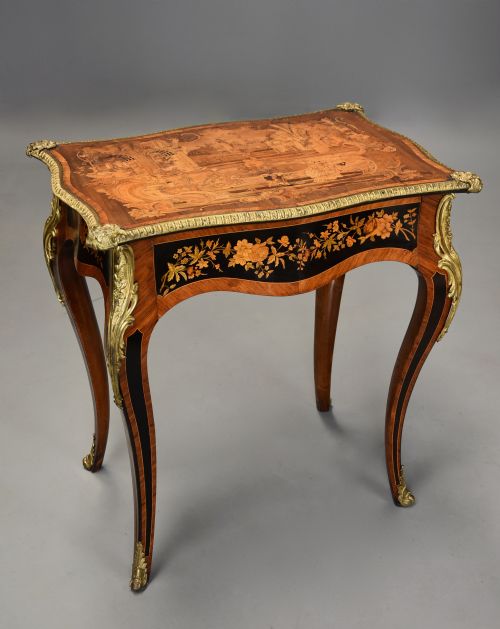

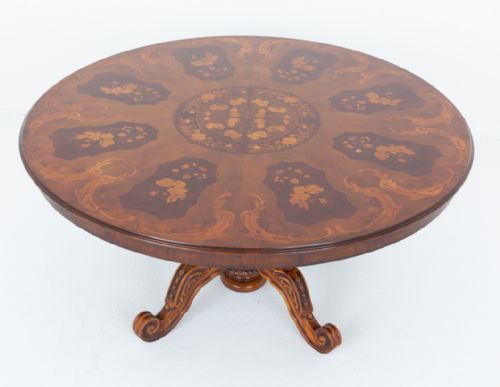


Floral Marquetry Centre Table
A floral marquetry centre table brings intricate floral veneers to the middle of a room, combining fine cabinetmaking with decorative impact.
Floral Marquetry Centre Table
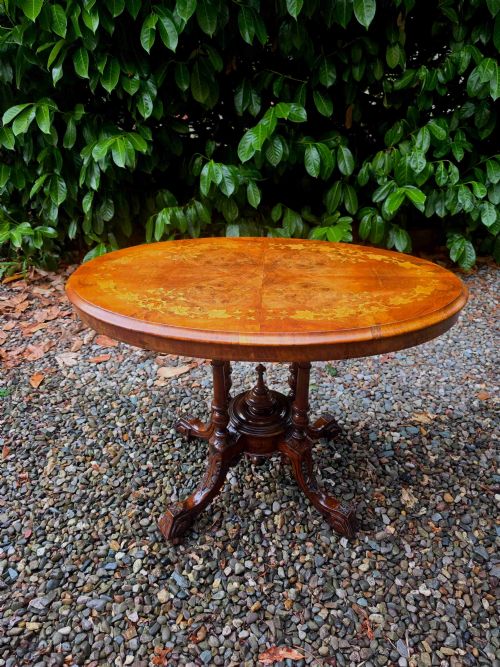
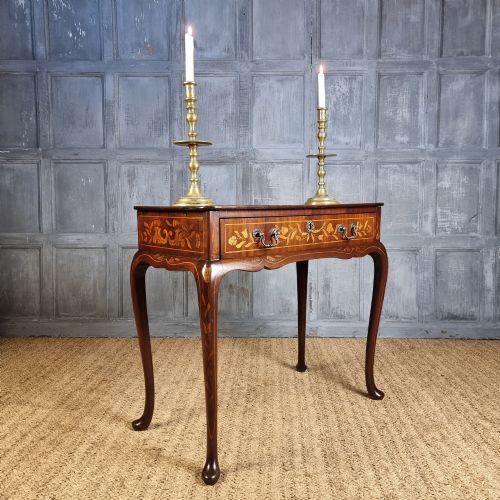
A floral marquetry centre table is a freestanding piece designed to sit in the middle of a room rather than against a wall. The form appears primarily across the nineteenth century, including Victorian examples alongside earlier eighteenth-century pieces.
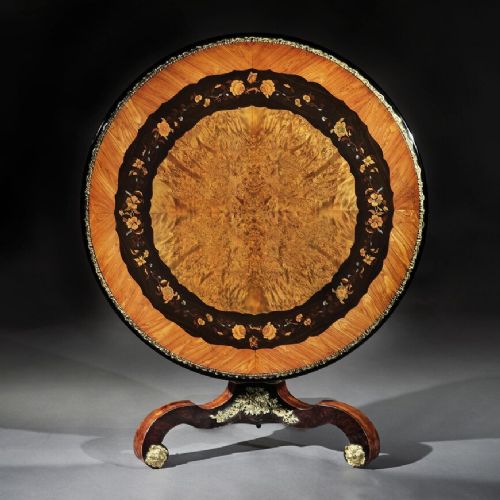
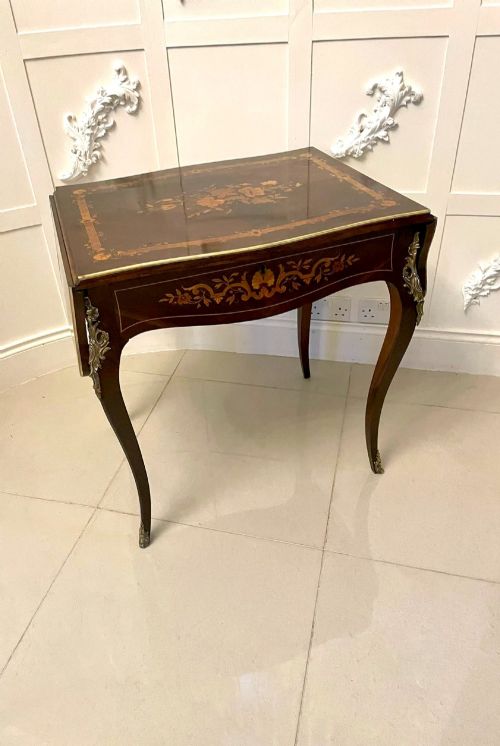
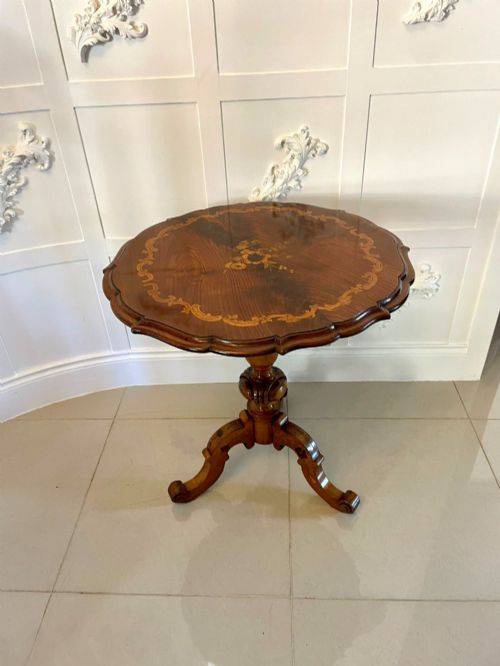
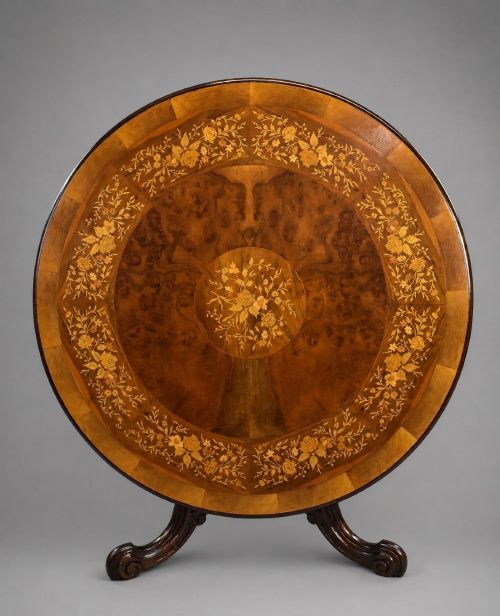
Most pieces met here are Victorian burr walnut, walnut, or rosewood tables decorated with floral inlay. They range from small round breakfast and lamp tables to large dining and occasional forms.
How They Were Made
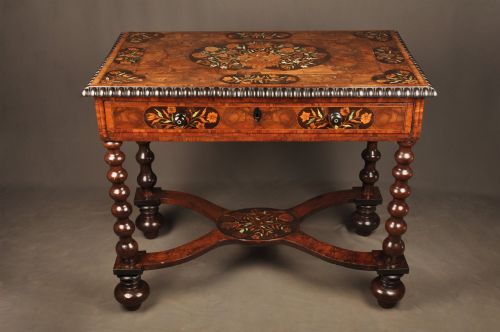
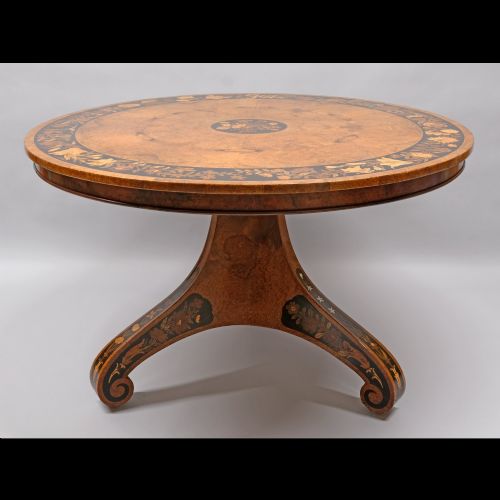
Cabinetmakers constructed these tables using a hardwood carcase of walnut, burr walnut, rosewood, or kingwood, veneered with contrasting fruitwood, satinwood, and sycamore to form floral marquetry patterns.
Many French and English pieces incorporate cast or gilt ormolu mounts and brass details to edge the tops and highlight the cabriole legs of Louis XV and XVI revival styles.
Listings span from the seventeenth century through the Victorian era, utilising walnut, rosewood, kingwood, and ormolu.
What Varies in Quality
Quality rests in the precision of the veneer work and the depth of the floral detailing across the top. Finely executed pieces display varied natural tones within the fruitwood leaves and petals rather than flat staining.
The choice of primary timber influences the character, with burr walnut and exhibition-grade kingwood showing superior figuring. Ormolu mounts on finer examples are crisply chased rather than simply cast.
Edward Holmes Baldock·Jackson and Graham
The Floral Marquetry Centre Table Glossary
- Marquetry inlay
- The art of applying decorative pieces of veneer to a structural carcase to form floral or geometric pictures. It differs from simple inlay by assembling the entire design as a sheet before gluing.
- Ormolu
- Gilded bronze mounts applied to the feet, aprons, and legs of furniture. The technique was particularly popular on French revival pieces.
- Burr walnut
- Timber taken from the wart or burl of a walnut tree, yielding highly swirled and knotted grain patterns. It provides a rich background for floral table tops.
- Centre table
- A freestanding table finished on all sides so it can stand in the middle of an interior space. These serve variously as occasional, writing, or breakfast tables.
Floral Marquetry Centre Table: Frequently Asked Questions
Where should a centre table go?
These tables are designed to stand free in the middle of a room, allowing the floral marquetry top to be seen from all sides.
They function well in large hallways, drawing rooms, or as large lamp tables.
How do I identify the period?
Periods are identified through timber choice, leg shape, and decorative style, such as Victorian burr walnut or French Louis XV revival.
Nineteenth-century examples frequently combine walnut carcases with elaborate floral veneers and ormolu mounts.
What is the difference between marquetry and inlay?
Marquetry assembles a complete pictorial veneer of various woods before applying it to the surface. Inlay involves cutting recesses directly into solid timber to insert decorative pieces.
Floral table tops on these pieces use marquetry techniques.
Can these tables be used for dining?
Certain larger examples function as breakfast or dining tables, while others serve as occasional or writing tables.
Round and octagonal variants provide flexible surface space depending on their diameter.