
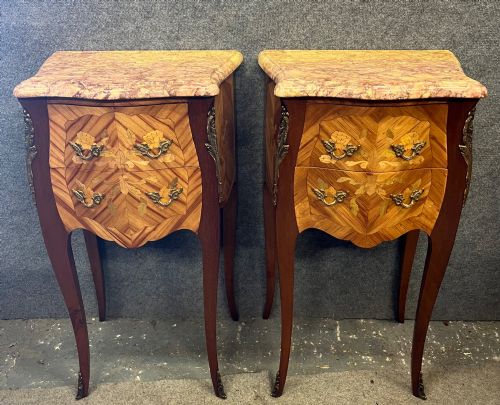


Floral Inlay Lamp Tables
Floral inlay lamp tables bring warmth to a room through intricate timber work and compact proportions.
Floral Inlay Lamp Tables
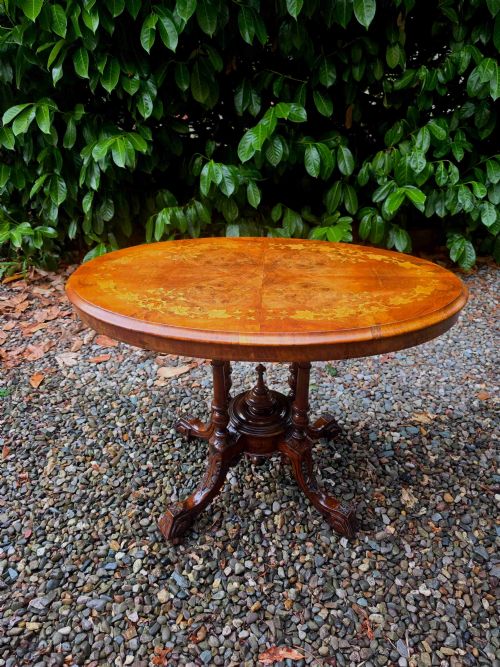
Floral inlay lamp tables are small occasional surfaces decorated with botanical marquetry, designed to hold lighting or sit beside seating. These pieces span from the mid-nineteenth century through the Edwardian era and into the early twentieth century.
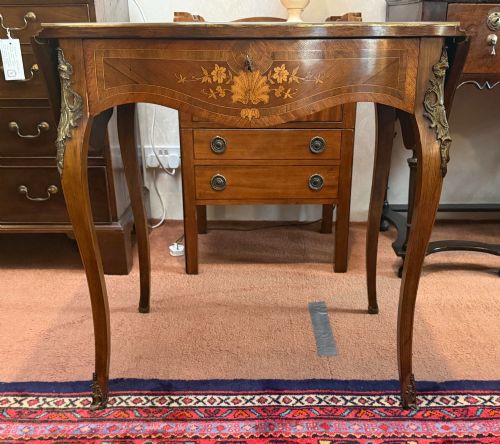
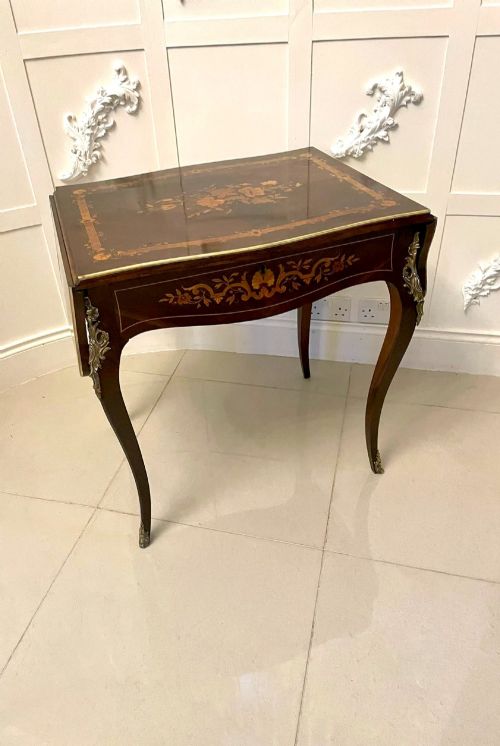
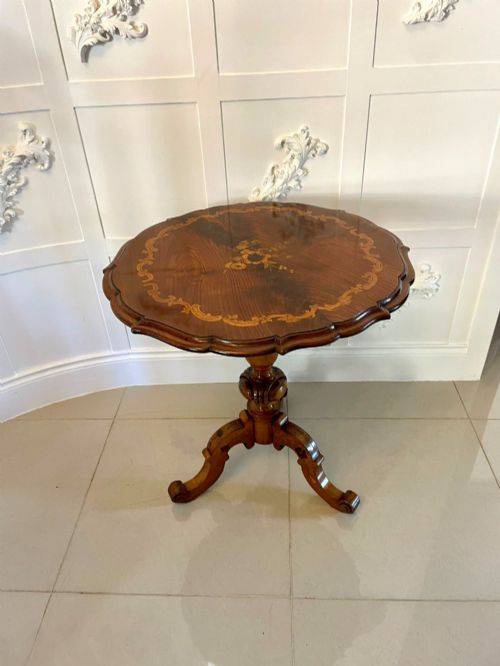
The version most commonly met on this page is the Victorian or Edwardian walnut or rosewood table, often featuring French styling such as Louis XV Revival forms. They appear as round, oval, kidney-shaped or occasional tables with delicate floral patterns worked into the timber top.
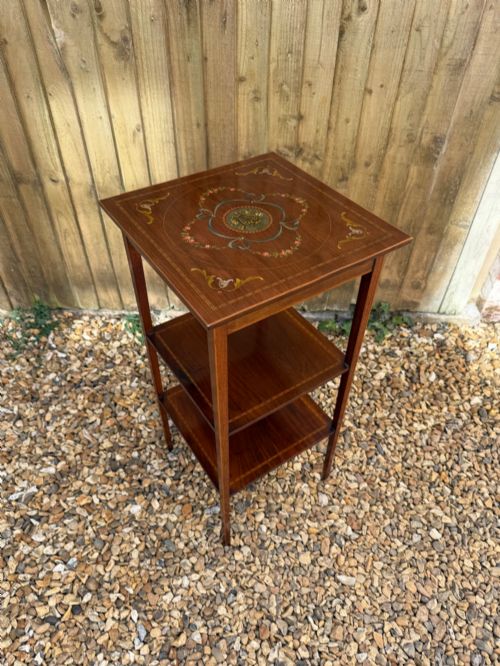
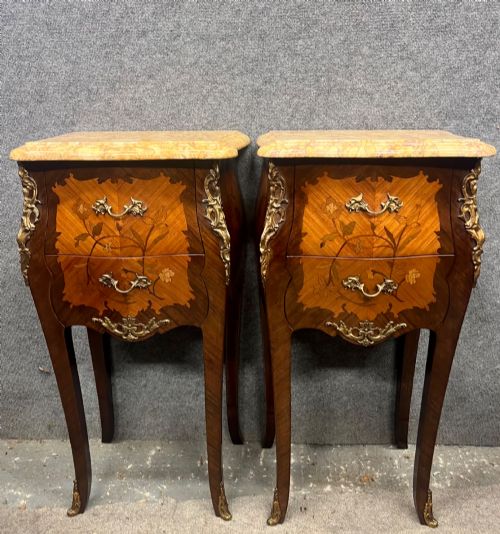
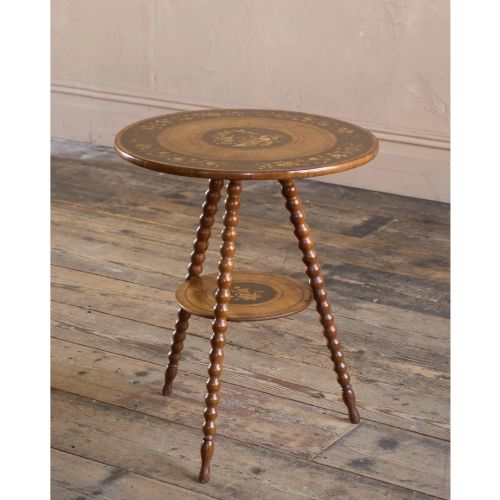
Makers utilised various secondary forms too, including bedside chests and two-tier occasional tables, ensuring a selection of compact formats suitable for modern living spaces.
Materials and construction
Cabinet makers constructed these pieces using dense hardwoods like walnut, rosewood, mahogany and burr walnut as foundations. They applied contrasting timbers, bone or satinwood to create detailed floral marquetry panels across the table tops.
Mounts in ormolu and brass frequently accent the legs and edges, particularly on pieces influenced by French design. Ebonised finishes and painted surfaces also appear alongside the natural wood grains.
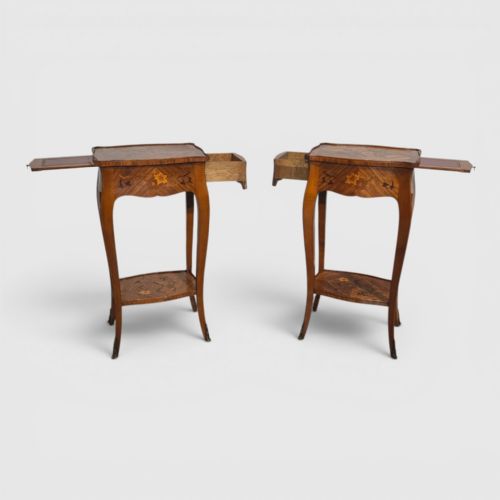
Selected tables incorporate hidden writing surfaces and card game compartments, proving that compact furniture once needed to host secret correspondence.
Distinctions in quality
The refinement of the marquetry work marks the primary division between standard pieces and the finest examples. Crisp lines within the floral motifs and a careful selection of varied timber grains demonstrate superior craftsmanship.
Secondary detailing such as marble tops, intricate brass or ormolu mounts and well-figured burr walnut veneers separate exceptional pieces from simpler utilitarian tables.
The Floral Inlay Lamp Tables Glossary
- Marquetry
- Decorative veneer work arranged in pictorial patterns such as floral designs across a surface. This technique requires precise cutting of different wood species to fit together seamlessly.
- Ormolu
- Gilded bronze mounts applied to furniture edges and legs for ornamentation. It provides a metallic contrast to the dark rosewood and walnut timbers.
- Burr walnut
- Timber taken from the warted growth on a walnut tree, yielding highly figured swirls. Cabinet makers prized it for creating richly patterned table tops.
- Kidney shaped
- A curved, asymmetrical form popular in Edwardian and Victorian side tables. The shape allows the piece to fit neatly against upholstery or in tight corners.
- Etagere
- A small multi-tiered stand used for display or as a side table. It offers extra surface levels within a compact footprint.
Floral Inlay Lamp Tables: Frequently Asked Questions
Where should I place a lamp table?
These tables suit placement beside sofas, armchairs or beds where surface space is needed for lighting. Their compact sizes allow them to fit into hallways and smaller corners without crowding the room.
Because many feature decorated tops on all sides, they work well as freestanding centre tables where the floral inlay remains fully visible.
How do I care for antique marquetry?
Keep wooden surfaces away from direct sunlight and strong heat sources to prevent the veneers and inlaid sections from drying out. Regular dusting with a soft, dry cloth preserves the polished finish.
Apply a microcrystalline wax occasionally to nourish the timber and protect the delicate marquetry work from moisture.
Are these tables sturdy enough for daily use?
Most pieces are built from solid hardwoods like mahogany and walnut, making them durable for holding lamps and small items. Their lighter occasional frames mean they are best kept out of heavy traffic areas to avoid knocks.
Care should be taken when moving them, lifting rather than dragging them across floors to protect the slender legs and joinery.
How can I tell Victorian from Edwardian pieces?
Victorian tables often display rich burr walnut or rosewood with dense, dark finishes and heavier floral marquetry. They frequently incorporate Revival styles influenced by French furniture.
Edwardian examples tend to feature lighter satinwood, mahogany or rosewood timbers with airier proportions and more delicate drop-leaf or two-tier structures.