


Floral Inlay Furniture
Floral inlay furniture brings complex botanical patterns into everyday rooms through centuries-old woodworking traditions.
Floral Inlay Furniture
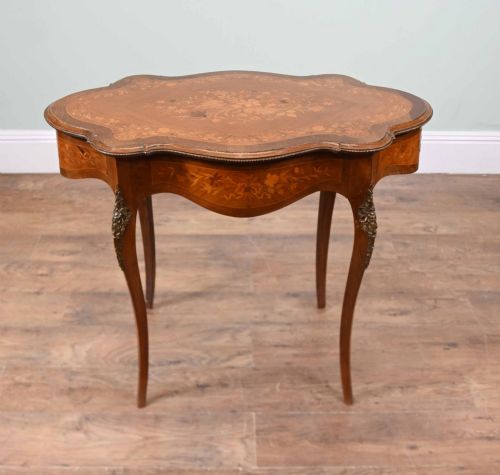
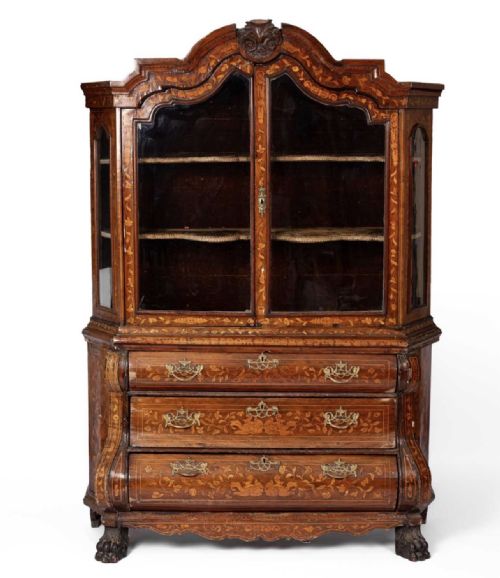
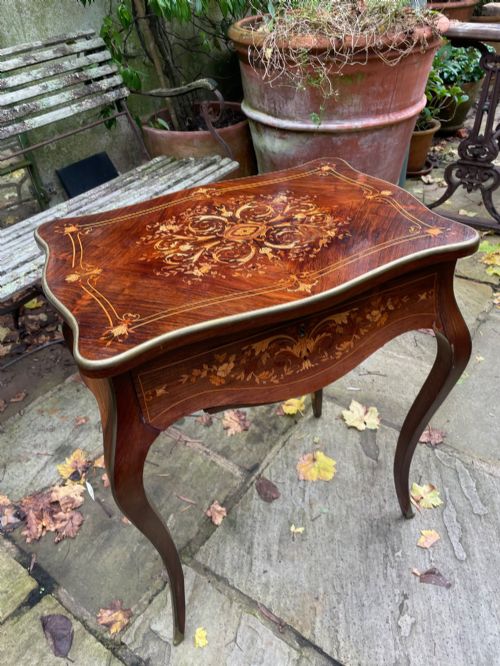
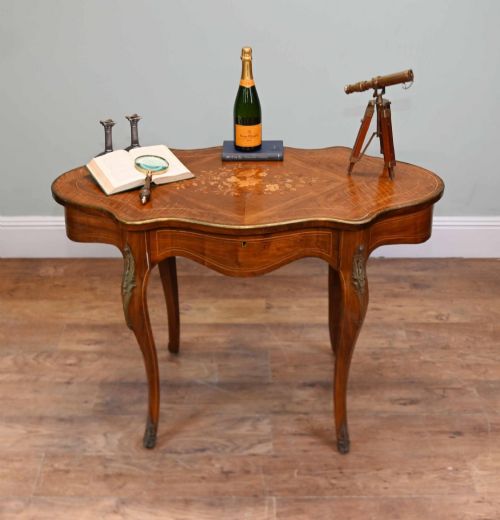
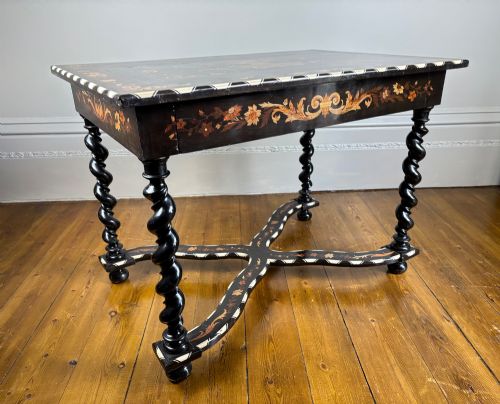
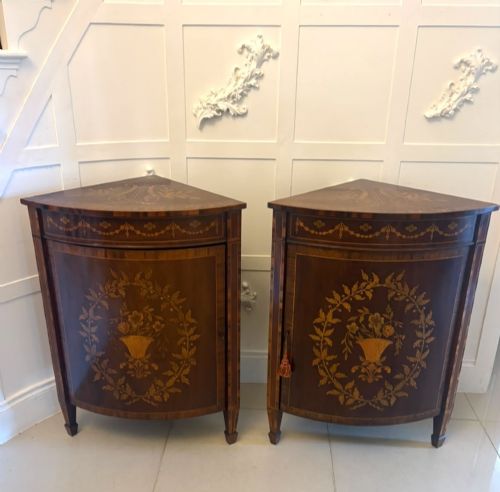
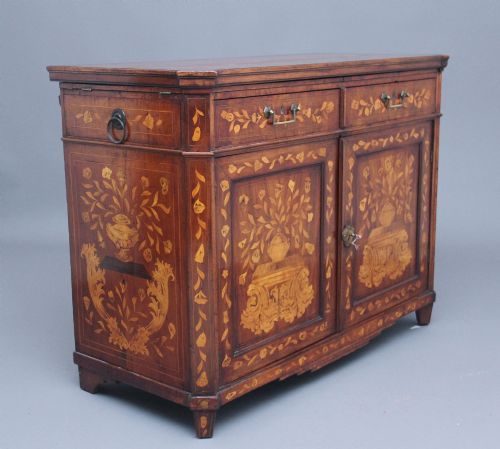
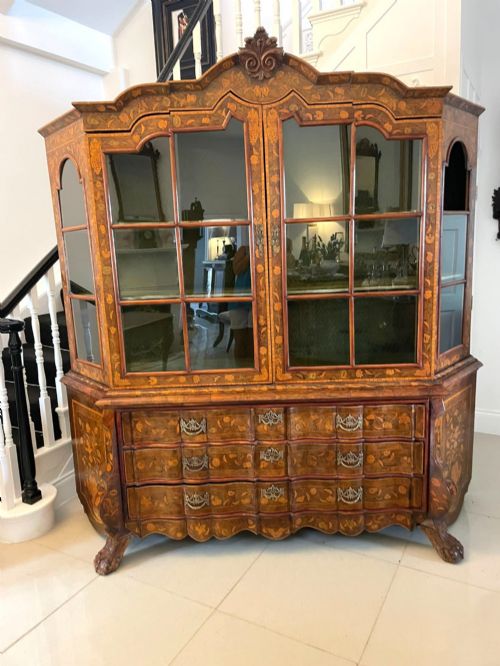
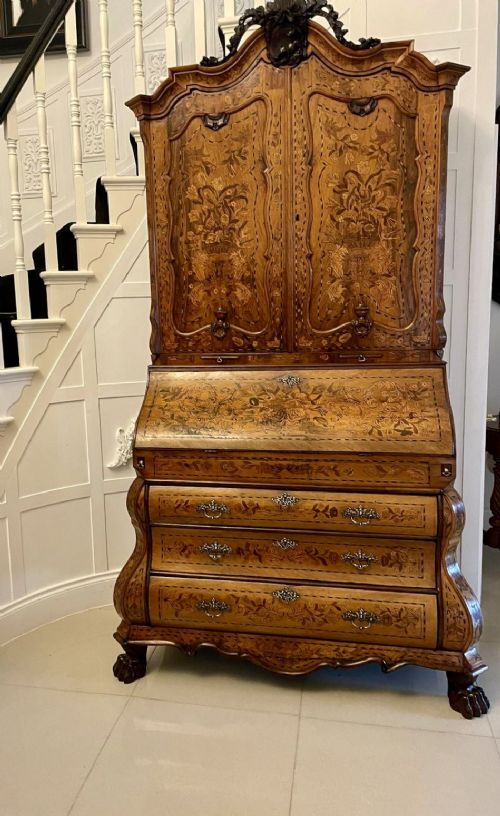
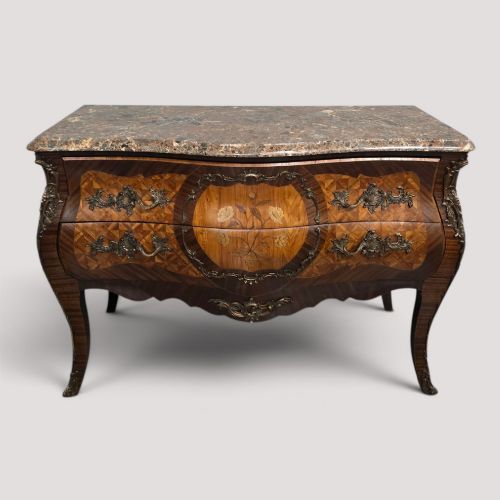
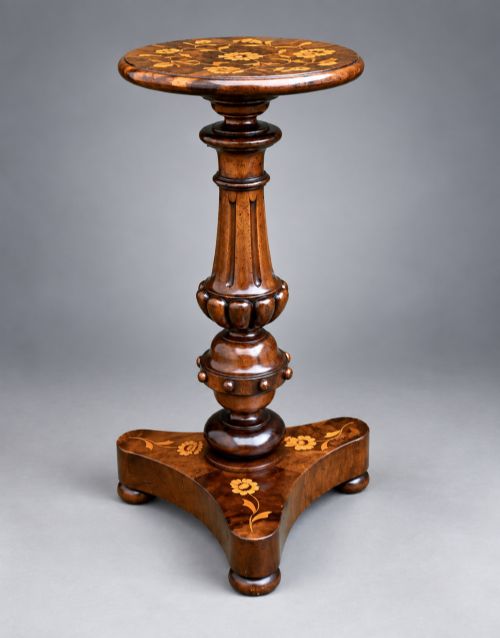
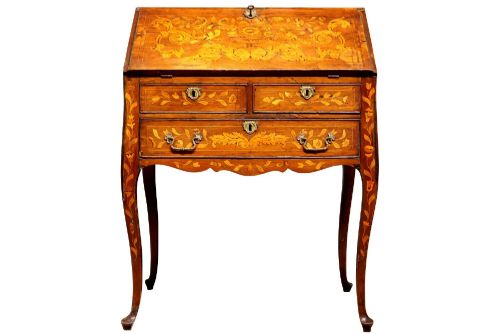
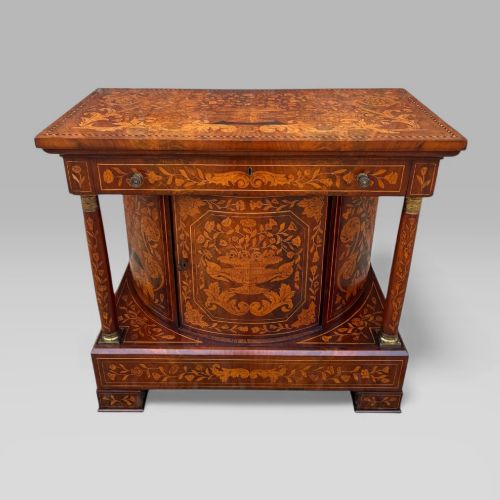
Floral inlay furniture encompasses chests of drawers, cabinets, side tables, and occasional tables originating from various periods including the 18th century and 19th century. Buyers seeking floral inlay furniture most commonly encounter Dutch marquetry pieces alongside French and English examples from the Victorian era.
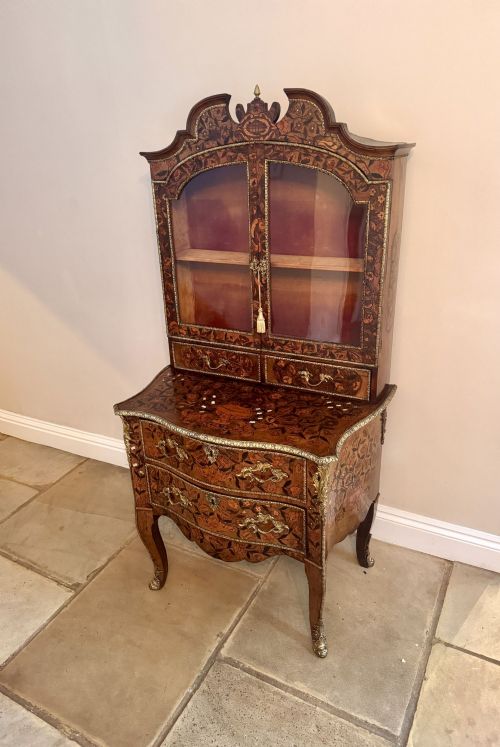
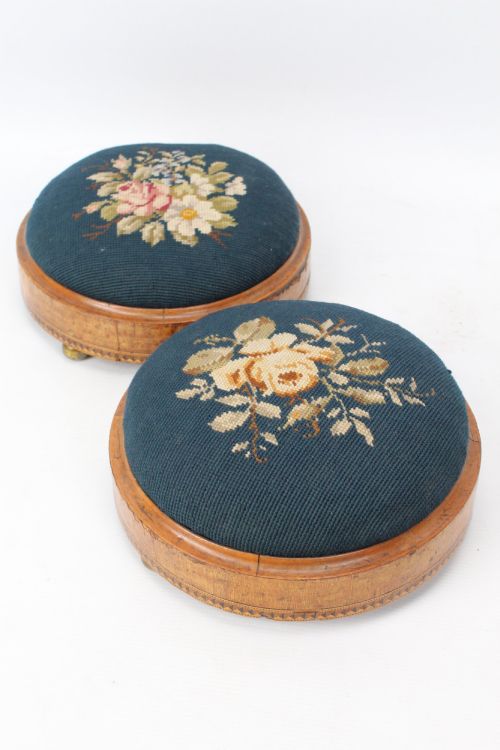
The selection ranges from tall bureau bookcases and display cabinets down to small sewing tables and foot stools. Workshops across Europe produced these works using robust carcases of walnut, mahogany, and rosewood to display elaborate botanical motifs.
Materials and Technique
Craftsmen built these items using dense timbers such as mahogany, walnut, and kingwood, often applying burr walnut or satinwood veneers to prominent surfaces. Into these grounds they set fine wooden veneers, fruitwood, bone, or brass to delineate stems, leaves, and blossoms.
The technique relies on precision cutting of contrasting veneers that fit together to form pictorial garden scenes before being glued to the structural carcase. Secondary materials like ormolu mounts, marble tops, and pewter details occasionally accent the primary floral compositions.
Floral Inlay Furniture Retail Price Guide 2026
Typical asking prices for floral inlay furniture among the pieces listed under this phrase on Sellingantiques today, from the lower quarter to the upper quarter. They describe what is for sale here now, not the wider market.
Listings feature walnut, mahogany, and rosewood combined with fruitwood, satinwood, and brass inlay across the eighteenth and nineteenth centuries.
Standards of Execution
The success of floral inlay furniture depends upon the crispness of the botanical cutting and the variety of woods employed to suggest natural shading in petals and leaves. Superior pieces maintain tight joints in their veneers without excessive filler, allowing the complex floral arrangements to retain their visual depth over centuries.
Structural integrity of the underlying cabinetwork matches the decorative ambition, ensuring drawers, doors, and folding tops operate smoothly. Master workshops balanced rich overall design with meticulous attention to secondary timbers and internal fittings.
Hewetsons London
The Floral Inlay Furniture Glossary
- Marquetry
- The art of applying pieces of veneer to a structure to form decorative patterns and pictorial designs. This technique creates the detailed garden scenes seen across the tops and doors of cabinets.
- Veneer
- A thin slice of fine wood applied to a coarser underlying timber to provide a decorative surface. Walnut and mahogany veneers form the background for contrasting floral designs.
- Ormolu
- Gilded bronze mounts applied to furniture edges and corners for decorative effect. These metal accents frequently frame French tables and cabinets.
- Bombe
- A swelling, outward-curved contour found on the lower portions of certain chests and cabinets. This curved form provides an expansive surface for large floral marquetry compositions.
- Burr walnut
- Wood taken from a tree growth that yields highly figured, swirling grain patterns. It serves as a textured backdrop that makes inlay work stand out.
Floral Inlay Furniture: Frequently Asked Questions
How do I clean floral inlay furniture?
Dust surfaces regularly with a soft, dry cloth to prevent particulate accumulation within the veneer joints. Avoid modern liquid polishes that can seep under lifted edges and loosen old animal glues.
Apply a traditional microcrystalline wax periodically to nourish the wood and protect the delicate fruitwood and bone inlays from atmospheric moisture.
Where should I place these pieces?
Position tables and cabinets away from direct sunlight and strong heat sources to prevent the timber and intricate veneers from drying out or warping. Stable indoor humidity levels protect the structural adhesives used in historical marquetry.
Allow sufficient clearance around drawers and drop-front desks so they open freely without scraping against adjacent interior walls or architectural mouldings.
Are these items suitable for daily use?
Many of these tables and chests were built for practical domestic storage and display, functioning well in modern residential settings with reasonable care. Using coasters and protective pads helps shield antique veneered surfaces from moisture rings and scratches.
Heavier items like bureau bookcases and large wardrobes require level flooring to ensure doors swing correctly and internal pigeonholes remain aligned.
How do I identify different periods?
Eighteenth-century examples often feature dense walnut carcases with elaborate Dutch floral marquetry, whereas Victorian pieces commonly utilise mahogany or rosewood with tighter, more restrained inlay. Examining the secondary interior timbers and construction fixings helps distinguish Georgian workshop practices from later nineteenth-century revivals.
Stylistic cues such as cabriole legs point toward mid-eighteenth-century Dutch and French aesthetics, while straight tapered legs and satinwood panels typically suggest later Sheraton influence.