




Floral Inlaid Console Table
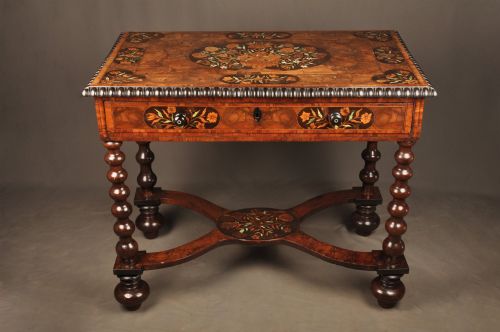
A floral inlaid console table brings together intricate marquetry and structural elegance, offering a practical surface with decorative depth.
Floral Inlaid Console Table
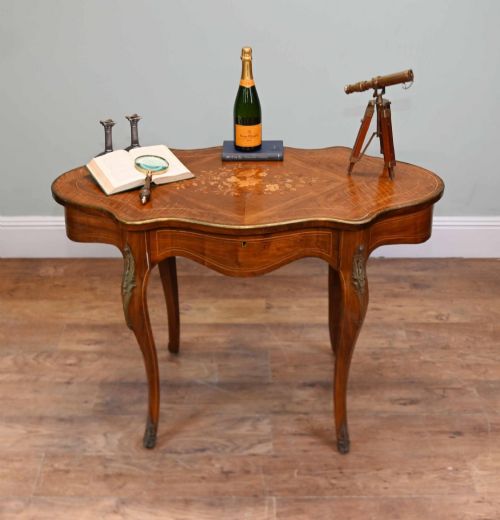
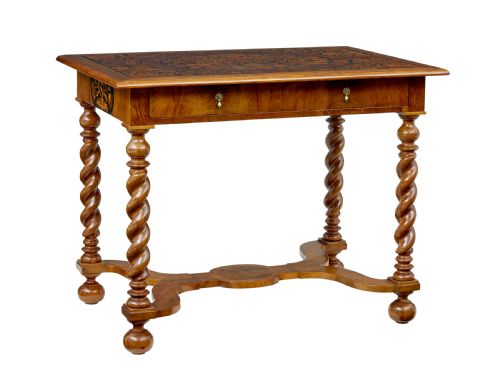
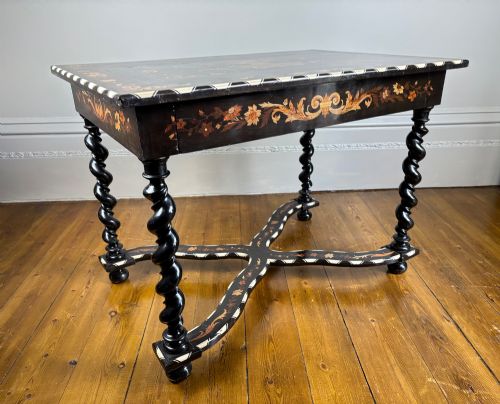
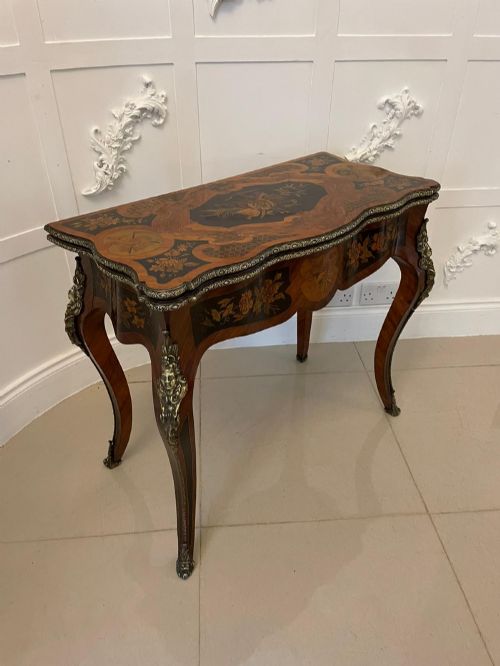
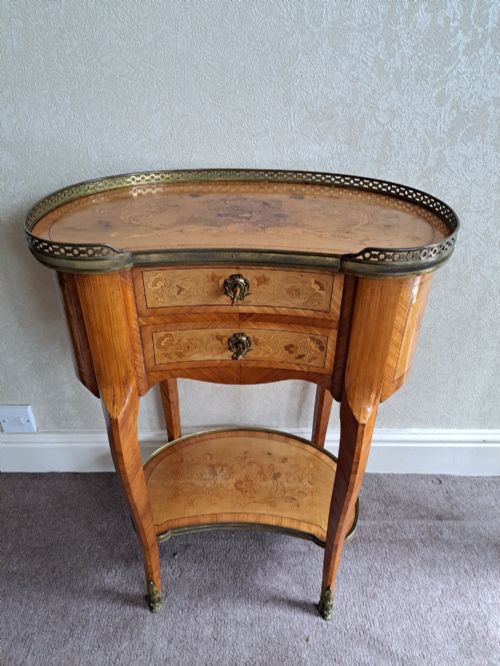
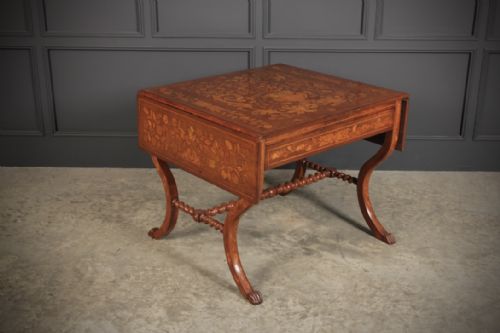
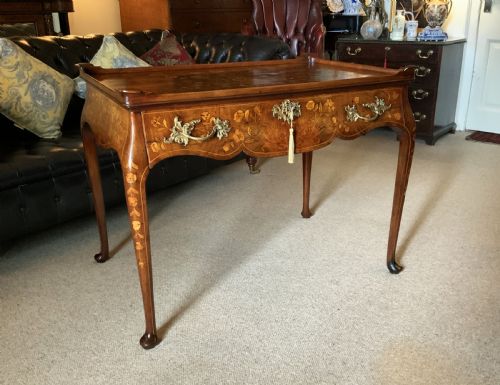
A floral inlaid console table appears across several distinct eras, spanning 18th century examples through to Victorian and Edwardian interpretations. These pieces take the form of side tables, card tables, console tables, and occasional tables, often featuring rich timber surfaces.
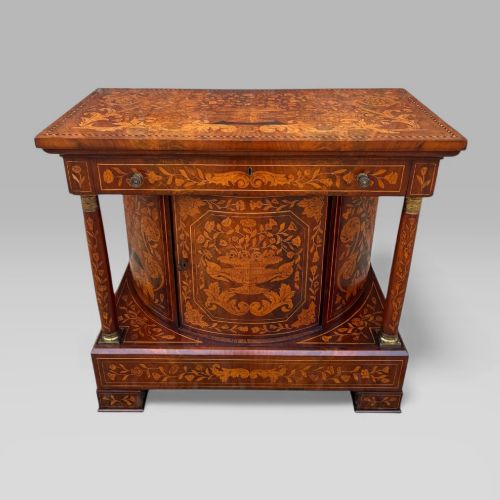
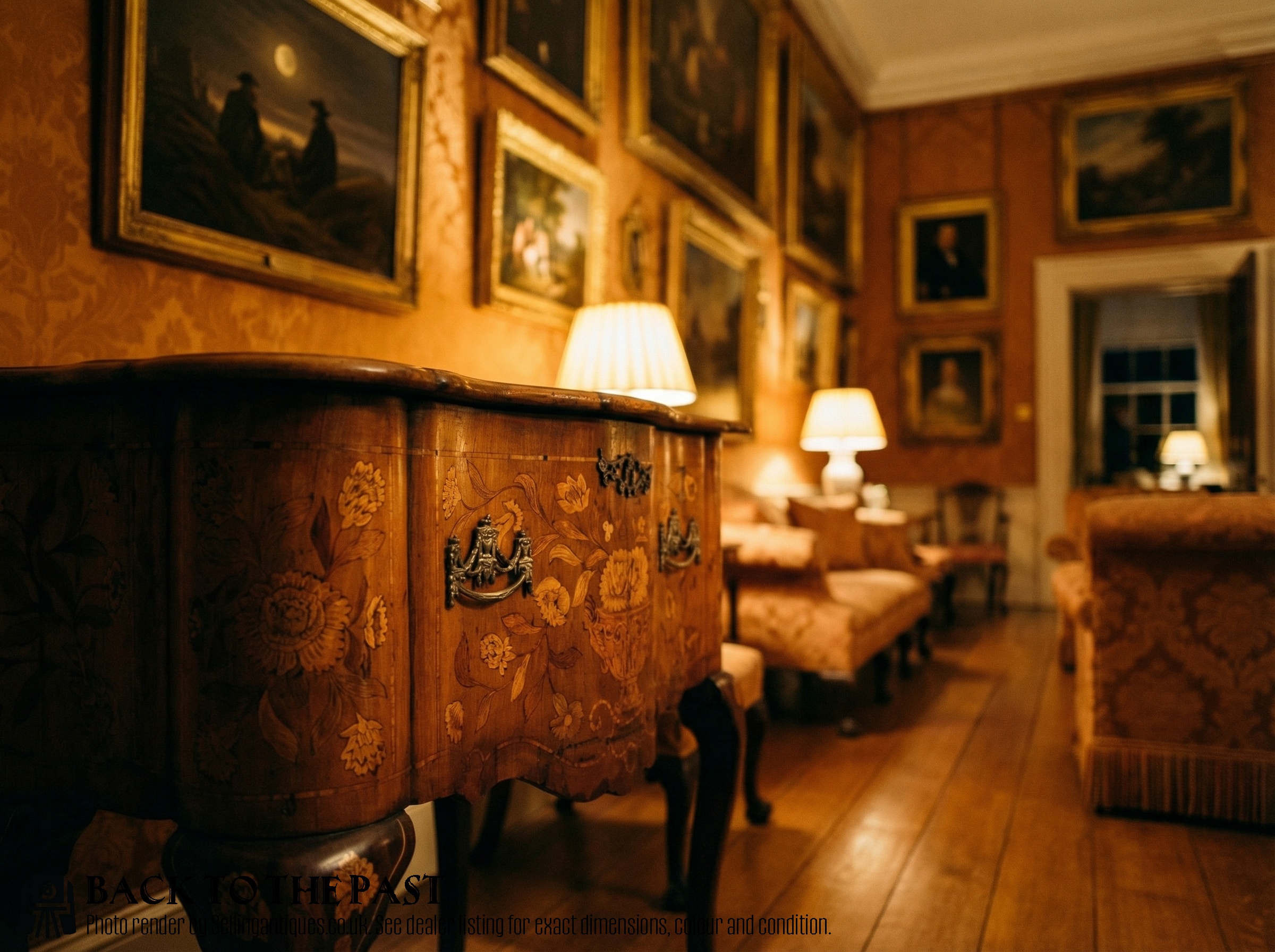
Dutch and French workshops dominate the tradition, with Dutch Baroque and Rococo pieces showing dense floral and bird motifs, alongside French Louis XV and Louis XVI revival designs. Walnut, mahogany, and rosewood serve as the primary foundational timbers for these forms.
Materials and technique
Cabinetmakers utilised dense hardwoods such as walnut, mahogany, kingwood, and rosewood as the structural base for marquetry work. Contrasting fruitwoods were cut into delicate floral veneers and set flush into the primary timber ground.
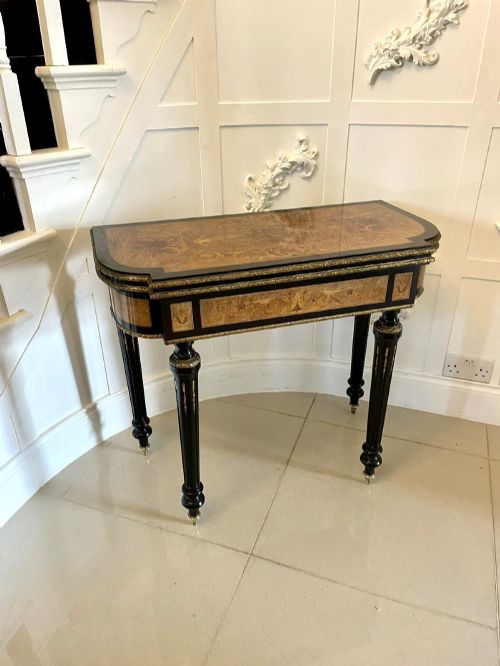
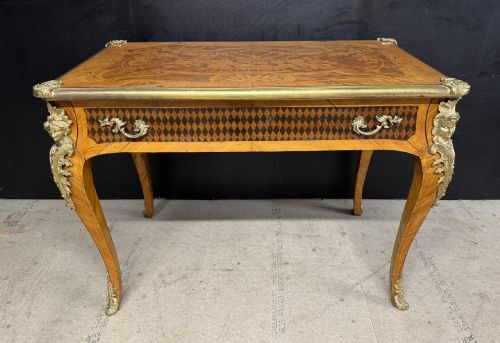
Advanced examples incorporate cast ormolu mounts, brass details, and occasional bone inlay to accent the contours of the table. Surface finishing relied on traditional polishing techniques that highlighted the multi-coloured wood grains of the marquetry.
Floral Inlaid Console Table Retail Price Guide 2026
Typical asking prices for floral inlaid console table among the pieces listed under this phrase on Sellingantiques today, from the lower quarter to the upper quarter. They describe what is for sale here now, not the wider market.
Several tables in the records hide their true versatility by transforming from unassuming console ledges into full-sized card and games tables.
Evaluating craftsmanship
The sophistication of the floral marquetry dictates the tier of the piece, with complex, multi-tonal botanical compositions separating standard items from exhibition grade works. Precision in the fit of the veneer inlay determines the smoothness and visual clarity of the design.
Structural mounts and secondary framing materials also indicate grade, particularly where cast ormolu or heavy brass elements are integrated. Timber selection plays a critical role, as highly figured walnut, kingwood, or burr walnut denote superior workshop standards.
Henry Dasson
The Floral Inlaid Console Table Glossary
- Marquetry
- A decorative technique where small pieces of wood veneer are arranged to form pictorial designs on a timber surface. This method creates the floral and bird patterns seen across these tables.
- Ormolu
- Gilded bronze used for decorative mounts and accents on furniture frames. This material appears frequently on French revival pieces.
- Demi-lune
- A half-moon shape characteristic of certain console and serving tables designed to sit flush against a wall. This profile suits narrow hallways and reception rooms.
- Serpentine
- A curved furniture line that undulates gently outward and inward. This contour adds movement to the edges of tabletops and cabinet fronts.
Floral Inlaid Console Table: Frequently Asked Questions
How do I clean a floral inlaid console table?
Dust the surface regularly with a soft, dry cloth to prevent dirt accumulation in the veneer seams.
Avoid chemical polishes and keep the timber away from direct heat sources to protect the marquetry work.
Where should I place a console table?
These tables fit well in entrance halls, living rooms, or along empty wall spaces where they serve as a decorative focal point.
Demi-lune shapes work particularly well in narrow corridors due to their flat rear edge.
Are these tables suitable for daily use?
Many examples function effectively as side tables, desk surfaces, or occasional tables for everyday living.
Card and games tables also offer folding tops that adapt between compact console use and expanded play surfaces.
How can I tell Dutch styles apart from French?
Dutch examples often feature dense, naturalistic floral marquetry with birds, set against walnut or marquetry backgrounds.
French pieces tend to incorporate ormolu mounts and softer curves associated with Louis XV and Louis XVI revival designs.