

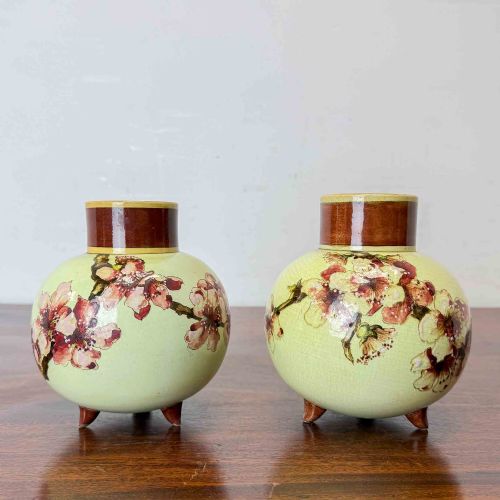


Floral Glazed Earthenware Vase
These floral glazed earthenware vase examples bring together centuries of painted flora, tin glaze, and ceramic craftsmanship.
Floral Glazed Earthenware Vase
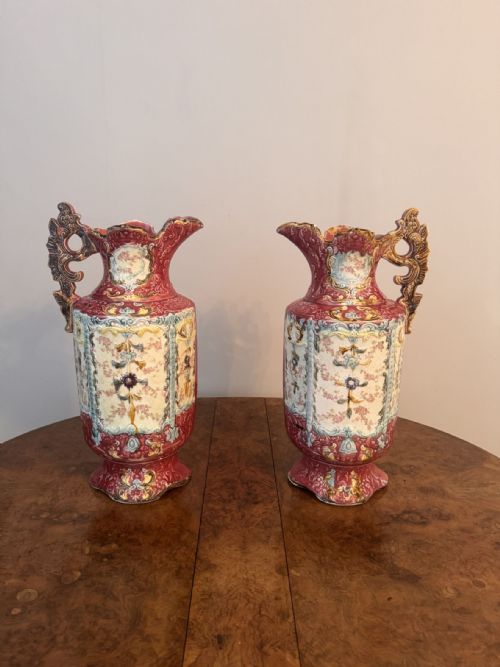
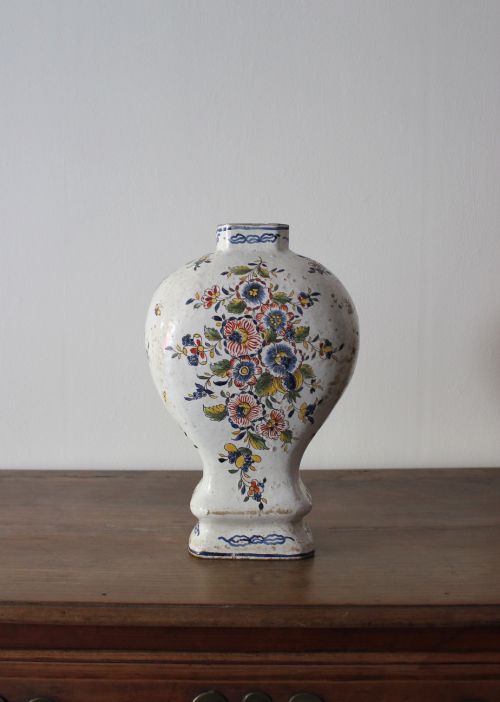
A floral glazed earthenware vase spans domestic and decorative vessels produced across the eighteenth, nineteenth, and early twentieth centuries. These pieces appear in forms ranging from simple baluster shapes to elaborate ewers, lidded vessels, and centrepiece bowls. British, Dutch, French, German, and Italian workshops all contributed distinct regional interpretations to this category.
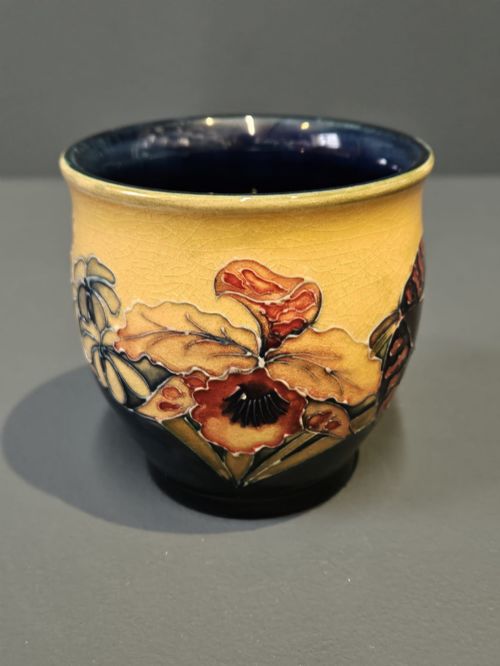
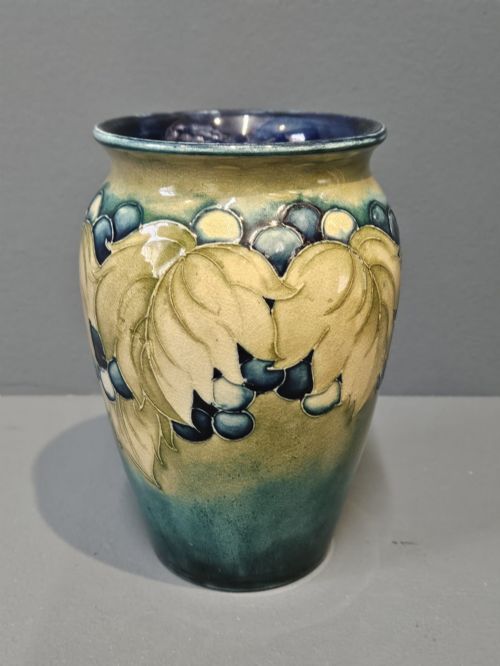
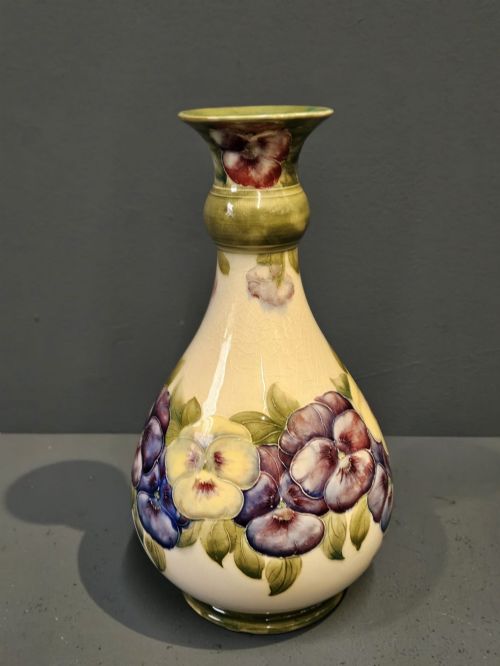
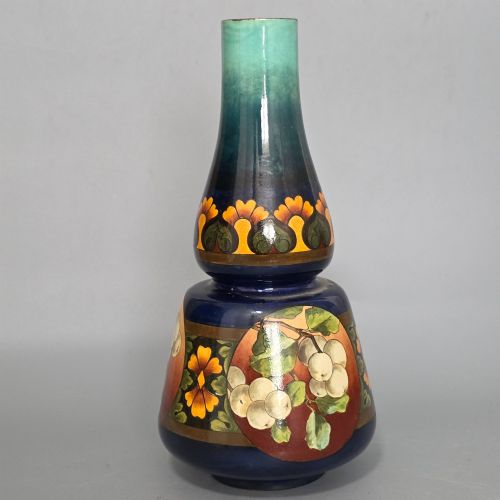
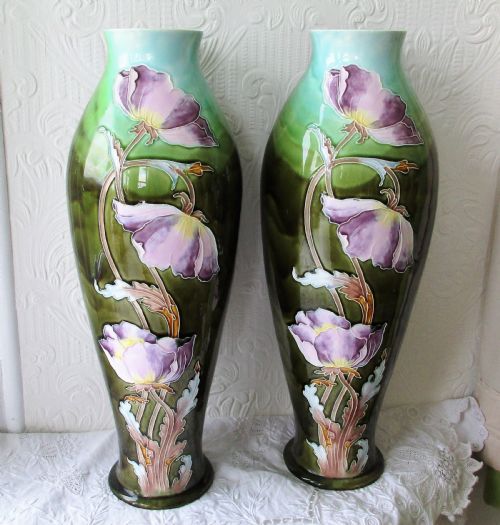
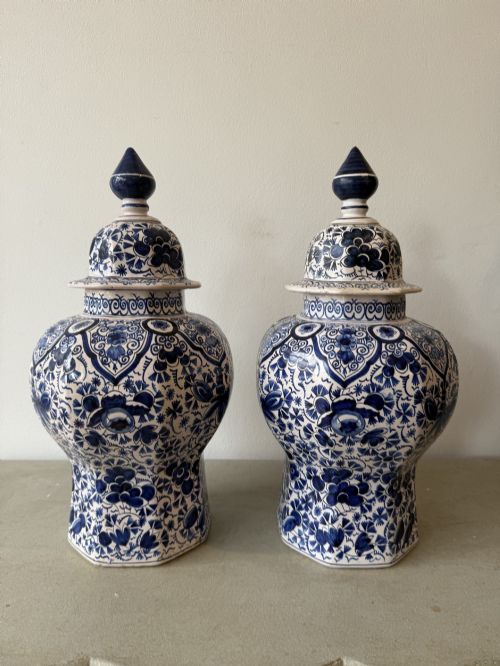
The most common examples on this page date from the nineteenth century and the early twentieth century, reflecting Victorian, Arts and Crafts, Art Nouveau, and Art Deco movements. Buyers encounter everything from blue and white Dutch Delftware to colourful English faience and studio pottery creations. These vessels serve primarily as decorative objects, often displaying hand-painted botanical motifs such as pansies, orchids, and cherry blossoms.
What varies in quality
Quality in a floral glazed earthenware vase rests upon the precision of the hand-painting and the depth of the glaze. Master decorators achieved subtle shading and vibrant colour saturation that elevate certain pieces above standard factory production. The clarity of the botanical drawing and the harmonious balance of the floral pattern across the vessel form distinguish superior examples.
The sophistication of the ceramic body and the ambition of the vessel shape also divide categories. Well-modelled handles, crisp moulding on ewers and lidded vases, and sophisticated studio pottery interventions denote higher artisanal input. Simpler domestic wares show more routine brushwork and standard potting techniques.
Sunflower motifs and painted pansies allow botanical enthusiasts to display perpetual summer indoors, regardless of the British weather.
Moorcroft McIntyre·Doulton Lambeth·Mettlach Pottery·Minton Secessionist·Sir Edmund Harry Elton·Ulisse Cantagalli·Burmantofts Faience·William Moorcroft·Kinkozan Satsuma
The Floral Glazed Earthenware Vase Glossary
- Earthenware
- Porous pottery fired at lower temperatures, requiring a glaze to hold liquids. This material forms the base of traditional delftware and faience.
- Tin Glaze
- An opaque white glaze containing tin oxide, used as a smooth surface for painting in blue and other colours. It defines traditional Dutch and English delftware.
- Faience
- Tin-glazed earthenware decorated with coloured enamels, produced widely in France, Italy, and England. The technique allows for bright pictorial and floral designs.
- Baluster
- A tall vase shape with a rounded body that tapers toward the top and stands on a wider base. This classic form appears frequently in eighteenth-century delftware.
- Intarsio
- A decorative ceramic technique developed by Doulton Lambeth that mimics inlaid wood through coloured glazes. It creates rich, patterned surface designs on art pottery.
Floral Glazed Earthenware Vase: Frequently Asked Questions
How do I date a delft floral vase?
Eighteenth-century examples often display looser brushwork and characteristic tin glaze pooling, while nineteenth-century revivals feature crisper execution and different base markings. Examining the clay body and the tone of the blue pigment helps establish the correct period.
Changes in trade connections and pottery techniques over the decades also left subtle clues in the glaze composition and weight of the ceramic body.
Where were these decorative vases displayed?
These vessels were designed as drawing-room ornaments, mantelpiece displays, and centrepieces in prosperous homes. Their painted floral surfaces added colour and botanical interest to interior spaces.
Larger lidded vases and ewers often stood on pedestals or side tables, functioning purely as decorative statements rather than utilitarian flower holders.
What is the difference between faience and delftware?
Faience generally refers to tin-glazed earthenware produced in France, Italy, and England that employs a broader palette of enamel colours. Delftware specifically denotes tin-glazed pottery associated with Dutch production styles, typically featuring blue and white painting.
Both categories rely on similar foundational glazing methods but developed distinct regional artistic traditions over the centuries.
How should I care for antique ceramic vases?
Keep these pieces out of direct sunlight to prevent any fading of the enamel colours on the glaze surface. Dust them gently with a dry, soft cloth rather than using liquid cleaners.
Avoid filling porous earthenware vessels with water for live plants, as moisture can seep through unglazed interior areas over time.