


Art Nouveau Earthenware Vase
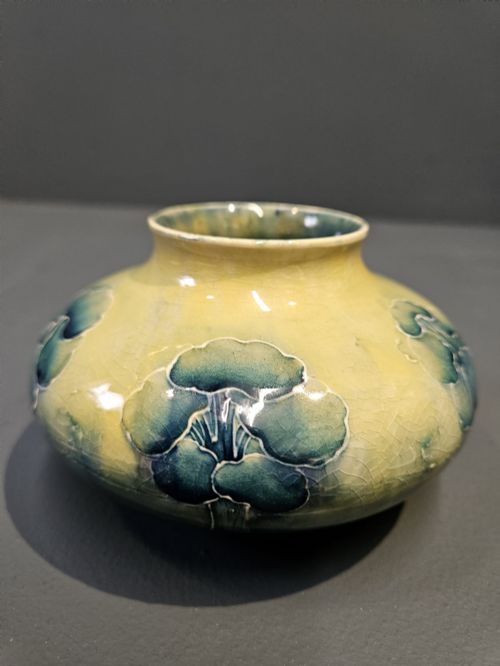
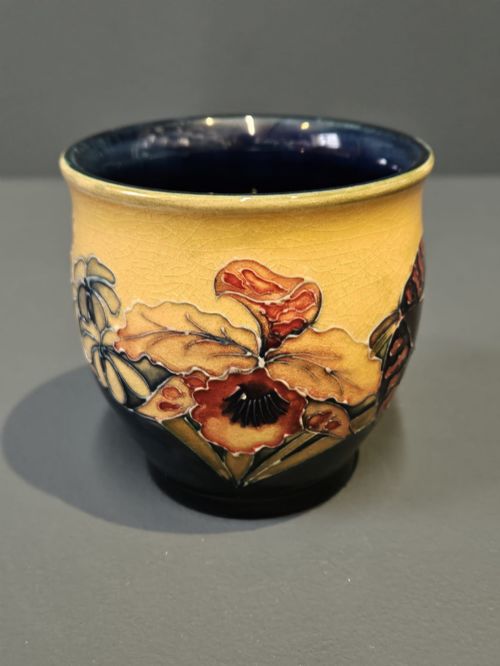
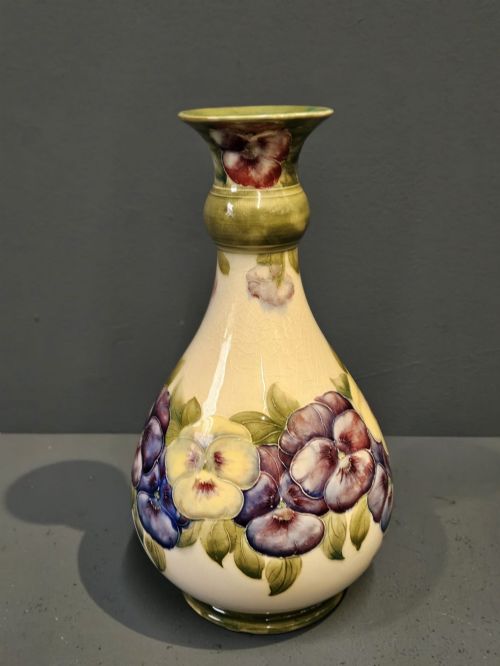
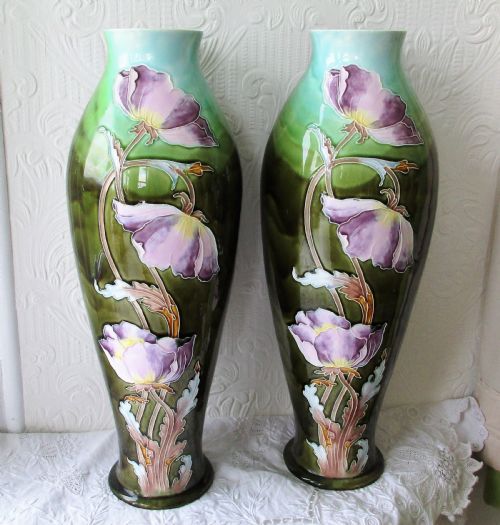
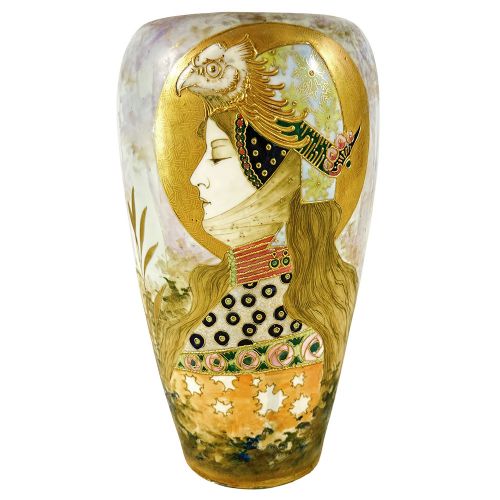
These art nouveau earthenware vase examples bring organic fluid forms and hand-painted floral motifs directly into domestic spaces.
Art Nouveau Earthenware Vase
An art nouveau earthenware vase combines flowing natural contours with botanical ornamentation characteristic of the late nineteenth and early twentieth centuries. These vessels appear in various forms, ranging from modest spill vases and miniature flower holders to monumental exhibition pieces and umbrella stands.
The pieces on this page span several decades from the late Victorian and Edwardian eras into the Art Deco period, with strong representation from 1900 and 1910. Makers utilised earthenware, glazed ceramic, faience, and specialised bodies such as Intarsio and Flamminian ware to achieve their sculptural profiles.
What varies in quality
The distinction between standard production items and superior examples rests upon the ambition of the design and the precision of the glaze execution. Pieces carrying specific artist signatures or attributed to renowned factories generally demonstrate a higher degree of sculptural complexity and controlled firing.
Hand-painted depth and the successful integration of glaze tones across complex relief mouldings elevate certain vessels above simpler transfer-printed counterparts. The crispness of the modelled flora and the richness of the palette separate mass-produced wares from exceptional studio and factory pieces.
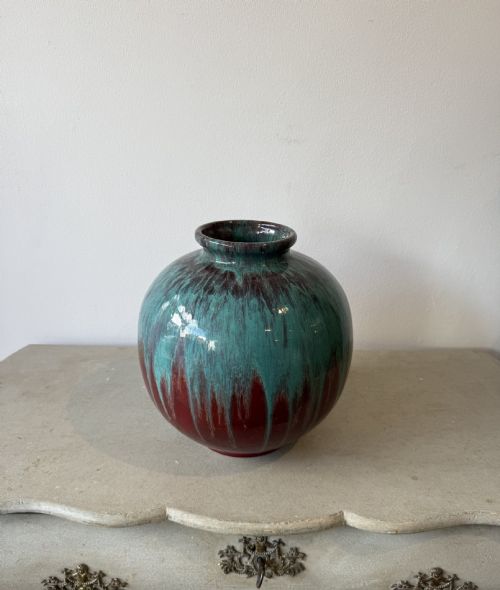
Sir Edmund Harry Elton formulated his own experimental glazes that dripped unpredictably, ensuring no two sunflower vases ever turned out identical.
Moorcroft·Reissner Stellmacher and Kessel·Wileman Intarsio·Gallilleo Chini·Sir Edmund Harry Elton·Brannam Art Pottery·Ernst Wahliss·Paul Dachsel·Doulton
The Art Nouveau Earthenware Vase Glossary
- Earthenware
- A porous pottery body fired at lower temperatures than stoneware or porcelain. It requires an impermeable glaze to hold water effectively.
- Faience
- Tin-glazed earthenware traditionally associated with French and European decorative ceramics. This technique provides a smooth opaque white ground for hand-painted decoration.
- Secessionist
- A stylistic movement rejecting traditional historicism in favour of geometric and organic abstraction. Works from this circle often feature stylised floral and repeating linear patterns.
- Spill vase
- A small upright vessel designed to hold slender tapers used for lighting candles or fires. These practical domestic items frequently received elaborate decorative treatment.
Art Nouveau Earthenware Vase: Frequently Asked Questions
How do I clean an old earthenware vase?
Dust gently with a dry, soft cloth to preserve the surface glaze and any delicate enamel or gilt details. Avoid submerging antique earthenware in water, as old bodies can absorb moisture through hairline fractures.
Keep these vessels away from direct sunlight and areas prone to rapid temperature fluctuations. Placing a small glass liner inside helps protect the porous interior if you intend to display fresh flowers.
How do I know if a piece is genuine?
Examine the base for factory stamps, hand-written signatures, registration numbers, or impressed marks typical of turn-of-the-century potteries. Genuine pieces display natural wear to the unglazed foot rim consistent with age.
Look closely at the glaze consistency and brushwork under magnification to check for modern reproduction signs. Comparing the weight, clay body, and decorative style against documented examples from the same period confirms authenticity.
What defines the art nouveau style on these vases?
The aesthetic relies on asymmetrical flowing lines, whiplash curves, and motifs drawn directly from stems, seed pods, and petals. Forms often mimic natural growth rather than rigid geometric symmetry.
Stylised depictions of sunflowers, pansies, water lilies, and orchids dominate the surface ornament. Glazes flow organically across the relief-moulded earthenware to emphasise movement and depth.
Were these vases meant for everyday use?
Many smaller vessels served as functional flower holders or mantle ornaments in Edwardian and Victorian homes. Monumental pieces and stick stands were designed primarily as architectural focal points for large hallways and reception rooms.
While some robust earthenware items handled daily domestic tasks, exhibition pieces were valued chiefly as decorative art objects. Owners typically displayed them prominently on sideboards, tables, or specialised pedestals.