

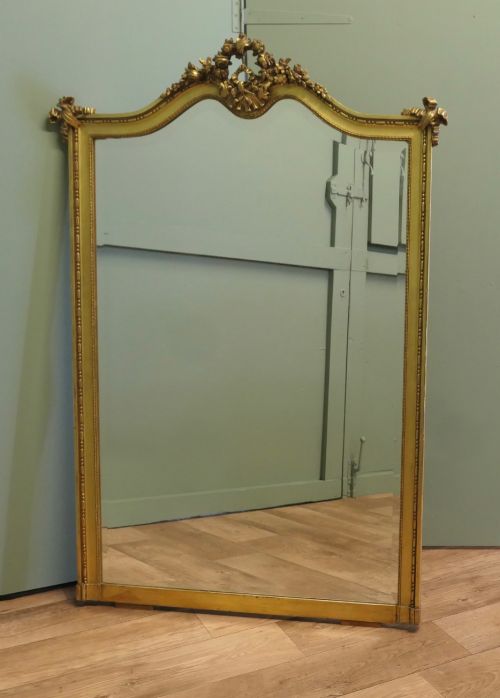
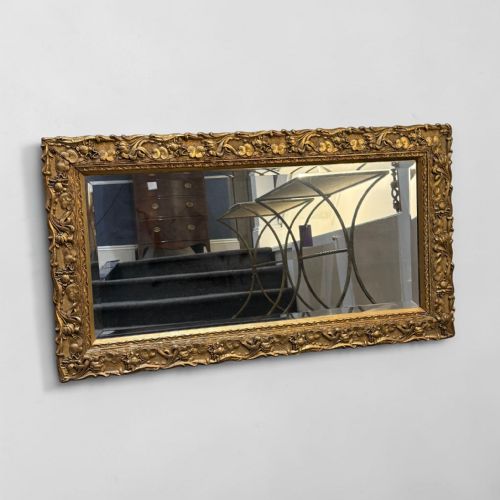
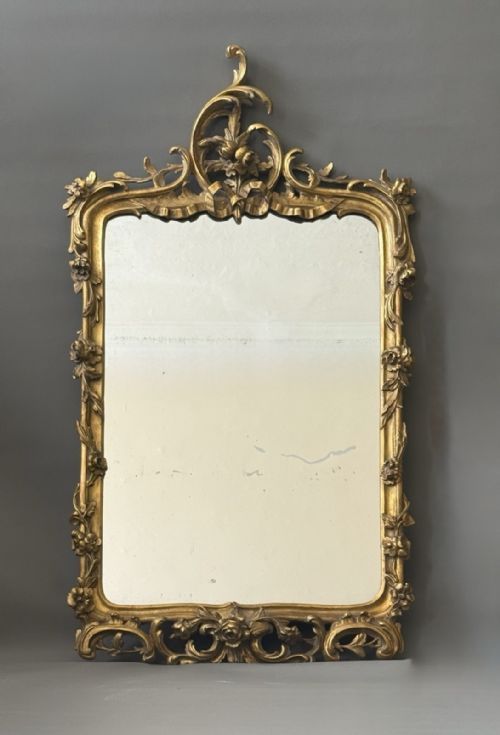
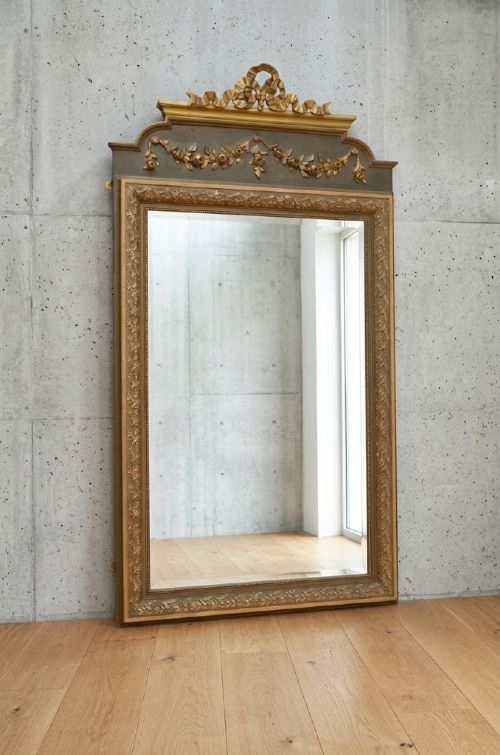



Floral Gilt Mirror
A floral gilt mirror brings botanical carving and reflective glass together, catching light across periods from the eighteenth century onwards.
Floral Gilt Mirror
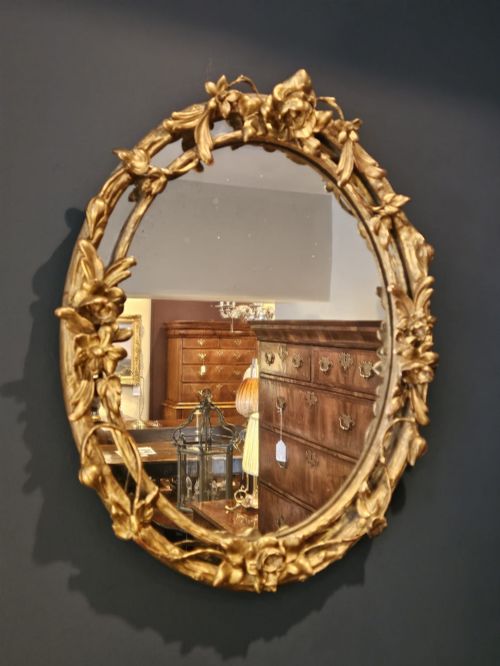
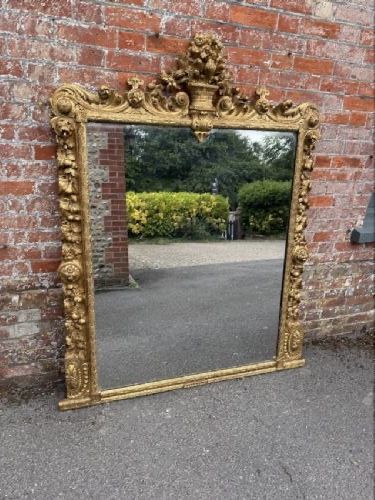
A floral gilt mirror takes form as wall mirrors, overmantels, and pier glasses adorned with carved or moulded botanical motifs. These pieces emerge across the nineteenth century, including Victorian interpretations and earlier eighteenth-century designs.
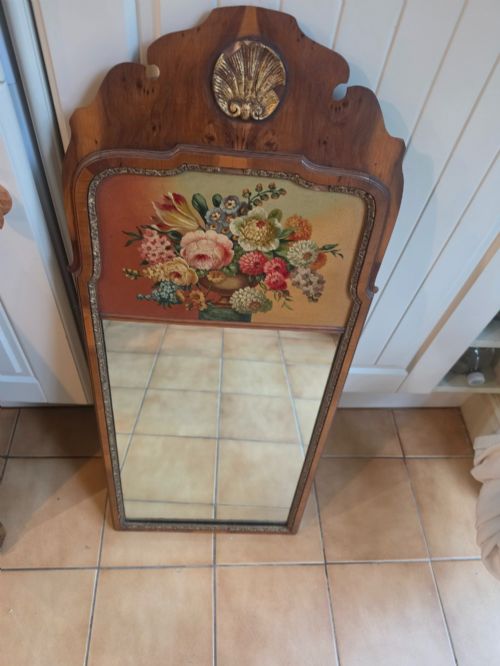
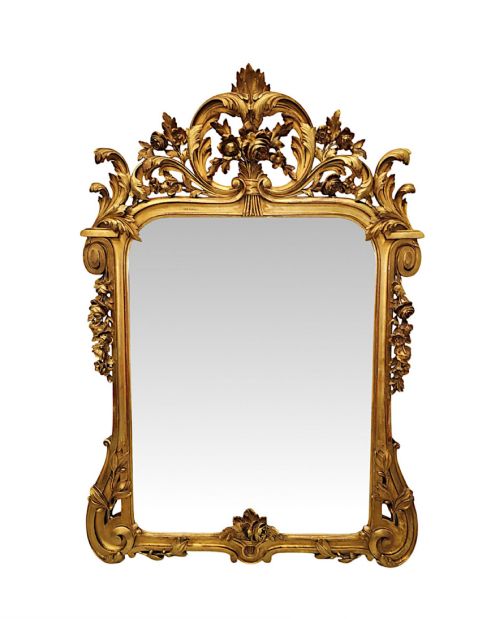
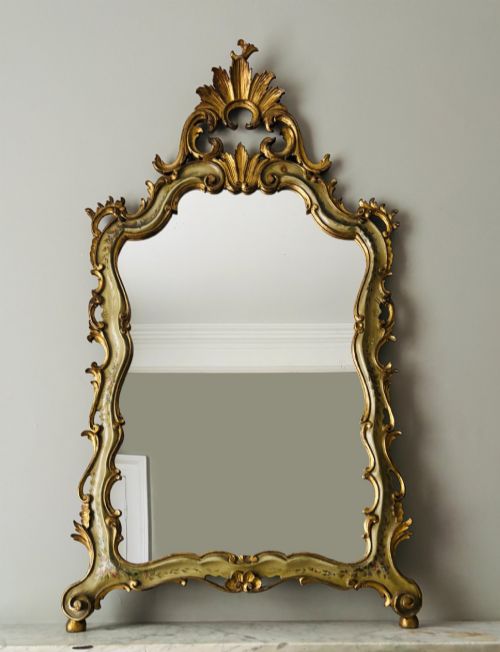
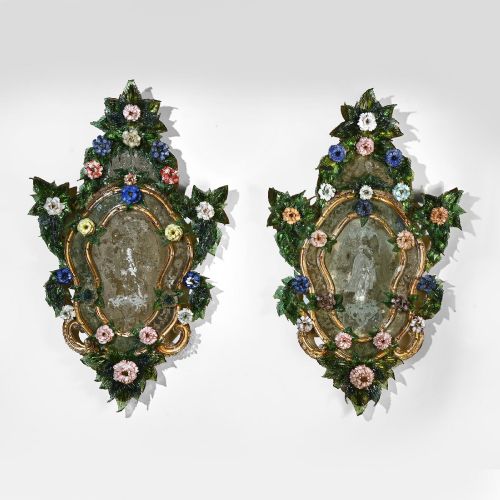
Buyers encounter French Rococo and Venetian styles alongside English overmantels bearing floral embossed detail or rose vine motifs. The inventory includes smaller painted Italian pier glasses and oval barbola mirrors with gesso flower decoration.
Originating from British, French, and Italian workshops, these items serve as functional reflectors and decorative focal points. The selection ranges from compact easel mirrors to large overmantles designed for principal reception rooms.
How they were made
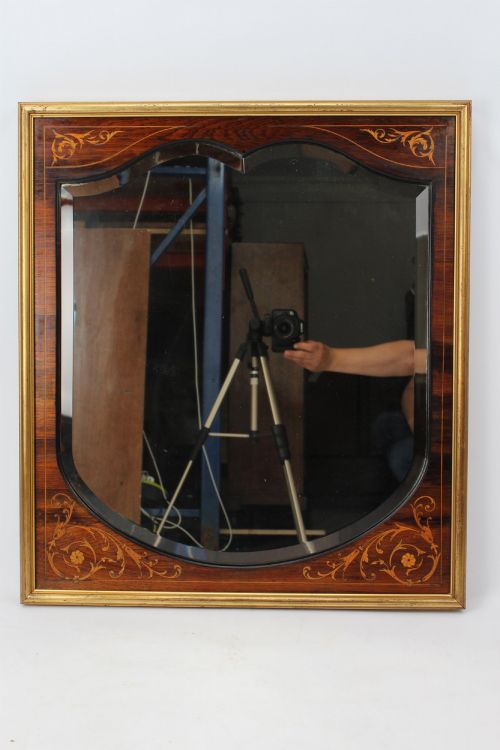
Artisans built the structural foundations using timber such as pine, walnut, rosewood, or mahogany. Carved wood and moulded gesso formed the relief ornamentation of floral swags, ribbons, and lily of the valley.
Guilders applied gold leaf or paint over the gesso and wood surfaces to achieve the characteristic metallic sheen. Certain Continental examples incorporate polychrome paint or micro mosaic work alongside the gilt decoration.
Floral Gilt Mirror Retail Price Guide 2026
Typical asking prices for floral gilt mirror among the pieces listed under this phrase on Sellingantiques today, from the lower quarter to the upper quarter. They describe what is for sale here now, not the wider market.
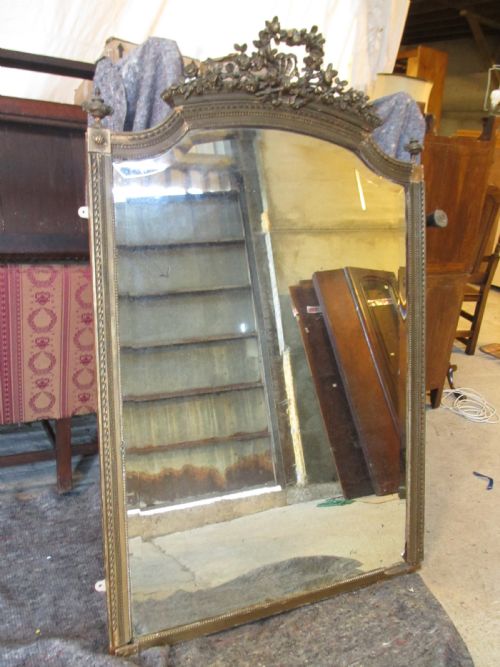
Listings feature floral gilt mirrors across the Victorian, Regency, and Edwardian periods, utilising carved wood, gesso, and painted finishes.
What varies in quality
The depth and crispness of the hand-carved floral relief separate finer examples from simpler moulded pieces. Skilled carving gives roses, leaves, and vines a distinct three-dimensional character.
The integrity of the original gilding and the condition of the mirror plate determine the historical value of each piece. Retaining the original mercury plate or period glass adds to the authenticity of an eighteenth or nineteenth-century frame.
The Floral Gilt Mirror Glossary
- Giltwood
- Wood that has been coated with gold leaf. This finish provides a warm reflective surface characteristic of formal mirrors.
- Gesso
- A plaster mix applied to wood frames before gilding or painting. It accepts detailed moulding for floral scrolls and crests.
- Overmantel
- A large mirror designed to hang above a fireplace mantelpiece. These pieces often feature wide proportions and substantial botanical carving.
- Pier Glass
- A tall, narrow mirror made to hang on the wall space between windows. They frequently incorporate painted panels and delicate floral motifs.
- Barbola
- A trade name for a type of ornamental gesso work used to create raised flower decorations. It appears on twentieth-century oval frames.
Floral Gilt Mirror: Frequently Asked Questions
Where should I hang a large overmantel mirror?
These substantial pieces anchor domestic interiors when positioned above a fireplace or along a principal drawing room wall. Their proportions reflect natural light and open up the surrounding space.
Ensure the wall structure and fixings can support the combined weight of the timber frame and glass plate safely.
How do I identify a Venetian mirror?
Venetian examples often display intricate glass engraving, Murano components, and polychrome painted details. They lean towards Rococo forms with elaborate crests and floral glass elements.
Look for traditional construction methods and Italian stylistic markers from the eighteenth and nineteenth centuries.
What is the difference between gesso and carved wood?
Carved wood relies on direct chiselling into the timber substrate to create floral details and relief ornament. Gesso involves building up a plaster composition over a wooden base before shaping or moulding.
Finer antique pieces often combine both techniques, using carved wooden foundations finished with detailed gesso layers.
How do I care for antique gilt surfaces?
Keep gilt frames away from direct sunlight and damp environments to protect the fragile gold leaf and underlying gesso. Dust the carved floral details gently with a soft, dry brush.
Avoid liquid cleaners or chemical polishes, which can strip the historic gilding from the wood.