





Floral Embroidered Rug
These embroidered textiles, often grouped under the search phrase floral embroidered rug, bring rich floral patterns and tactile needlework into domestic interiors.
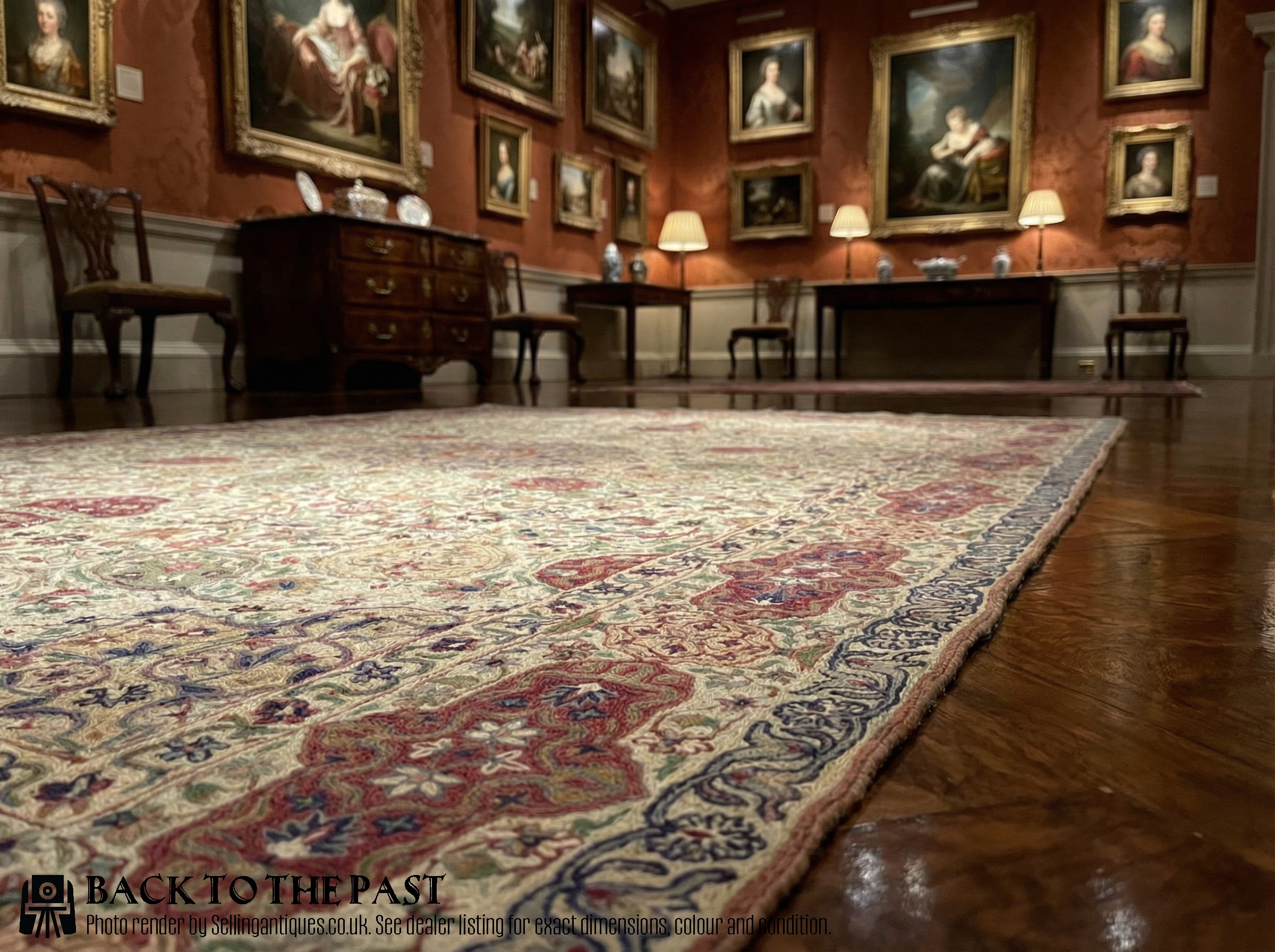
Floral Embroidered Rug
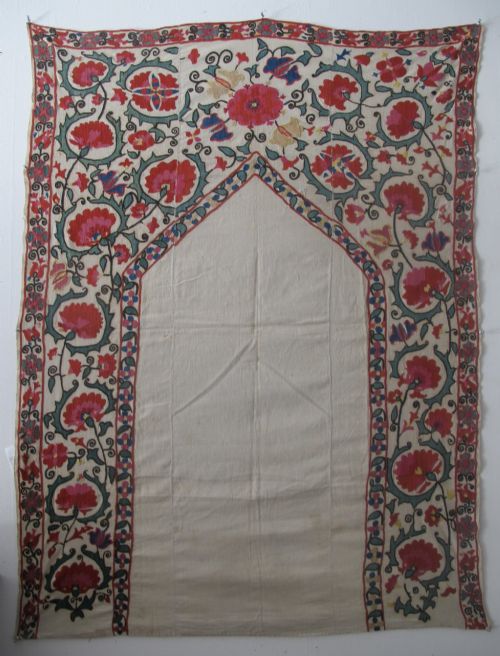
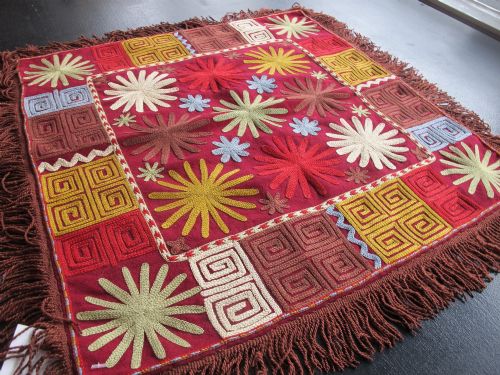
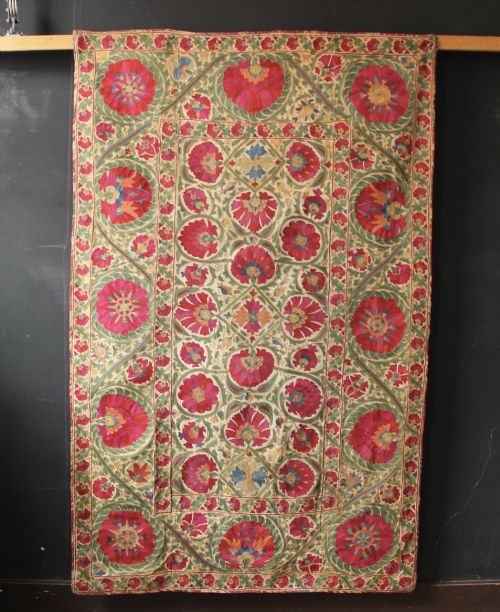
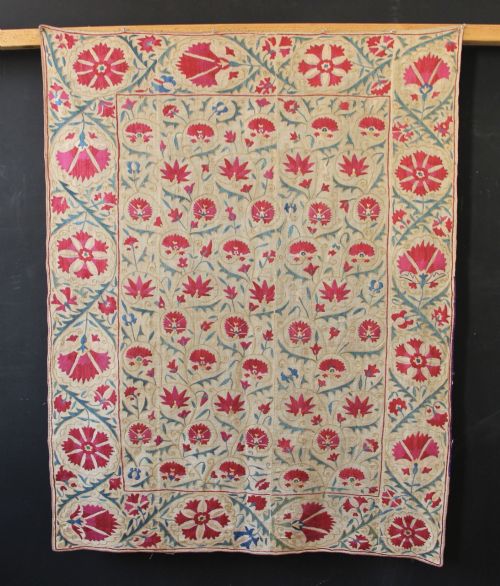
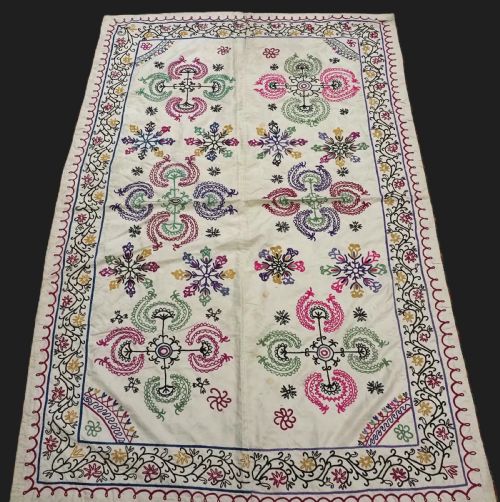
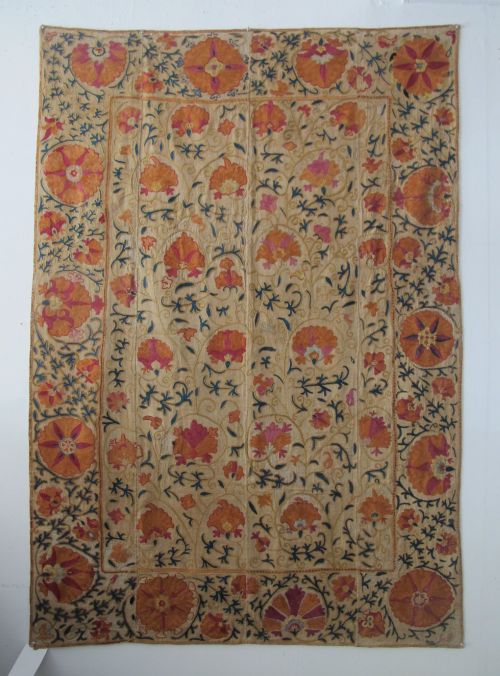
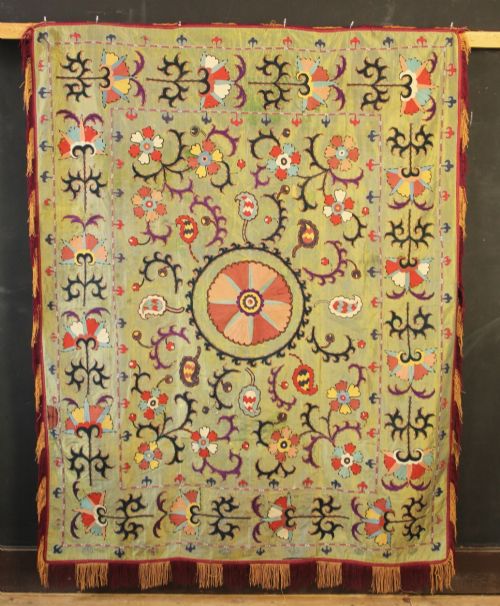
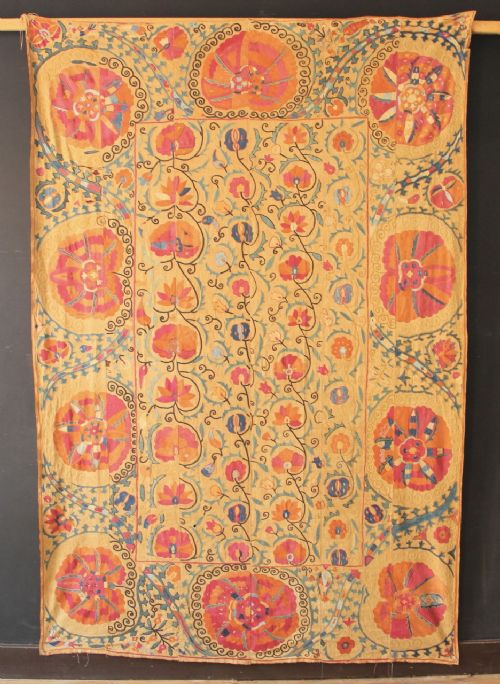
A floral embroidered rug search brings up a range of textile formats, including Suzanis from Central Asia, Portuguese needlepoints, Ottoman embroideries, and Persian Rasht pieces. These objects function primarily as wall hangings, covers, and area rugs depending on their regional origin and construction.
Central Asian Suzanis dominate the selection, showing traditional floral and medallion motifs worked in silk on cotton or wool grounds. Alongside these, buyers encounter Portuguese needlework pieces, Kashmir chain stitch rugs, and Persian felt-backed embroideries.
The inventory spans from the eighteenth century through to the mid-twentieth century, offering works from workshops in Uzbekistan, Persia, Turkey, and Portugal. Each regional tradition applies distinct stitch techniques and colour palettes to botanical and geometric layouts.
Materials and construction
Makers utilised natural textile grounds such as cotton, wool, silk, canvas, and felt to support heavy thread work. Silk thread and metallic thread provide the primary linear definition for the detailed floral motifs across Central Asian and Persian examples.
Techniques range from fine tambour and chain stitch embroidery to complex silk and felt appliqué work. Portuguese pieces rely on needlepoint stitches on canvas grounds, while Ottoman and Uzbek items often display dense surface stitching executed by hand.
Listings feature textiles from the eighteenth century to the mid twentieth century, utilising cotton, silk, wool, canvas, and felt grounds.
Assessing quality
Quality rests upon the fineness of the needlework and the density of the silk or wool thread coverage across the ground fabric. Pieces with tightly executed stitches and intricate botanical detailing demonstrate superior technical execution by the maker.
The clarity and complexity of the design layout, such as architectural elements or large medallion variants, distinguish finer regional examples from simpler utility covers. Preservation of the original ground material and vibrant thread colours further separates the top of the range.
The Floral Embroidered Rug Glossary
- Suzani
- An embroidered textile from Uzbekistan, traditionally worked by women as part of a bride's dowry. These pieces typically feature bold floral designs on cotton or silk foundations.
- Nim Suzani
- A smaller scale version of a standard Suzani textile, often utilised as a small wall hanging or cover. The term denotes pieces of reduced dimensions compared to full-sized bridal hangings.
- Rasht embroidery
- A traditional Persian textile technique involving inlaid wool felt and silk appliqué work. These items frequently display intricate floral medallions on rich felt grounds.
- Chain stitch
- A sewing and embroidery technique in which a series of looped stitches form a chained pattern. Kashmir rugs frequently employ this method to create textured botanical surfaces.
- Arraiolos
- A style of Portuguese needlepoint embroidery named after the town where the craft originated. These rugs and panels use wool yarn on a canvas foundation.
Floral Embroidered Rug: Frequently Asked Questions
How are these textiles cleaned?
Maintenance requires specialist textile cleaning rather than standard domestic methods. Professional curators use gentle surface aspiration to remove dust without disturbing delicate silk threads.
Water washing risks dye bleed and ground shrinkage, particularly on antique cotton and felt pieces. Specialist conservation ensures the historical integrity of the embroidery remains intact.
Can these hang on walls?
Many examples function effectively as wall hangings due to their lightweight foundation fabrics and pictorial layouts. Mounting typically involves a fabric sleeve stitched to the reverse to distribute weight evenly.
Avoid direct sunlight when displaying textiles on walls to prevent fading of natural silk and wool colours. Stable indoor humidity protects the organic fibres from premature degradation.
What is a Nim Suzani?
A Nim Suzani represents a smaller variant of the traditional Central Asian marriage hanging. These compact textiles offer the same intricate floral embroidery in reduced dimensions.
Their scale makes them suitable for smaller interior wall spaces or tabletop display. Collectors value them for the same technical execution found in larger formats.
How do I identify Persian Rasht work?
Persian Rasht embroideries are identifiable by their distinctive use of wool felt grounds combined with silk appliqué. The designs often centre on small floral medallions framed by complex borders.
These pieces rely on inlaid felt pieces rather than surface embroidery alone for their visual impact. The tactile contrast between smooth silk thread and dense felt defines the type.