
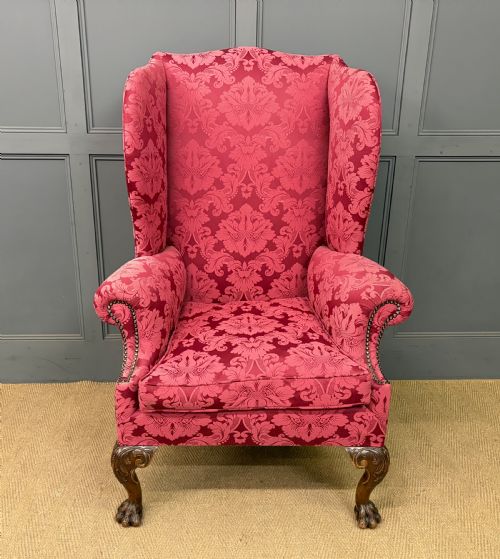


Floral Damask Seat
These floral damask seat examples are upholstered chairs and settees covered in patterned textiles, offering period charm and comfortable seating for any room.

Floral Damask Seat
When you search for floral damask seat, you are looking at upholstered seating designed with patterned fabric coverings. The pieces listed span from the nineteenth century through the mid twentieth century, covering Victorian, Edwardian, and revival styles.
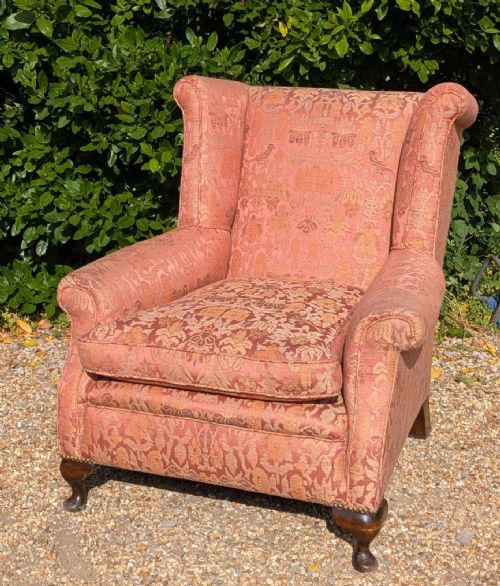
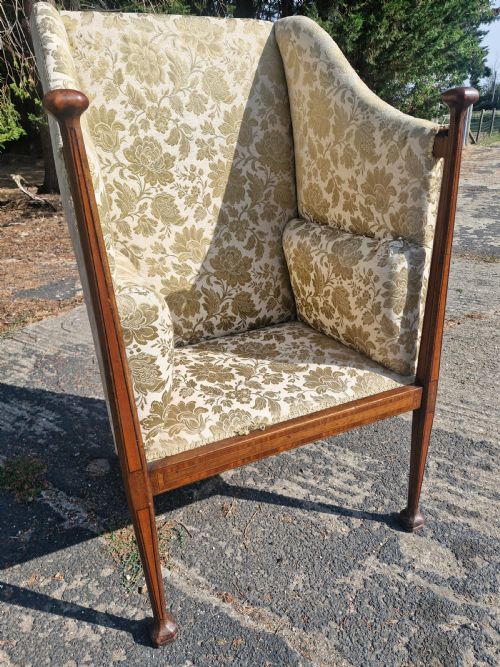
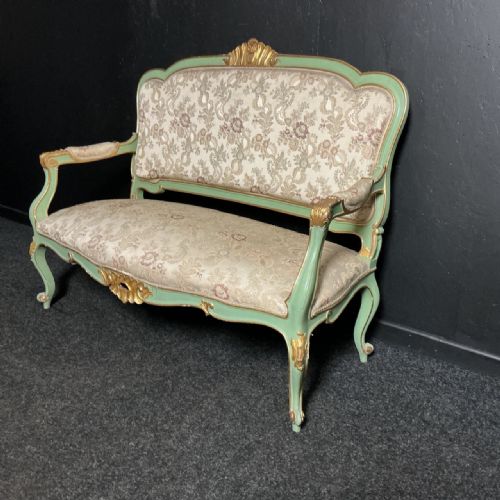
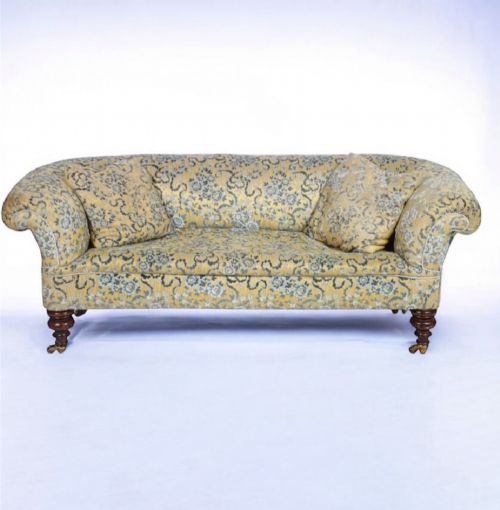
The most common forms you will meet on this page are armchairs, settees, and sofas framed in wood. These include wing armchairs, barrel back chairs, and salon suites originating from various periods.
Makers and manufacturers drew upon historical designs such as Queen Anne, Louis XV Revival, and Georgian styles. This mix of periods and forms gives buyers a wide choice of traditional seating.
How they were made
The construction of these pieces relies on solid timber frames fashioned from mahogany, walnut, and general hardwood. Carved wooden elements and inlaid details often define the structural framework of the chairs and settees.
Upholstery forms the core of these items, utilising damask fabric, standard fabric, and occasionally feather filling for comfort. Brass accents sometimes appear as decorative tacks or castors on the wooden legs.
The listings span from 1890 through the 1960s, featuring timber frames of mahogany and walnut alongside brass and various damask fabrics.
What varies in quality
The choice of timber creates a clear distinction across the range, with dense hardwoods like mahogany and walnut marking higher grades than simpler woods. The precision of inlaid woodwork and hand-carved frames further separates standard items from finer examples.
The quality of the textile covering and interior stuffing also determines the standard of the seat. Denser damask weaves and supportive interior fillings like feathers represent superior craftsmanship compared to basic fabric and stuffing.
The Floral Damask Seat Glossary
- Damask
- A reversible figured fabric with patterns formed by weaving, traditionally utilising silk, wool, linen, or cotton. This textile provides the characteristic textured surface seen on these seats.
- Wing Armchair
- An upholstered armchair with side panels attached to the back, designed to shield the sitter from drafts. These chairs frequently feature exposed wooden legs and detailed framework.
- Settee
- A long upholstered seat for more than one person, sharing similarities with a small sofa. They appear in various revival styles across the listed periods.
- Salon Suite
- A matched set of seating furniture intended for formal reception rooms. These suites usually comprise a settee and matching armchairs.
- Prie-Dieu Chair
- A low devotional chair with a high back, often featuring upholstered padding for kneeling or resting arms. The Victorian examples utilise walnut framing.
Floral Damask Seat: Frequently Asked Questions
How do I clean a damask seat?
Vacuum the fabric gently using a soft brush attachment to remove dust and debris trapped in the woven pattern. Spot clean any marks carefully with a mild textile cleaner suited to the specific material.
Avoid soaking the fabric or using harsh chemical agents that might damage the delicate damask weave. Professional cleaning is recommended for antique upholstered items to preserve the textile integrity.
What periods do these seats cover?
The selection spans from the nineteenth century through the Edwardian era and into the early twentieth century. You will also find later mid century French pieces alongside historical revival styles.
Each period brings distinct woodworking techniques and upholstery styles, ranging from heavy Victorian walnut to lighter Edwardian frames.
Are these seats comfortable for daily use?
Many pieces feature traditional padding and some include feather filling designed to provide substantial support. Their usability depends on the current condition of the internal webbing and padding.
Consider whether the seat height and back support suit your daily living requirements before placing it in a primary seating area.
How can I tell an Edwardian seat apart?
Edwardian seating often displays lighter proportions and simpler wood framing compared to heavier Victorian counterparts. They frequently incorporate satinwood inlay or subtle painted details on hardwood frames.
The upholstery styles and overall brightness of the design reflect the aesthetic preferences of the early twentieth century.