



Floral Ceramic Set
When you search for a floral ceramic set, you encounter groupings of tableware and display pieces united by botanical decoration.
Floral Ceramic Set
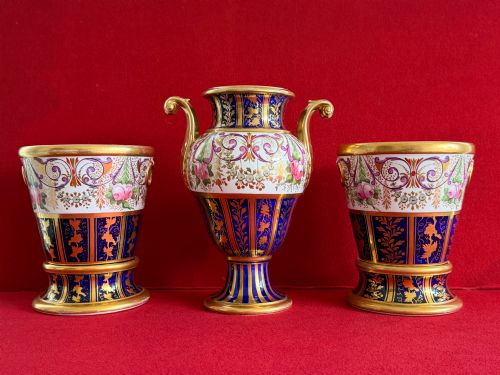
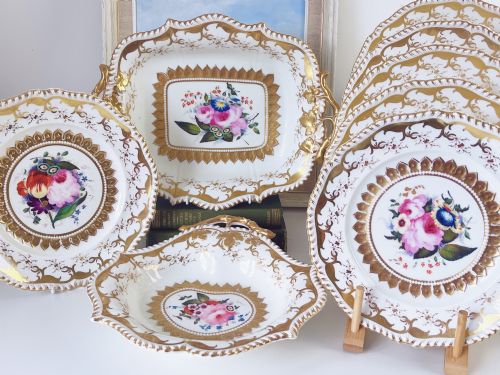
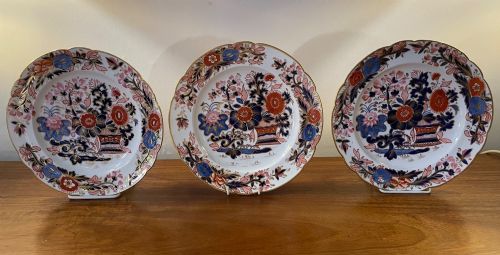
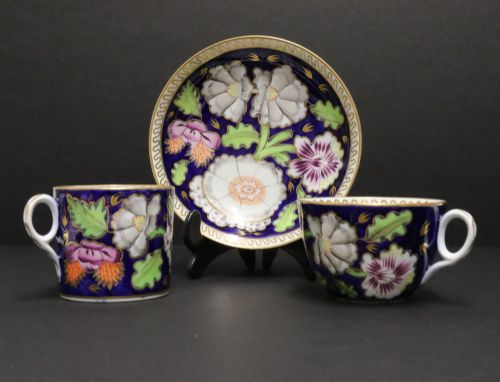
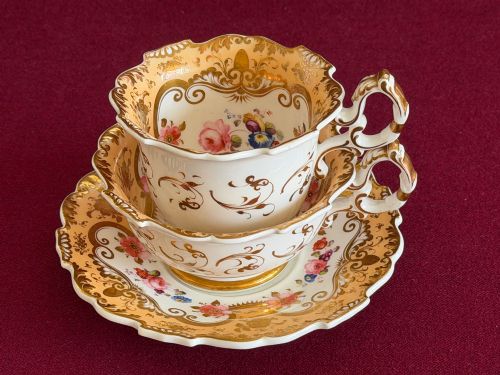
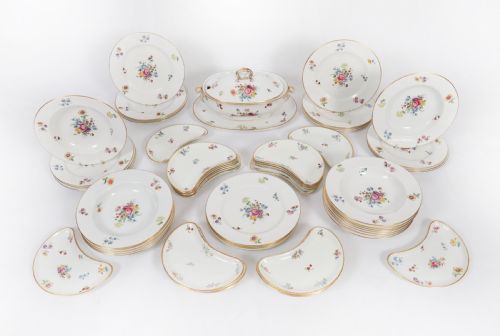
A floral ceramic set encompasses diverse groupings ranging from large dinner and dessert services to smaller teacups, trios, and washstand basin sets. The pieces span Georgian, Regency, and Victorian eras through to Edwardian and later twentieth-century production.
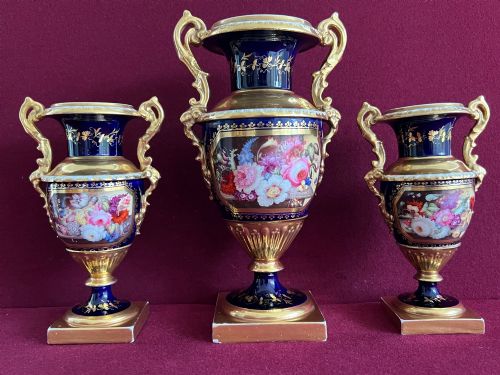
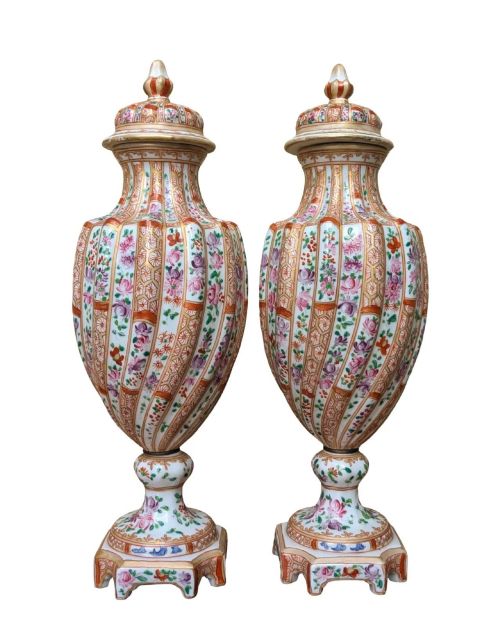
Tableware configurations include soup bowls, cabinet plates, and complete tea services alongside decorative garnitures and washstand sets with matching jugs and basins. Production stems from English potteries, continental European factories, and Asian workshops.
The decorative schemes rely heavily on botanical motifs, taking the form of hand-painted floral arrangements, transfer-printed sheets, and enamel highlights applied to porcelain, earthenware, and ironstone.
Materials and methods
Potters utilised porcelain, earthenware, ironstone, and soft paste ceramic bodies, shaping them into plates, vessels, and complete services before firing.
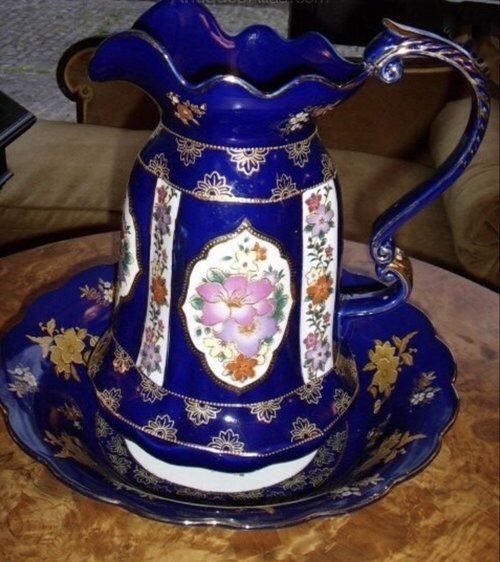
Decoration relied on cobalt blue glaze, polychrome enamels, transfer printing, and gilding with gold leaf applied over or under the final glaze layer.
Floral Ceramic Set Retail Price Guide 2026
Typical asking prices for floral ceramic set among the pieces listed under this phrase on Sellingantiques today, from the lower quarter to the upper quarter. They describe what is for sale here now, not the wider market.
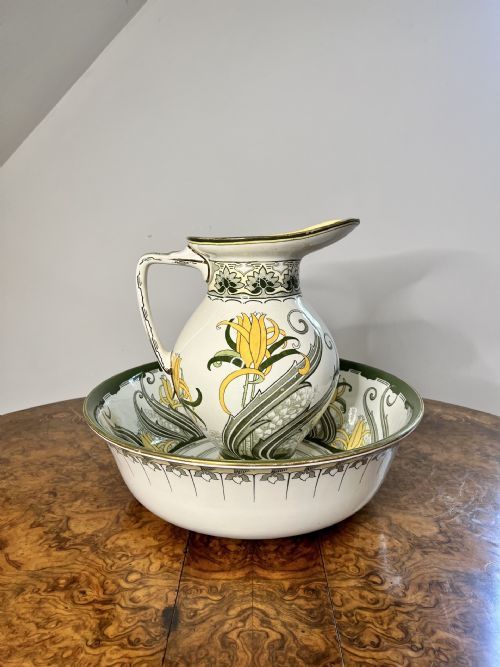
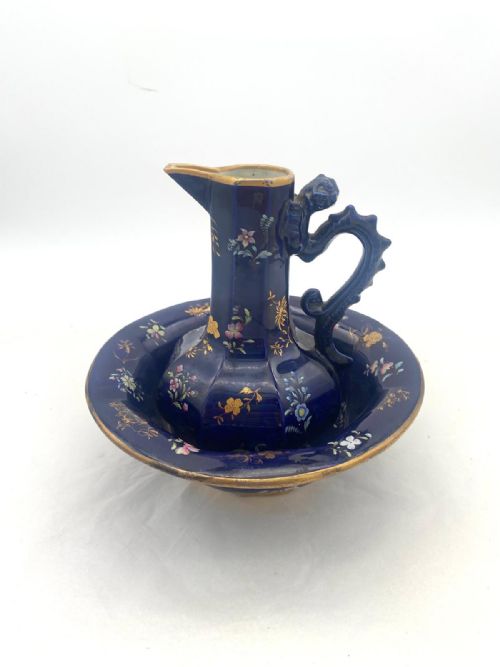
Even the morning wash routine received a botanical uplift through painted porcelain jugs and basins.
Distinctions in execution
Execution depends on the precision of the hand-painted brushwork or the clarity of the transfer-printed floral sheet pattern across multiple items in a service.
The choice of body material, from standard earthenware to refined porcelain or ironstone, alters the weight, translucency, and durability of the finished items.
Spode Porcelain·Edme Samson·Minton Porcelain·Grainger Lee And Co·H And R Daniel·Newhall Porcelain·Doulton Burslem·Masons Ironstone·Chamberlains Worcester·Royal Vienna·Copeland Spode·John Ridgway·Royal Worcester·Coalport·Sevres Porcelain·Chantilly
The Floral Ceramic Set Glossary
- Garniture
- A set of matching vases or urns, usually numbering three or five, designed to stand together on a mantelpiece or sideboard. These decorative groupings often share identical floral motifs and forms.
- Ironstone
- A heavy, durable type of earthenware patented in the nineteenth century to imitate porcelain while offering greater strength. It forms the base of many robust dinner and washstand services.
- Transfer printing
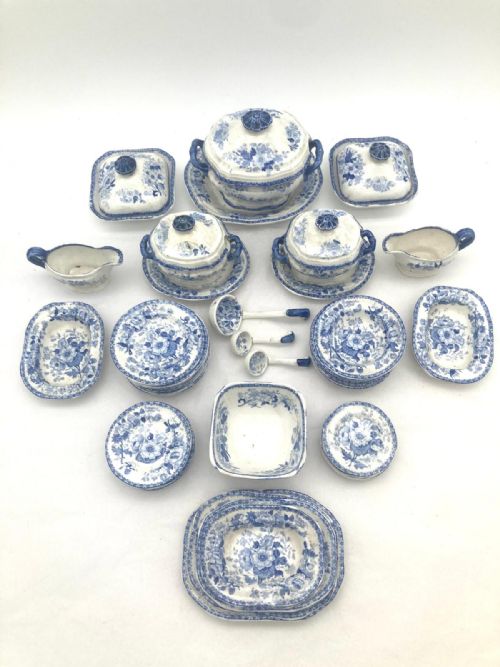
- A mechanical method of applying complex decorative patterns to ceramic surfaces using a paper template inked from an engraved copper plate. This technique allowed intricate floral designs to be reproduced rapidly.
- Trio
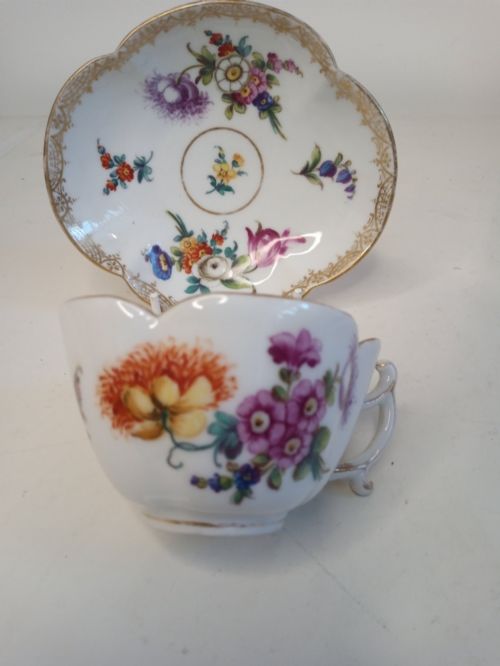
- A matched set comprising a teacup, saucer, and matching side plate. They appear frequently in nineteenth-century and Edwardian tea services.
- Washstand set
- A matching basin and jug, sometimes accompanied by slop pails or soap dishes, designed for bedroom hygiene before indoor plumbing. They often feature large-scale floral transfer prints or hand-painted botanical sprays.
Floral Ceramic Set: Frequently Asked Questions
What is included in a dessert service?
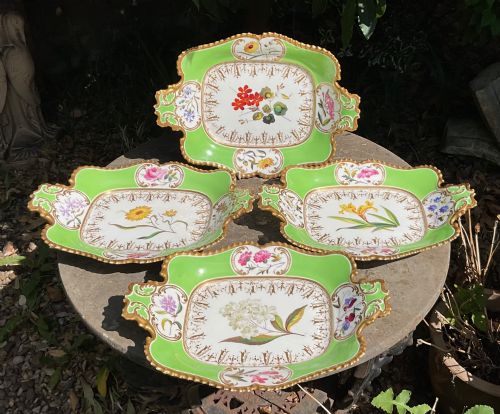
A dessert service typically comprises a collection of shaped plates alongside larger comports, dishes, or serving vessels intended for the final course of a formal meal. They often feature detailed hand-painted botanical subjects.
These gatherings allowed hosts to display fine ceramic bodies and intricate enamel work to their dining guests.
How were washstand sets used?
Washstand sets were placed in bedrooms to hold water for morning and evening washing before modern bathrooms became standard in homes. The large jug held fresh water while the matching basin caught it.
They combined practical utility with decorative floral patterns that matched the room's furnishings.
How do I care for antique ceramics?
Antique ceramics require careful hand washing in lukewarm water using mild detergent, avoiding dishwashers and harsh abrasive sponges. Sudden temperature changes can cause old glazes to crack.
Displaying pieces away from direct sunlight helps preserve delicate enamel colours and gold leaf highlights.
How are different periods identified?
Periods are identified through a combination of paste composition, glaze characteristics, form styles, and factory marks stamped or painted on the underside. Georgian and Regency pieces often show softer paste variations and distinct potting shapes.
Later Victorian and Edwardian examples incorporate different manufacturing techniques and bolder transfer-printed botanical palettes.