



Floral Ceramic Basket
A floral ceramic basket brings handpainted blooms and modelled petals straight to a table, offering a charming focal point for any room.
Floral Ceramic Basket
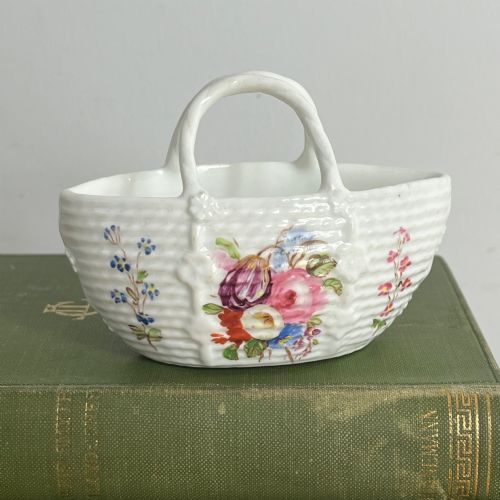
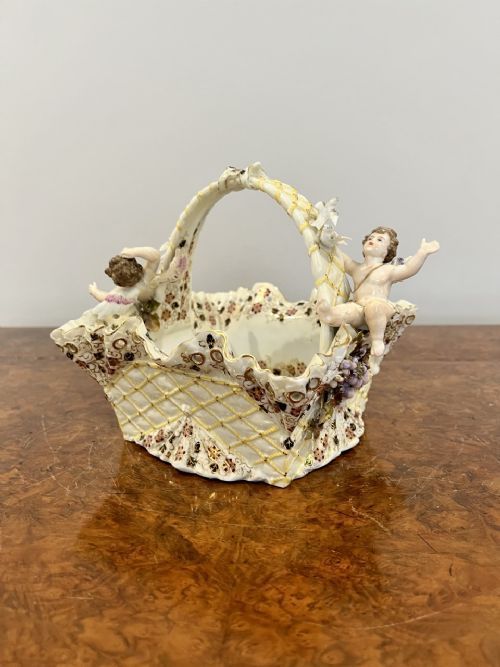
A floral ceramic basket represents a delightful category of decorative object, often designed as a centrepiece, fruit dish, or figural accessory. These pieces span the eighteenth, nineteenth, and early twentieth centuries, drawing upon Georgian, Victorian, and Rococo Revival styles.
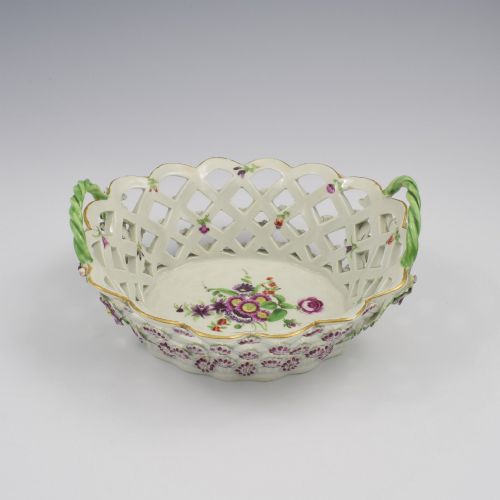
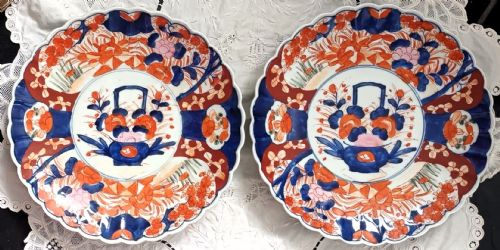
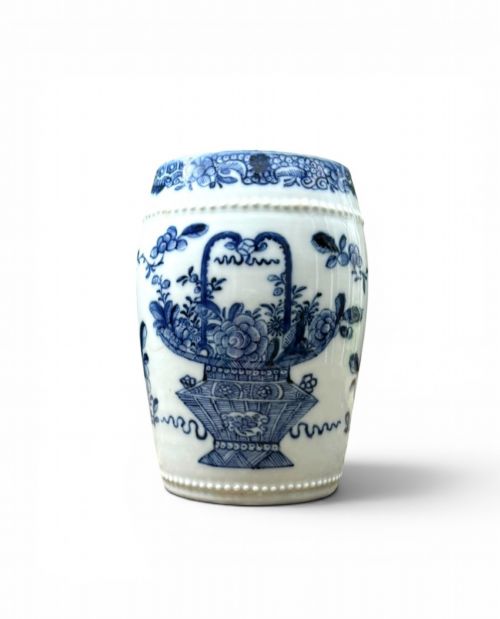
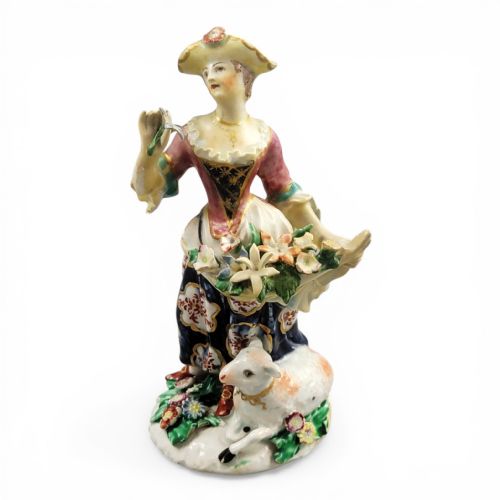
The selection on this page centres on porcelain vessels adorned with botanical motifs, including applied ceramic flowers, handpainted blooms, and pierced or woven basketwork textures. Examples range from English factories like Worcester and Rockingham to continental German manufactories and Asian export wares.
Buyers encounter various forms, from small miniature baskets to large German centrepieces featuring cherubs or elaborate openwork handles. Each item captures a historical interest in bringing natural garden forms into interior decoration.
Materials and construction
Potters utilised porcelain, soft-paste porcelain, and pottery bodies, shaping them through moulding, throwing, or hand-building techniques. Many items incorporate pierced trellis work or simulated wicker designs to mimic actual baskets.
Decoration relied on handpainted enamel colours, transfer printing, and gilding with gold leaf. Applied ceramic flowers, individually modelled and attached by hand before firing, appear frequently across the English and German pieces.
Floral Ceramic Basket Retail Price Guide 2026
Typical asking prices for floral ceramic basket among the pieces listed under this phrase on Sellingantiques today, from the lower quarter to the upper quarter. They describe what is for sale here now, not the wider market.
Object forms include centrepieces, miniature baskets, teapots, dishes, and figural candlesticks decorated with applied flowers.
Judging quality and execution
Quality rests heavily on the crispness of the modelling and the delicacy of the applied floral elements. Superior pieces demonstrate fine, detailed handpainting on the porcelain surface rather than heavy or hurried brushwork.
The handling of the glaze and gilding also marks the difference between standard production and exceptional manufacture. Maker attribution, such as works associated with established porcelain houses, influences the standing of a piece within the range.
Flight Barr & Barr·Dr Wall Worcester·Bow Porcelain·C.G. Schierholz and Sohn·Sitzendorf
The Floral Ceramic Basket Glossary
- Soft-Paste Porcelain
- An early artificial porcelain composition fired at lower temperatures than hard-paste porcelain. It possesses a warm glaze appearance.
- Comport
- A decorative dish or bowl elevated on a foot, commonly used for serving fruit or sweets in nineteenth-century settings.
- Gilding
- The application of gold leaf or gold powder to ceramic surfaces for highlights and borders. It provides a rich contrast to painted enamel colours.
- Rococo Revival
- A nineteenth-century design style reviving the asymmetrical scrolls, natural motifs, and C-scrolls of the eighteenth century. It appears often on Victorian centrepieces.
- Transfer Printing
- A mechanical method of applying printed designs to pottery using engraved copper plates. This technique sped up production in blue and white wares.
Floral Ceramic Basket: Frequently Asked Questions
What is a floral ceramic basket used for?
These items served primarily as decorative centrepieces, fruit holders, or sweetmeat dishes on formal dining tables.
Today, they function as striking display pieces on sideboards or mantelpieces, often holding dried arrangements or standing alone as sculptural art.
How do I care for antique porcelain?
Antique porcelain requires gentle hand washing in warm water with mild soap when cleaning is necessary. Avoid harsh abrasives and ultrasonic cleaners to protect handpainted enamels and delicate applied gilding.
Keep pieces away from high-traffic areas where applied floral petals might experience accidental knocks or friction.
How can I tell English porcelain from continental porcelain?
English factories like Worcester and Rockingham often utilised specific soft-paste bodies and distinct enamel palettes during the eighteenth and early nineteenth centuries. Their marked pieces carry factory ciphers typical of British registration or production.
Continental manufactories, particularly German houses such as Meissen and Schierholz, frequently employed elaborate figural supports, cherubs, and highly textured applied floral encrustations.
What periods do these ceramic baskets come from?
The pieces span from the mid-eighteenth century through the Victorian era and into the early twentieth century. Georgian and Regency examples sit alongside late nineteenth-century Rococo Revival and Edwardian centrepieces.
Each period introduced distinct stylistic shifts, moving from early handpainted floral reserves to later highly sculptural, three-dimensional flower applications.