


Floral Brass Chandelier
These floral brass chandeliers bring intricate botanical metalwork and warm illumination into a room, offering an instant focal point of period charm.
Floral Brass Chandelier
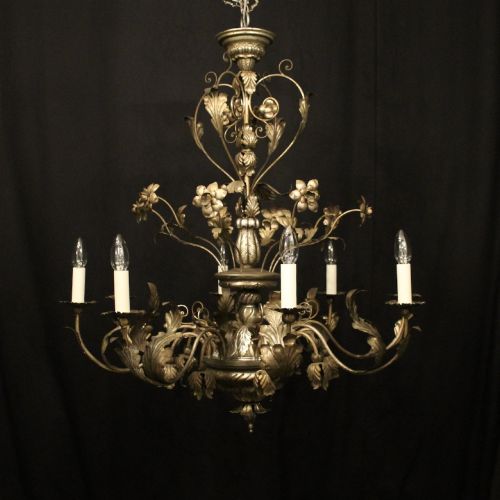
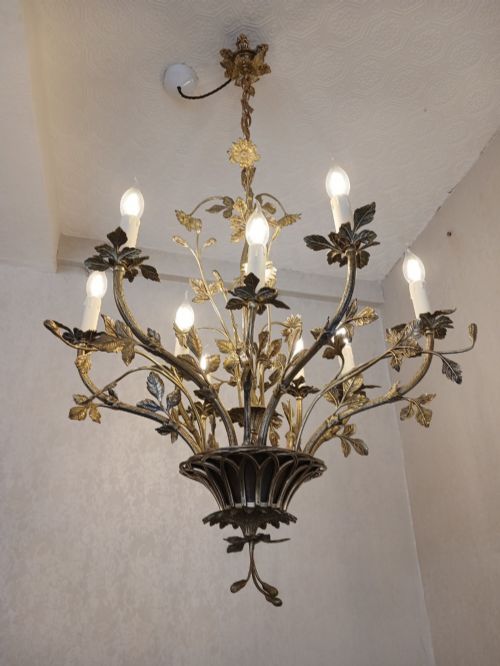
A floral brass chandelier combines structural metalwork with botanical motifs, forming a striking overhead light source for period interiors. When searching for a floral brass chandelier, buyers encounter pieces spanning the Victorian era through the 1930s, reflecting diverse regional tastes from French country workshops to Italian Florentine studios.
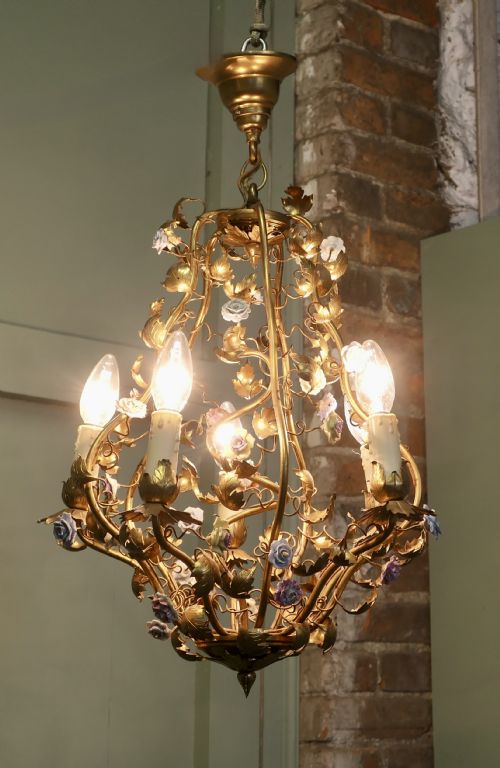
The selections on this page feature ceiling lighting configured with multiple bulbs, branch arms, and decorative elements such as ceramic flowers, glass grapes, and crystal droplets. Alongside ceiling fixtures, occasional table lamp variants appear, offering smaller scale illumination while retaining the characteristic floral and brass construction.
Origins heavily lean towards Continental European design traditions, particularly French and Italian aesthetics including Art Nouveau, Rococo Revival, and Empire styles. These pieces range from intimate three branch arrangements to grand sixteen light tent and waterfall configurations.
How they were made
These fixtures rely on durable base metals, principally brass, bronze, and gilt metal, which provide the structural strength needed to support multiple branch arms and hanging elements. Artisans shaped and cast these metals to form the twisting vines, leaves, and structural frames that define the botanical appearance.
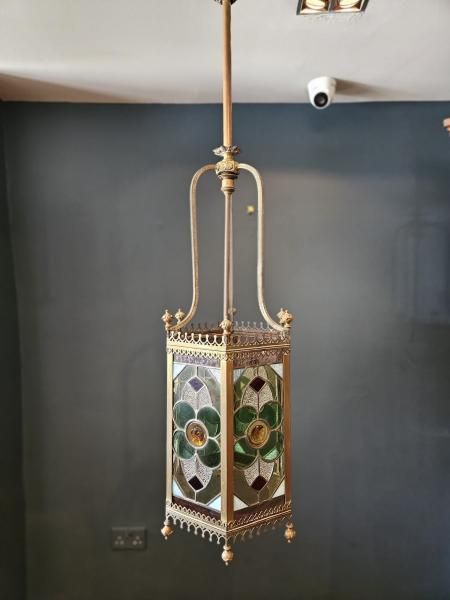
Glass and crystal components, such as leaded panels, tent and waterfall drops, and opaque grapes, were integrated alongside painted toleware and ceramic flowers. This combination of reflective glass and tinted metal creates a textured play of light across the floral motifs.
Some chandeliers feature opaque glass grapes nestled among the metal leaves, bringing a literal harvest directly to the ceiling.
What varies in quality
The distinction between standard examples and the finest pieces rests upon the finesse of the metalwork and the complexity of the botanical detailing. Superior items display deeply chased brass, delicately modelled ceramic or tole flowers, and integrated crystal elements that catch the light evenly.
Proportion and scale also dictate quality, as seen in the balance between the number of light branches and the supporting frame, whether in a modest three branch table variant or a substantial multi light Florentine ceiling fixture.
The Floral Brass Chandelier Glossary
- Toleware
- Painted or lacquered metalware, frequently shaped into botanical forms like leaves and petals to introduce colour and texture.
- Tent and waterfall
- A lighting arrangement where strings of crystal beads form a tent shape above a cascade of drops, diffusing the illumination.
- Florentine style
- An aesthetic originating in Florence, known for ornate giltwork, rich botanical carvings, and decorative floral metal structures.
- Leaded glass
- Glass pieces joined together with lead cames, often utilised in lanterns and shades to form geometric or pictorial patterns.
Floral Brass Chandelier: Frequently Asked Questions
How do I clean a brass chandelier safely?
Dust the metal and glass components regularly with a soft, dry cloth to prevent grime accumulation.
Avoid abrasive cleaners that can strip gilt finishes or damage delicate ceramic and tole flower attachments.
Are these chandeliers suitable for low ceilings?
Most ceiling fixtures in this category require adequate clearance to accommodate their multi branch drop and decorative crystal elements.
Table lamp variants offer an alternative solution where vertical hanging space is limited.
How can I date a brass chandelier?
Examine the construction methods, wiring types, and stylistic indicators such as Art Nouveau curves or Victorian Gothic heaviness.
Materials like leaded glass and specific patinations on the brass provide further clues to the manufacturing decade.
What rooms suit a floral chandelier best?
Dining rooms and entrance halls provide traditional settings where multi light fixtures can serve as a primary design anchor.
Boudoirs and living spaces benefit from the softer illumination and decorative botanical forms found in smaller branch configurations.