
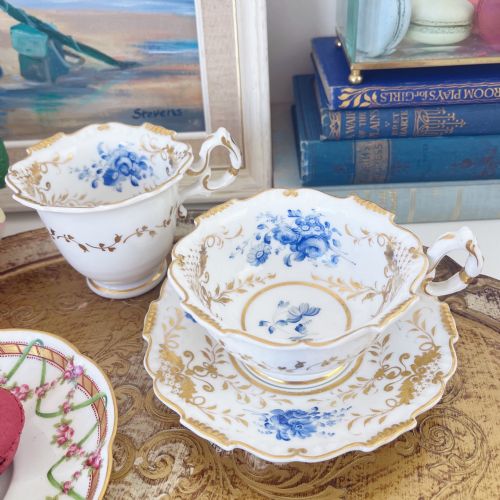
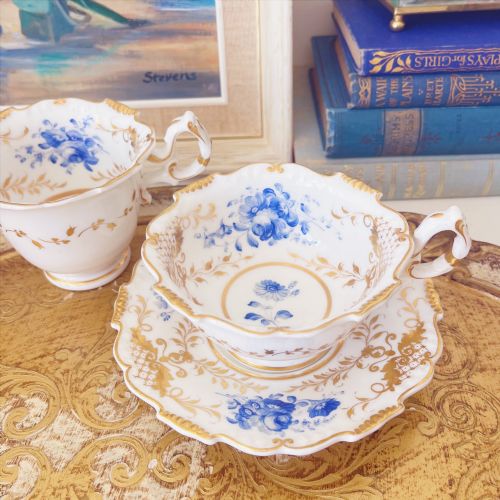
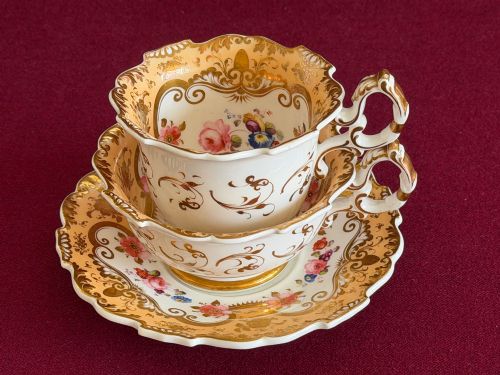
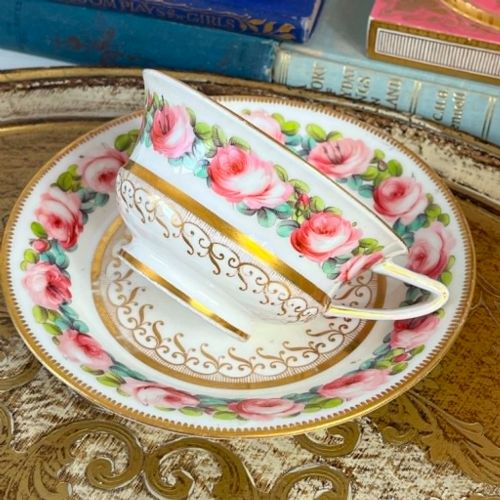
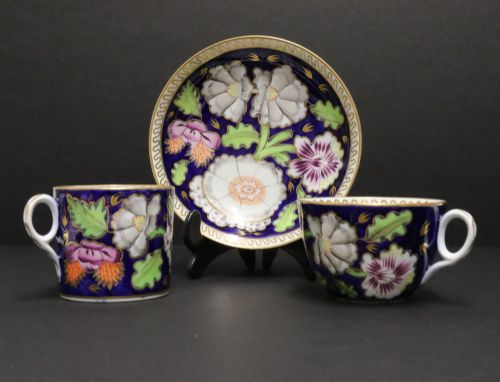
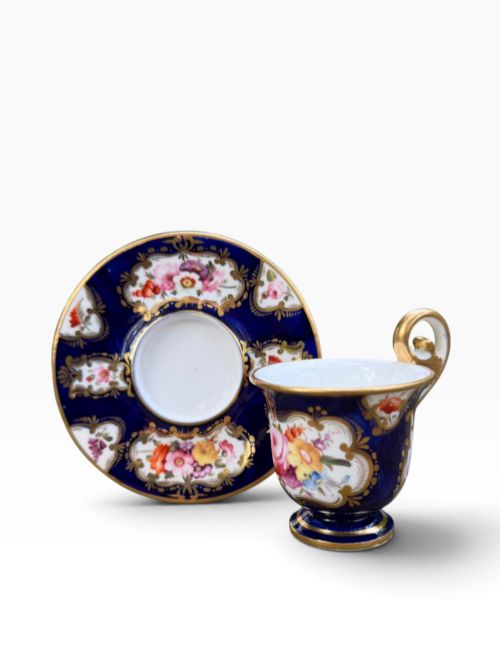
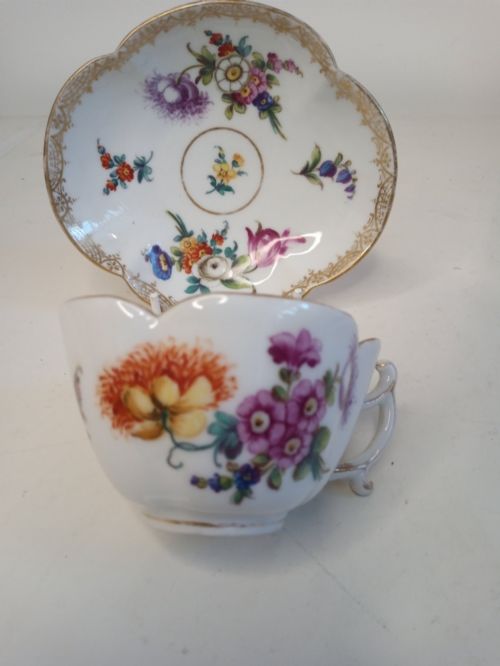


Floral Bone China Saucer
These floral bone china saucer selections offer handpainted botanical charm from Georgian, Regency, and later British periods.
Floral Bone China Saucer
A floral bone china saucer brings delicate botanical artistry and traditional British craftsmanship to the table. When searching for a floral bone china saucer, buyers encounter pieces ranging from early nineteenth century cabinet trios to twentieth century tea sets.
The inventory on this page spans periods from the Georgian and Regency eras through the Victorian age into the 1900s, 1910s, 1920s, and 1930s. Forms include standalone teacups and saucers, duos, trios, coffee cans, demitasse sets, and larger tea services.
Makers represented in the evidence include H & R Daniel, Davenport, Newhall, Coalport, Royal Albert Crown China, Yates, Minton, Wileman Foley Shelley, Spode Copeland, and Royal Worcester. These items appear within categories of teaware, cabinet cups, and complete tea sets.
Assessing Quality
Quality in these ceramic pieces rests upon the precision of the handpainting and the finesse of the porcelain body. Finer examples display meticulous brushwork in floral details and carefully applied gilding that enhances the underlying form.
The distinction between standard domestic wares and superior cabinet pieces also lies in the reputation of the pottery and the complexity of the pattern. Renowned factories employ superior potting techniques and intricate decorative schemes executed by named decorators.
Listings feature porcelain and bone china items spanning the Georgian, Regency, Victorian, and twentieth century periods.
H & R Daniel·Davenport·Newhall·Coalport·Royal Albert Crown China·Yates·Minton·Wileman Foley Shelley·Spode Copeland·Royal Worcester·Royal Crown Derby
The Floral Bone China Saucer Glossary
- Bone china
- A type of porcelain incorporating bone ash, known for its high strength, chip resistance, and translucent white body. It provides a smooth surface ideal for detailed enamel painting.
- Cabinet cup
- A decorative porcelain cup intended primarily for display in a cabinet rather than for daily tea consumption. These pieces often feature elaborate handpainted scenes and rich gilding.
- Demitasse
- A small cup used for serving Turkish coffee or espresso. They frequently appear in sets alongside matching saucers from twentieth century periods.
- Gilt
- A thin layer of gold applied to the ceramic surface for ornamentation. It highlights rims, handles, and painted floral motifs.
- Trio
- A matching set comprising a teacup, coffee cup, and saucer, or a teacup, saucer, and matching small plate. They represent complete drinking services from the Georgian and Regency periods.
Floral Bone China Saucer: Frequently Asked Questions
How do I date an old saucer?
Dating relies on identifying factory backstamps, ceramic body characteristics, and stylistic painting traits. Early nineteenth century pieces often feature handwritten pattern numbers rather than printed marks.
Comparing the floral motifs and gilding styles to documented periods like the Regency or Victorian eras helps narrow down the production decade.
Are these saucers safe for daily use?
Most antique porcelain and bone china saucers are delicate and best reserved for gentle handling or display. Handwashing protects the fragile enamel colours and delicate gold leaf from detergent wear.
Thermal shock from boiling water poured directly into un-warmed antique cups can also cause hairline cracks in older ceramics.
What is a cabinet trio?
A cabinet trio consists of three matching ceramic pieces, usually a teacup, coffee cup, and saucer, intended for display. These items were often produced by prominent potteries during the Regency and nineteenth century.
They showcase superior artistic painting and elaborate gilding meant to impress guests in a drawing room.
How do I spot handpainted floral designs?
Handpainted ceramics show subtle brushstroke textures and slight variations between pieces under magnification. Printed transferware patterns display uniform dot matrices or unbroken ink lines.
Floral motifs attributed to specific decorators often exhibit individual artistic style and precise enamel layering.