
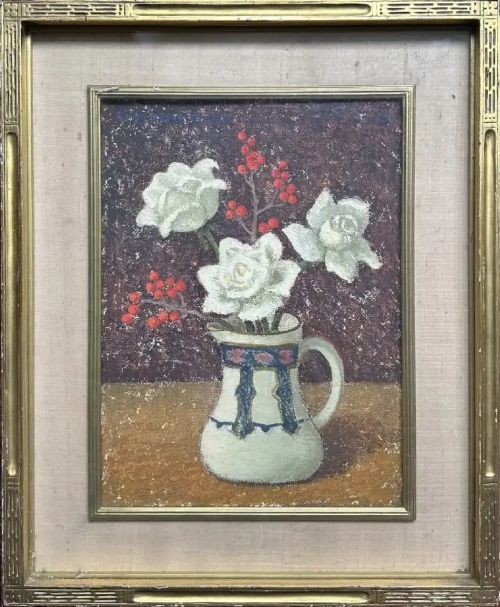
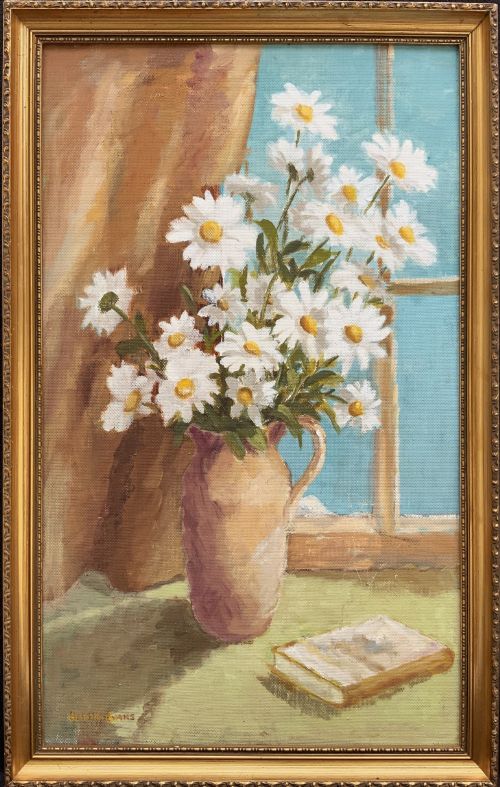


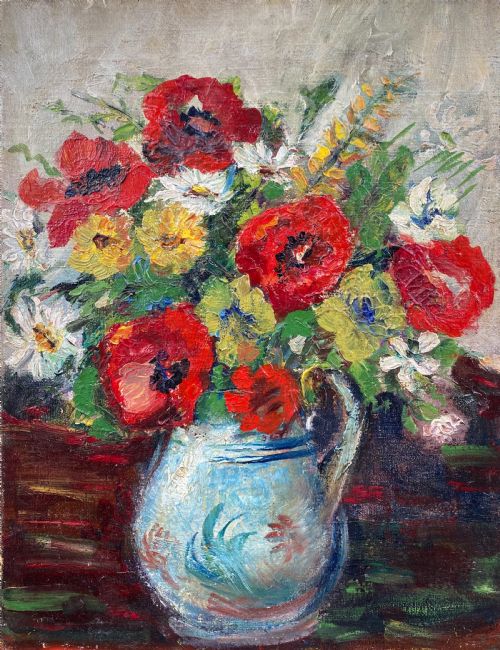
Floral Artwork in Jug
These floral artwork in jug pieces capture painted studies of blooms arranged in vessels, bringing mid-century and traditional still life charm to a room.
Floral Artwork in Jug
When you search for floral artwork in jug, you are looking at still life paintings that focus on cut flowers arranged within pitchers, ewers, and pottery vessels. The selection spans the nineteenth century through the mid-twentieth century, including works from the nineteen-twenties, nineteen-thirties, nineteen-forties, nineteen-fifties, and nineteen-sixties. You will encounter various regional expressions here, from modern British and Scottish compositions to French oils and American impressionism.
The most common formats on this page are framed original paintings executed in oil or watercolour. Subjects range from white roses, red berries, and pelargoniums to gladioli, cosmos flowers, and spring blossoms. These pieces reflect traditional still life disciplines alongside mid-century impressionist and art deco sensibilities.
How they were made
Artists painted these floral studies using oil paint, watercolour, and ink on supports such as paper, canvas, wood, and metal. Oil paints provided rich textures and deep tones for canvases and metal panels, while watercolours offered fluid immediacy on paper grounds. Gilt framing often completed the presentation of these works.
The techniques rely on the traditions of still life painting, capturing light, shadow, and the tactile qualities of both petals and pottery. Mid-century and impressionist hands employed looser brushwork, whereas Victorian and traditional approaches favoured tighter observation.
Listings span periods from the nineteenth century through the nineteen-sixties, capturing shifts from Victorian observation to mid-century impressionism.
What varies in quality
Quality rests upon the confidence of the brushwork and the harmony of the composition within the painted vessel. Superior pieces demonstrate a sure command of tone and colour, making the interplay between the flowers and the jug feel balanced and deliberate.
The handling of the medium dictates distinction, whether through the luminous layering of oil paint on canvas or the crisp transparency of watercolour on paper. Finer examples display a distinct personality in their mark-making, distinguishing lively original paintings from more formulaic decorative studies.
Emma Fordyce MacRae·James Tower·Owen Bowen·Margaret Laing·Jabez Bligh·Marion Broom·Edith Alice Andrews
The Floral Artwork in Jug Glossary
- Still life
- A painting or drawing depicting inanimate subject matter, typically commonplace objects which may be either natural or man-made, such as flowers and pottery. In these works, artists arranged blooms in jugs as primary studies in form and light.
- Impressionism
- A nineteenth-century movement characterised by relatively small, thin, yet visible brush strokes and an emphasis on accurate depiction of light. Pieces here span traditional approaches to mid-century impressionist interpretations.
- Watercolour
- Artists' paint made with water-soluble binders and pigmented powder, applied to paper surfaces. It yields translucent washes well suited to delicate floral studies.
- Gilt
- Covered thinly with gold leaf or gold paint, frequently seen on the traditional frames enclosing these paintings. It provides a warm, reflective border to the canvas or paper within.
Floral Artwork in Jug: Frequently Asked Questions
How do I date a floral still life painting?
Dating relies on stylistic clues, framing, artist signatures, and the materials used such as canvas, paper, or metal panels. Mid-century works often show impressionistic freedom, whereas nineteenth-century pieces tend towards tighter detail.
Examining the back of the frame or panel can occasionally reveal exhibition labels, signatures, or dates left by the artist.
What framing is typical for these watercolours?
Many watercolours and oils from this selection appear within period frames, often featuring gilt or painted wooden mouldings that complement the artwork. These frames protect the delicate paper or canvas surfaces from physical knocks.
Retaining the original frame preserves the historical context of the piece, though some collectors choose to update mounts for conservation reasons.
Are these paintings original works?
The selection consists of original paintings executed by hand in oil, watercolour, or ink rather than mass-produced prints. Each piece represents a distinct hand and unique artistic composition.
Signatures or attribution to named artists further confirm the individual nature of these artworks.
How should I care for an oil painting on metal?
Works painted on metal require stable indoor humidity and protection from direct sunlight to prevent paint flaking or metal oxidation. Dusting should be done gently with a soft, dry brush.
Avoid using liquid cleaners or abrasive cloths on the painted surface or the surrounding frame.