
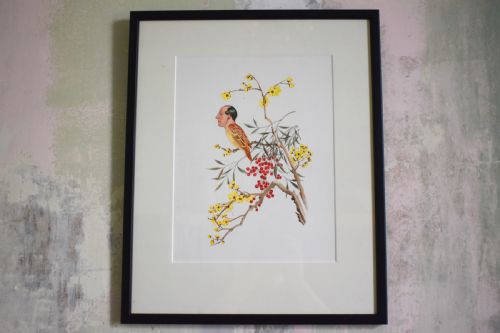


Paper Watercolour Floral Painting
A paper watercolour floral painting brings the quiet immediacy of botanical studies and cottage gardens directly onto the wall.
Paper Watercolour Floral Painting
When you search for paper watercolour floral painting, you encounter delicate works executed on paper surfaces using water-based pigments and gouache. These pieces encompass 19th Century Victorian botanical studies alongside 20th Century British still lifes, depicting garden scenes, vases of roses, and potted blossoms.
The version most commonly met on this page is the framed floral still life or garden view originating from the Victorian period through to the mid-20th century. Works frequently showcase detailed renderings of seasonal blooms such as pansies, wallflowers, and camellias handled by named artists.
How they were made
Artists utilise watercolour pigments and gouache applied directly onto paper supports, sometimes combining these mediums with ink for definition. The fluid nature of watercolour allows for transparent washes of colour that capture the delicate tones of petals and foliage.
Many of these works are finished with wood framing and glass protection to safeguard the sensitive paper surface from atmospheric moisture and handling damage. The physical construction relies on traditional mounting techniques appropriate to the 19th and 20th centuries.
Cats sleep through the most intricate still-life sessions, entirely indifferent to the careful layering of pink roses and wallflowers.
What varies in quality
Quality separates through the sureness of brushwork and the artist's command of light and botanical structure. Superior examples demonstrate a precise yet fluid handling of pigment that gives petals depth and naturalistic form.
The distinction also lies in the preservation of the paper and the vibrancy of the pigments over time. Works that retain their original colour intensity without excessive fading or toning represent the upper tier of the range.
James Tower·Alice Anne Renshaw·Henrietta Creswell·William Edward Fox·Theresa Stannard·Lester Sutcliffe·Lilian Stannard·William Hough·Edith Barrow·Rowland Henry Hill·Grace Hastie·Phyllis I Hibbert·Marian Chase·Alfred W Parsons·Jabez Bligh·Owen Bowen·Charlotte Isa James·Alice Macallan Swan·Marion Broom·Edith Alice Andrews·Jane Utley·Beatrice Parsons·Theresa Sylvester Stannard·Minnie Smythe
The Paper Watercolour Floral Painting Glossary
- Watercolour
- A paint consisting of a pigment suspended in a water-soluble vehicle. It is applied in translucent washes to paper to create luminous effects.
- Gouache
- An opaque water-based paint that includes a white pigment filler, producing a denser and heavier finish than standard watercolour. It is frequently used to add highlights to floral studies.
- Botanical study
- A rigorous visual record of a plant's structure, flowers, and leaves. These works combine artistic skill with accurate scientific observation.
- Still life
- A painting featuring inanimate subject matter, typically commonplace objects or natural items such as cut flowers in jugs and bowls of fruit.
- Foxing
- Brown spots or patches that develop on older paper due to chemical reactions involving iron impurities. It is a common occurrence in historical works on paper.
Paper Watercolour Floral Painting: Frequently Asked Questions
How should I hang these?
Display these works away from direct sunlight to prevent the watercolour pigments from fading over time. Maintaining a stable indoor environment protects the paper from humidity.
Ensure the frame is properly sealed behind glass to keep dust and atmospheric pollutants away from the delicate surface.
What is the history?
These works span from the 19th century through the mid-20th century, capturing changing artistic approaches to floral subjects. Victorian examples often lean towards botanical precision while later pieces embrace British Impressionism.
Artists frequently painted gardens, potted plants, and gathered blooms during the Edwardian era and wartime periods. This genre reflects a sustained British affinity for domestic horticulture and natural observation.
Are they original?
The listings consist of original hand-painted works rather than modern mass-produced reproductions. Each piece represents a direct application of pigment to paper by the artist's hand.
Signatures, dates, and period framing often provide additional verification of authenticity for individual paintings.
How do I date them?
Dating relies on inscribed dates, artist biographies, stylistic conventions, and framing materials. Victorian works often display tighter botanical detail while mid-century pieces show looser brushwork.
Comparing the paper type and pigment characteristics with documented examples from specific decades helps narrow the creation period.