


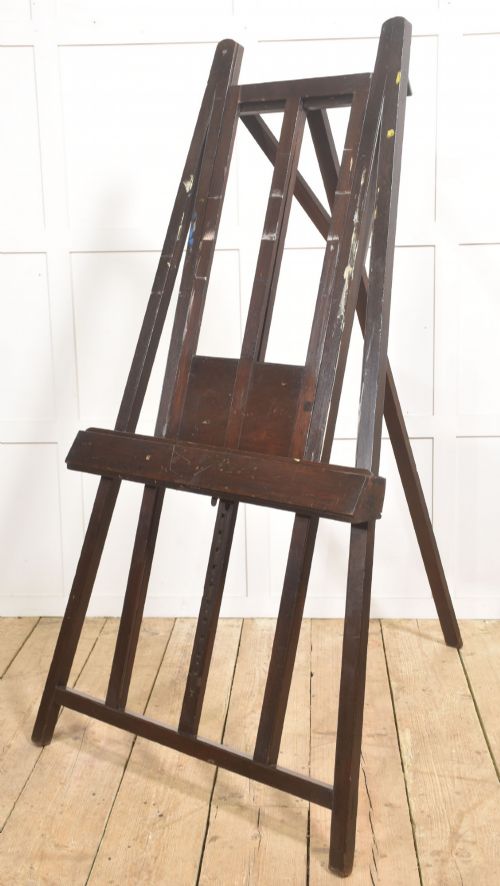


Floor Standing Studio Easel
These heavy timber frames are built to hold serious work in a proper workspace.
Floor Standing Studio Easel
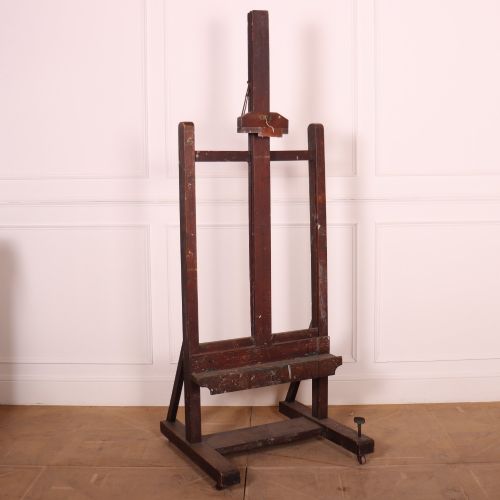
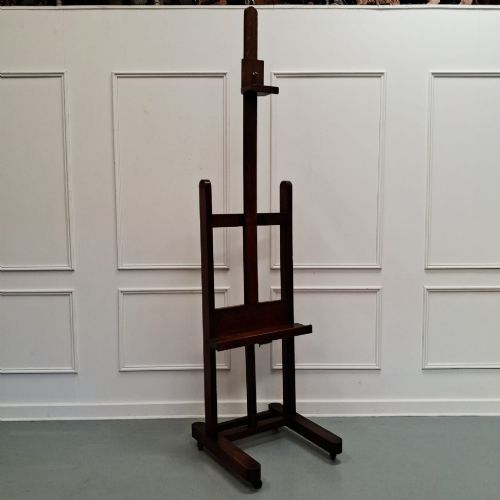
A floor standing studio easel gives you a robust, adjustable wooden frame designed to support large canvases during the creative process. When searching this phrase, you will find substantial working pieces rather than delicate decorative stands.
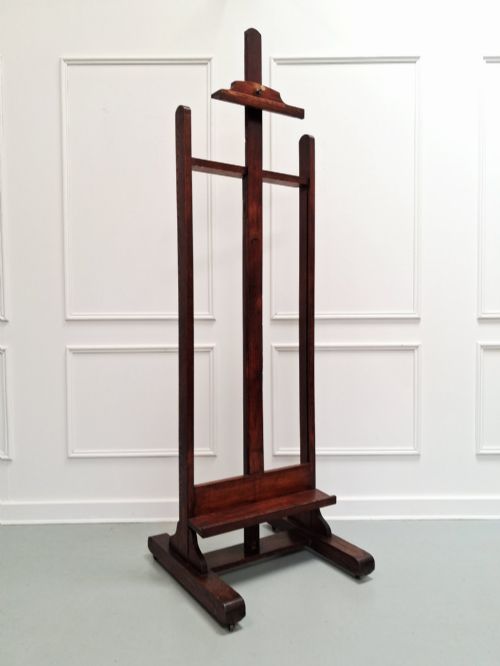
Most examples you meet on this page hail from the nineteenth century up through the nineteen-twenties, constructed in sturdy timbers like oak and mahogany. Forms range from simple upright frames to double-sided gallery versions and fully adjustable mechanisms.
How they were made
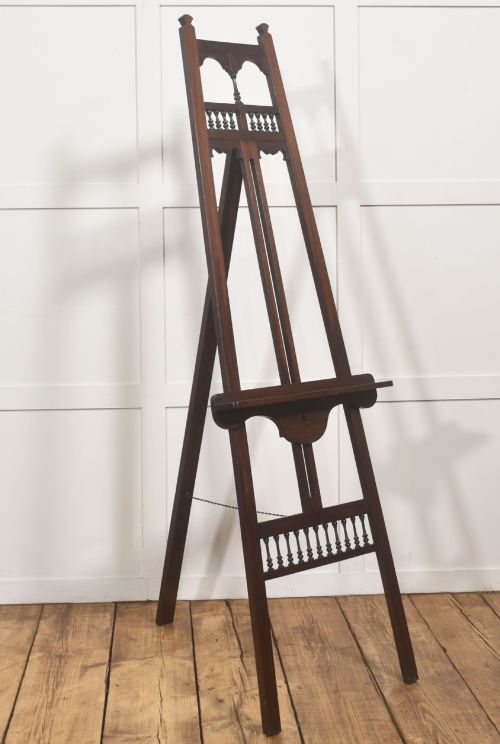
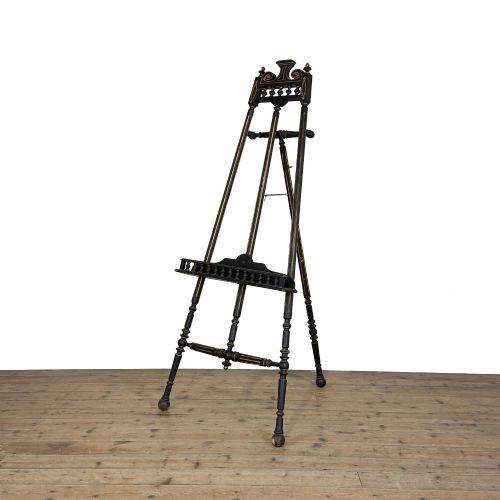
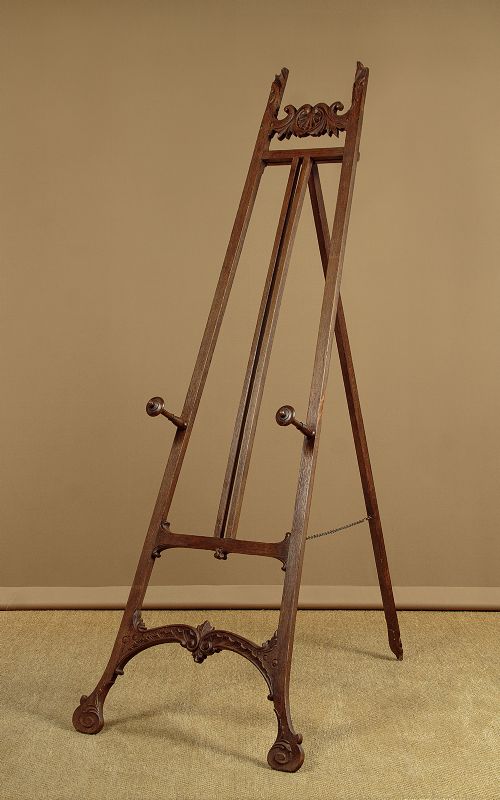
Joinery relies on heavy oak, mahogany, walnut and timber, often shaped with hand-carved details or ebonised finishes depending on the stylistic period. Structural integrity is paramount to bear the weight of heavy timber frames and the canvases resting upon them.
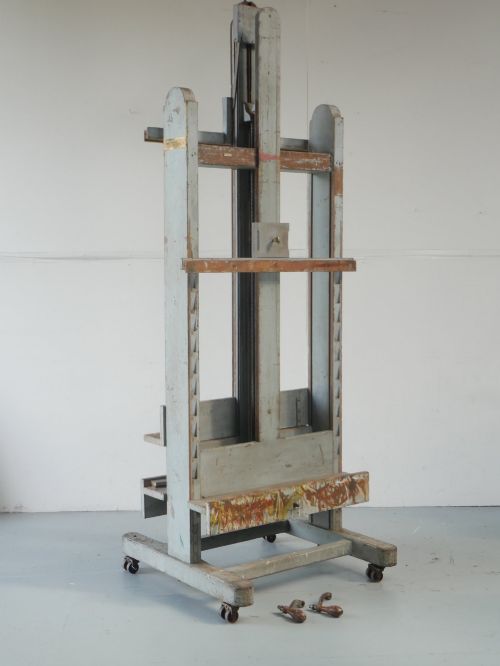
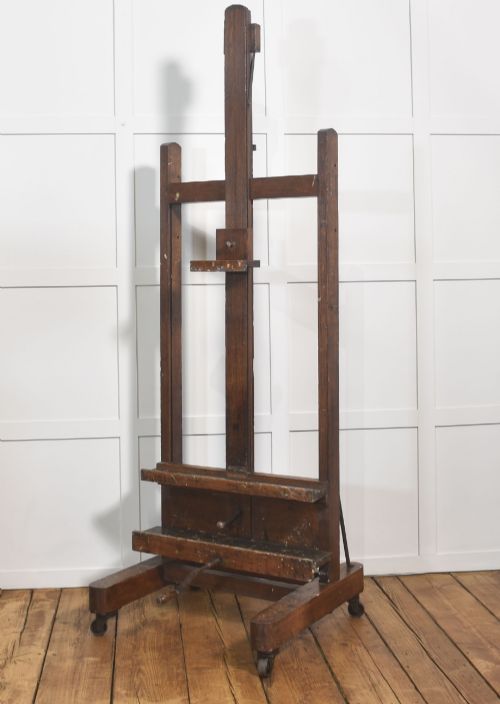
Iron, cast iron and brass components provide the mechanical movement for fully adjustable frames and winding mechanisms. These metal fittings allow artists to alter height and angle securely during daily work.
Floor Standing Studio Easel Retail Price Guide 2026
Typical asking prices for floor standing studio easel among the pieces listed under this phrase on Sellingantiques today, from the lower quarter to the upper quarter. They describe what is for sale here now, not the wider market.
Listings feature timber frames in oak, mahogany and walnut, alongside iron and brass mechanical hardware.
What varies in quality
The sophistication of the mechanical adjustment mechanism dictates much of the standing within the range. Simple static frames sit below complex winding systems that remain smooth and functional after a century of studio use.
The Floor Standing Studio Easel Glossary
- Double sided
- A frame designed with working ledges on both the front and the back, allowing two canvases to be supported simultaneously.
- Fully adjustable
- A mechanical construction allowing the height and tilt of the canvas to be altered via integrated metal screws and ratchets.
- Gothic Revival
- A nineteenth-century design style drawing on medieval architectural motifs, seen here in carved woodwork.
- Aesthetic Movement
- A late Victorian style prioritising visual beauty and refined surface treatments, often expressed through ebonised timber.
- Gallery easel
- A heavy display stand intended to show finished works to prospective buyers rather than hold wet paint.
Floor Standing Studio Easel: Frequently Asked Questions
How do I adjust the height on these?
Most models rely on a system of wooden ratchets, pegs, or metal winding handles attached to iron brackets. You loosen the mechanism to slide the central carriage up or down the main uprights.
Take care to support the weight of the ledge with one hand while releasing the lock to prevent sudden slipping.
Can I use one for modern painting?
These frames were built from heavy timbers like oak and mahogany to hold substantial nineteenth-century and early twentieth-century canvases. Their sturdy footprints make them ideal for supporting large modern work.
Ensure your floor space can accommodate the wide base and substantial weight before placing one in a modern studio.
How do I tell nineteenth century pieces apart?
Look closely at the timber choice, the style of the joints, and the type of metal fittings used on the winding apparatus. Pieces span from Georgian mahogany up to industrial iron variants and 1920s workshops.
Stylistic cues such as Gothic Revival carving or Aesthetic ebonising help narrow down the exact decade of manufacture.
Are double sided ones practical for home use?
Double sided gallery models offer immense visual presence and allow you to display two artworks back-to-back in a large room. They require ample clearance because they cannot sit flush against a wall.
Consider the floor area in your room before committing to a frame that demands a central position.