
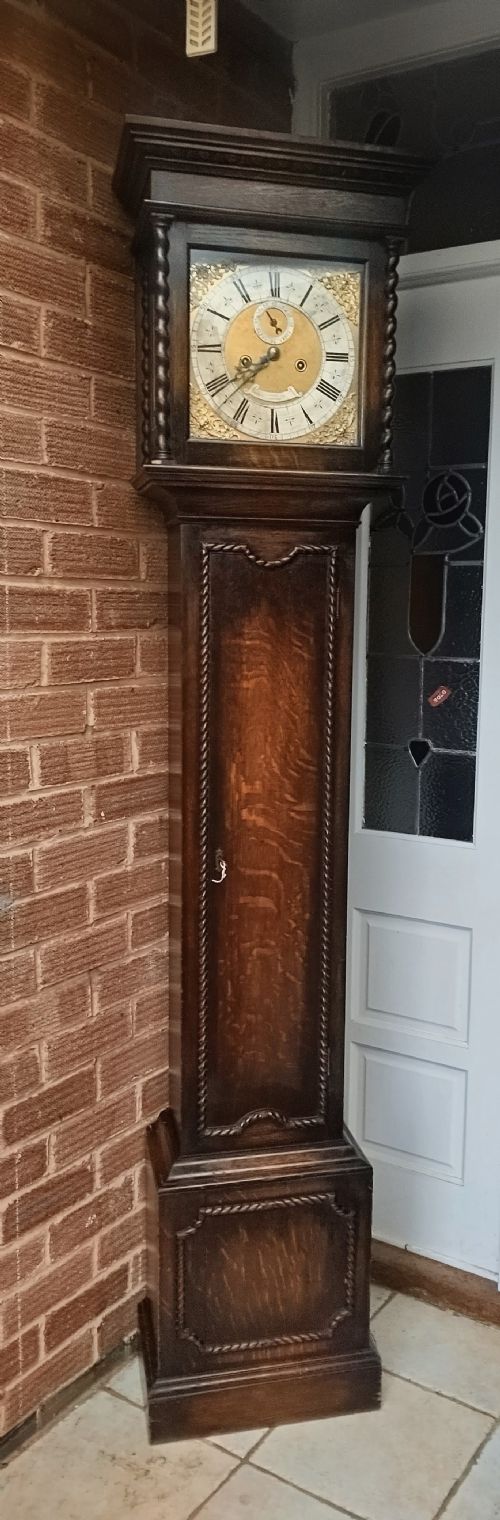
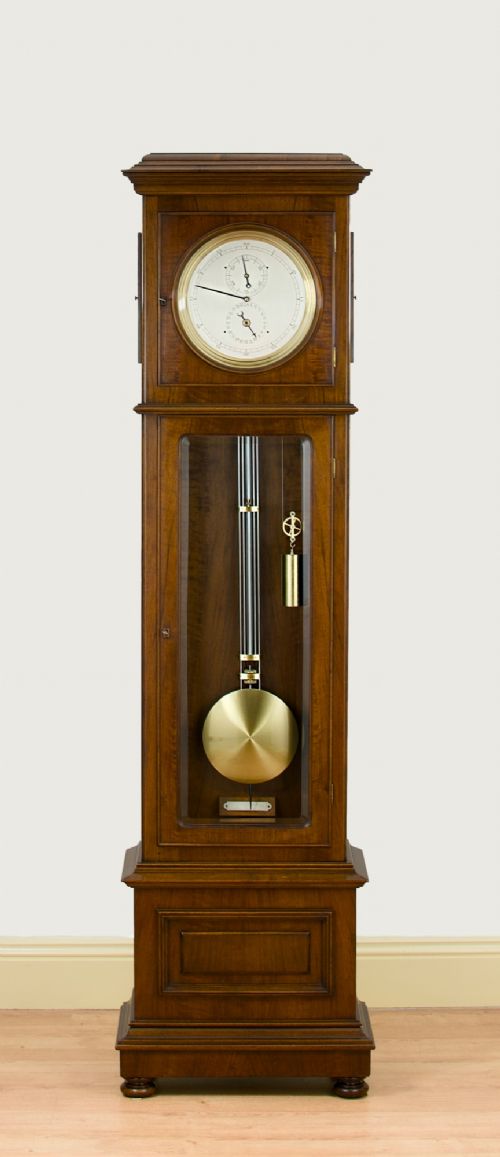


Floor Standing Regulator
These floor standing regulator clocks are precision timepieces designed to measure time with exactness, offering both mechanical mastery and stately presence.
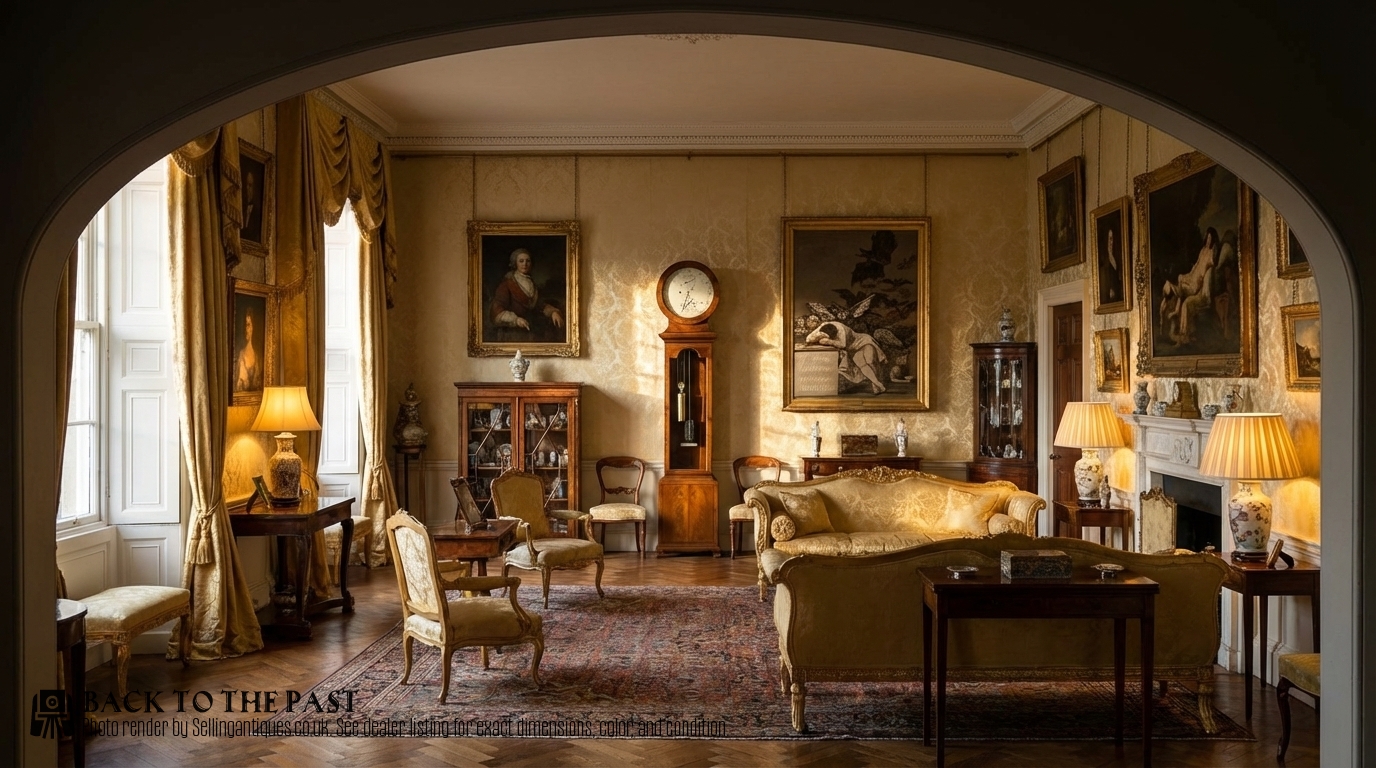
Floor Standing Regulator
A floor standing regulator is a high-precision timepiece housed in a tall case, built to maintain accurate time through controlled pendulum movement. When you search for this phrase, you find tall horological pieces designed for exacting timekeeping rather than simple domestic use.
The versions most commonly met on this page span the nineteenth century into the early twentieth century, taking forms such as longcase clocks and tall floorstanding regulators. These pieces appear in various historical styles including Victorian, Edwardian, and French Louis XV, reflecting both English and continental workshop traditions.
Makers often placed these precision movements in substantial wooden housings made from mahogany, walnut, oak, and kingwood. They serve both as functional scientific instruments and as commanding architectural furnishings within a room.
How they were made
Maker workshops constructed the tall architectural housings using solid and veneered timbers such as mahogany, walnut, maple, and kingwood, often incorporating glass panels to display the swinging pendulum and weights. Ormolu mounts and brass hardware frequently accent the polished wood surfaces.
Internal mechanisms rely on heavy brass gear trains, enamel dials, and precision escapements designed to reduce friction and maintain steady timekeeping. Makers such as Lenzkirch and Gillett & Johnston engineered movements for exactitude, while cabinetmakers built the enclosing floor cases to house the lengthy pendulums.
The listings show nineteenth-century and early twentieth-century pieces utilising mahogany, walnut, oak, and kingwood timbers.
What varies in quality
The refinement of the internal movement separates standard timepieces from high-precision regulators. Superior examples feature complex gear trains, jewelled bearings, and specialised deadbeat escapements designed for absolute accuracy.
Cabinetwork quality also defines the piece, with finer examples utilising dense hardwoods, precise marquetry or kingwood inlay, and thick bevelled glass. The crispness of brass or ormolu mounts and the legibility of the enamel dial further distinguish the upper tier of execution.
Lenzkirch·Gillett and Johnston·James Wood·French Royal Exchange·Aitchison of Glasgow·Richard Rowell Oxford
The Floor Standing Regulator Glossary
- Regulator clock
- A high-precision pendulum clock used as a standard for setting other timepieces. These mechanisms prioritize accurate timekeeping over simple domestic utility.
- Longcase clock
- A tall pendulum clock enclosed in a wooden case that protects the weights and pendulum. Also known historically as a grandfather clock.
- Ormolu
- Gilded bronze ornamentation applied to furniture and clock cases. This decorative technique adds metallic richness to the timber housing.
- Escapement
- The internal mechanism that converts rotational energy into impulses for the pendulum. It is the core component responsible for regulating the speed of the clock.
Floor Standing Regulator: Frequently Asked Questions
What is a floor standing regulator?
A floor standing regulator is a tall clock engineered specifically for high-precision timekeeping, featuring an exposed or glazed pendulum and a fine-tolerance movement.
These pieces were traditionally used in observatories, railway offices, and grand hallways where exact time was essential.
How do I wind the clock?
Winding involves using a specialised key to raise the internal weights or tension the spring mechanism depending on the specific movement design.
Care must be taken not to overwind the train, ensuring the pendulum remains undisturbed during the process.
Where should I place a regulator?
Place the clock against a sturdy, vibration-free interior wall on a level floor to ensure the pendulum swings evenly.
Avoid areas subject to direct sunlight, dampness, or extreme temperature fluctuations that could affect the wood and metal components.
How do I read the dial?
Many regulators feature separate subdials for hours, minutes, and seconds to allow for precise reading of time deviations.
The enamel dial presents these indications clearly behind protective glass.