


Floor Standing Hall Clock
A floor standing hall clock commands a room with its height and rhythmic ticking, bringing centuries of mechanical precision and cabinetmaking to the hallway or landing.
Floor Standing Hall Clock
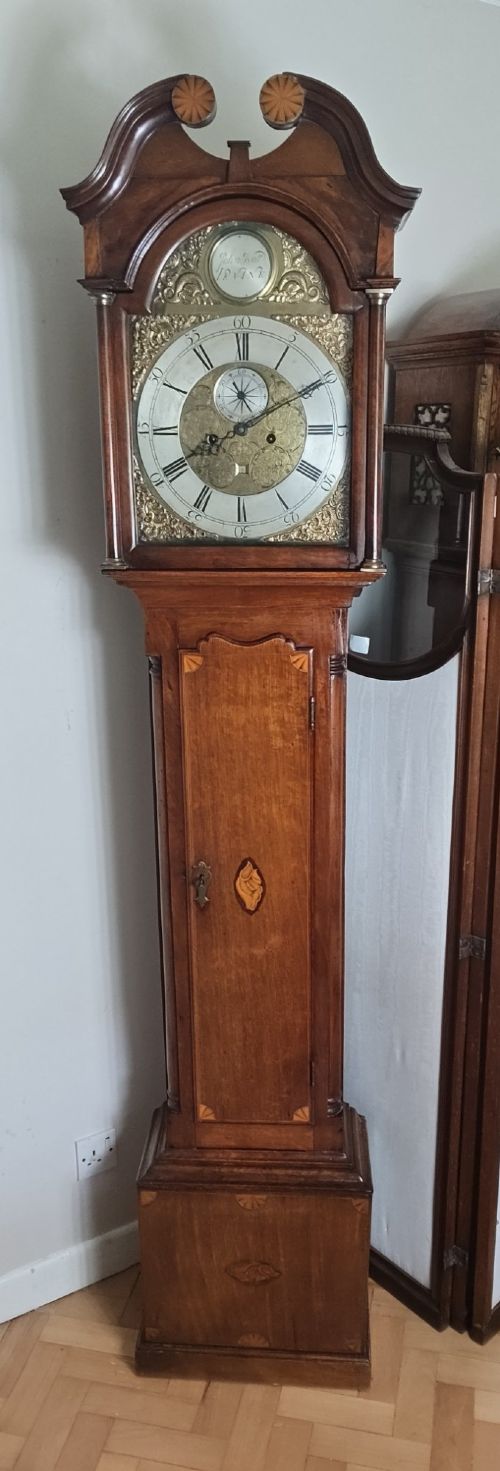
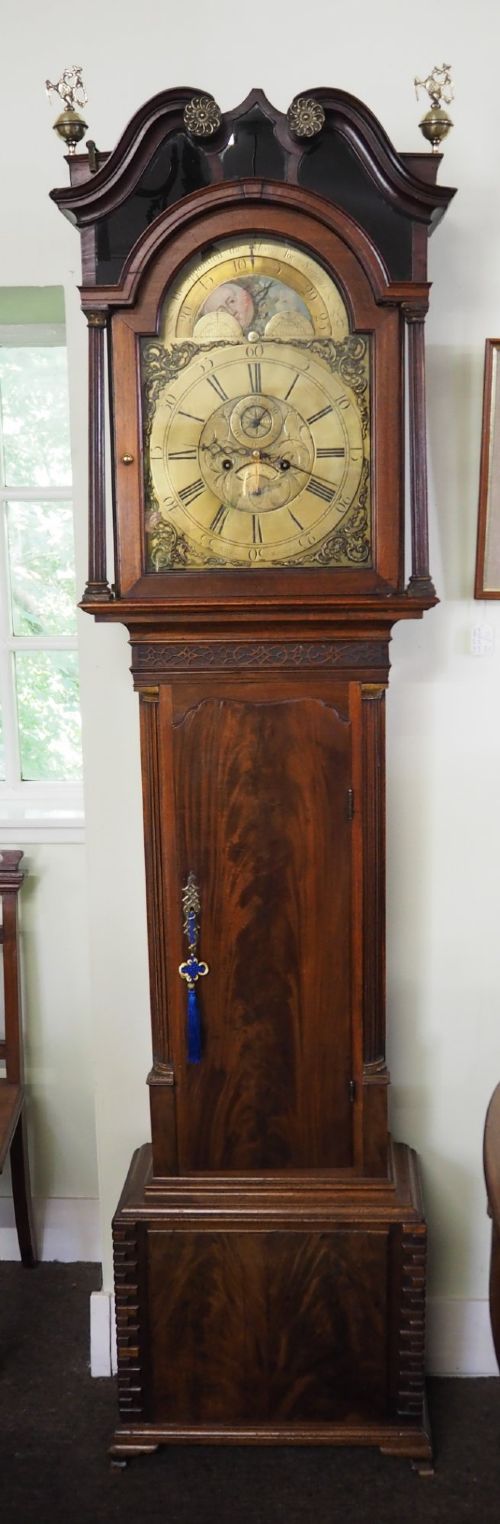
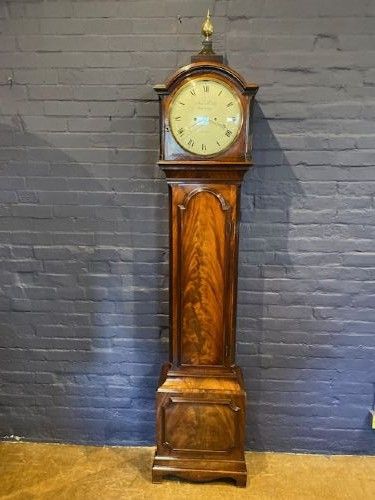
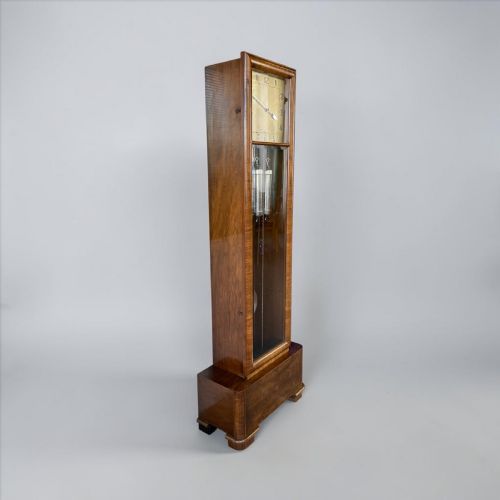
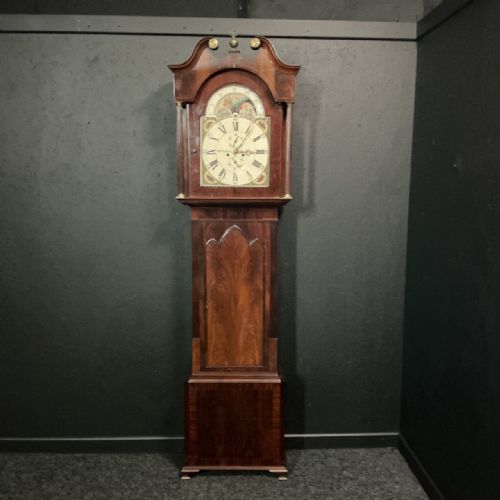
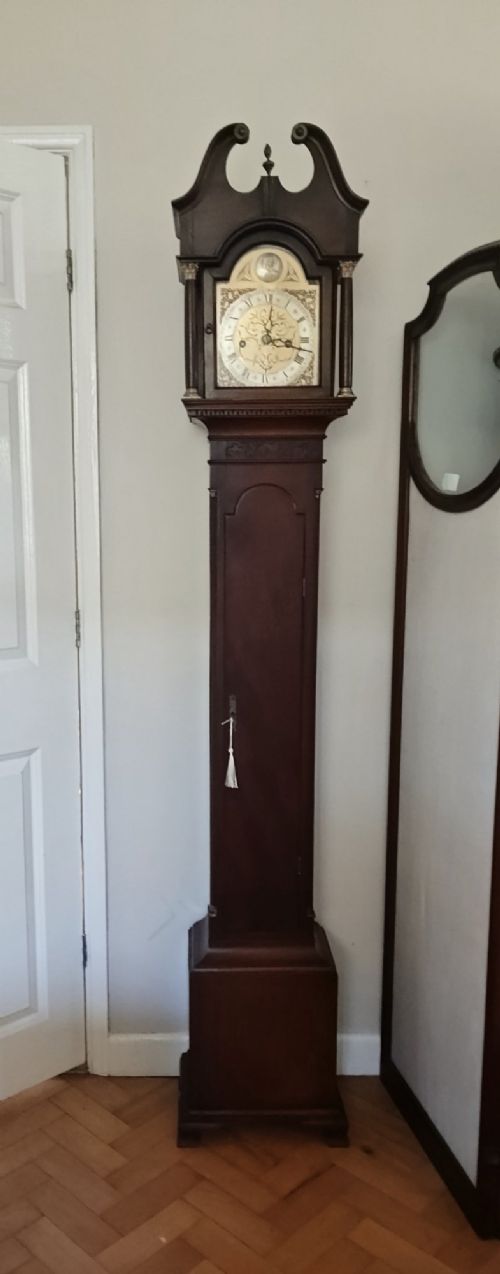
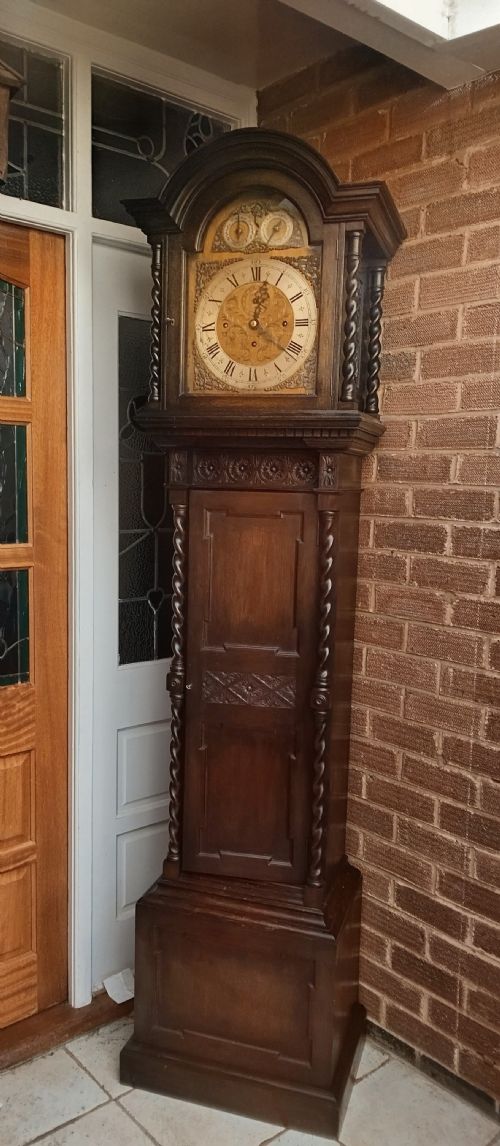
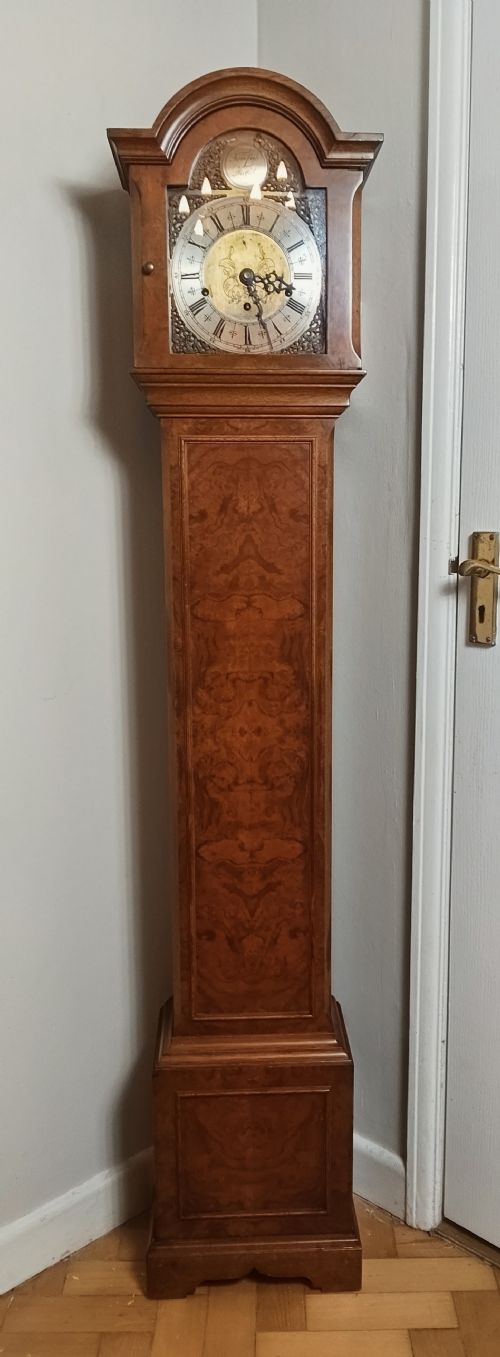
A floor standing hall clock, more commonly known as a longcase or grandfather clock, stands tall to house a weight-driven or spring-driven movement within a fitted wooden case. These timepieces span several centuries of design, ranging from early oak examples to refined mahogany and walnut cases of later periods.
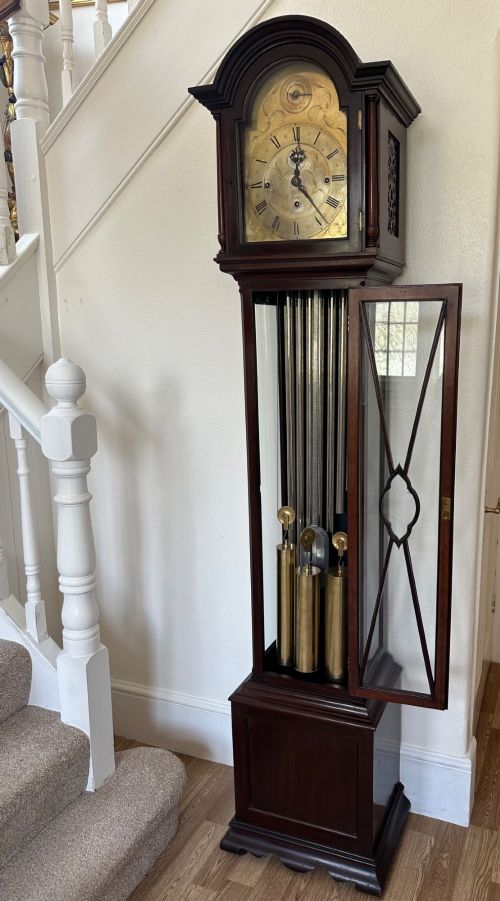
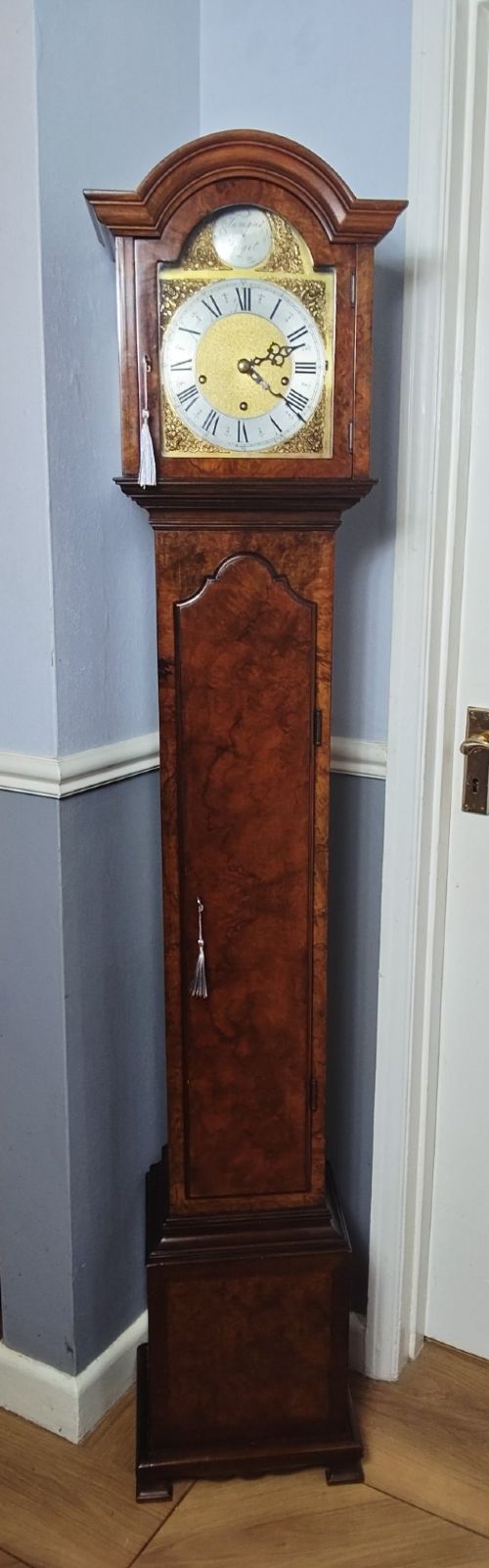
The selection includes substantial eight-day movements alongside smaller grandmother clocks and musical variations with tubular bells. Regional variations from Scotland sit alongside London pieces, offering buyers a choice of proportions and dial configurations suited to different interior spaces.
How They Were Made
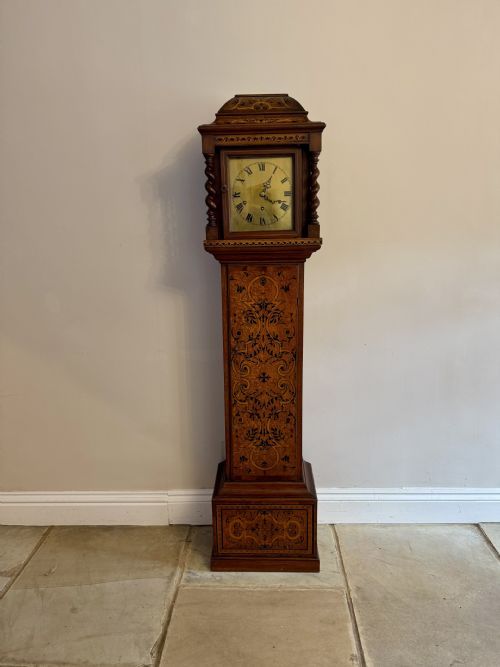
Cabinetmakers utilised timber such as mahogany, oak, walnut, and satinwood, often applying intricate inlay, marquetry, or carving to the tall wooden housings. Glass panels protect the dial and pendulum, allowing a clear view of the face and the swinging weight below.
Clockmakers housed complex brass movements within these enclosures, incorporating steel components for gears and springs. Dials combine brass, painted surfaces, and moon phases to track time and lunar cycles.
Some models play tunes on tubular bells, turning the hallway into a belfry.
What Varies in Quality
The sophistication of the movement dictates much of the standing, with quarter-chimes and tubular bell systems representing greater mechanical complexity than standard time-and-strike mechanisms. Signed dials by notable makers add a layer of distinction to the inner workings.
Cabinet work separates standard production from exceptional examples, seen in the selection of figured veneers, precise marquetry inlay, and the harmonious proportions of the wooden case.
James McCabe·ELLIOTT·John Wylde·Dwerrihouse & Carter·Edward Glase·Thomas Baker·THOMAS HALL·Maple & Co
The Floor Standing Hall Clock Glossary
- Longcase clock
- A tall, weight-driven pendulum clock housed in a protective wooden case standing directly on the floor. This term is synonymous with the grandfather clock.
- Grandmother clock
- A smaller, more slender version of the traditional longcase clock, typically produced during the twentieth century to fit modern ceiling heights.
- Moon phase
- A dial mechanism that tracks and displays the phases of the moon through a rotating painted disc. It provides both practical calendar information and visual decoration to the face.
- Fusee
- A conical pulley connected to the mainspring by a cord or chain, designed to equalise the driving force as the spring unwinds. This mechanical addition improves the timekeeping accuracy of the clock.
- Marquetry
- The art of applying decorative pieces of veneer to a structure to form intricate patterns and pictures. It appears on the wooden cases of various periods.
Floor Standing Hall Clock: Frequently Asked Questions
How do I wind a floor standing hall clock?
Wind the clock by inserting the key into the winding holes on the dial and turning it gently until the weights or springs reach their upper limit. Take care not to overwind the movement, as this can strain the internal components.
Ensure you support the weight or use the crank with a steady hand to maintain control throughout the winding process. Regular winding keeps the pendulum swinging at a consistent rate for accurate timekeeping.
Where should I place a floor standing hall clock?
Position the clock against a sturdy interior wall away from direct sunlight, heating vents, and damp areas. A stable floor surface ensures the case remains plumb, which is essential for the proper beat of the pendulum.
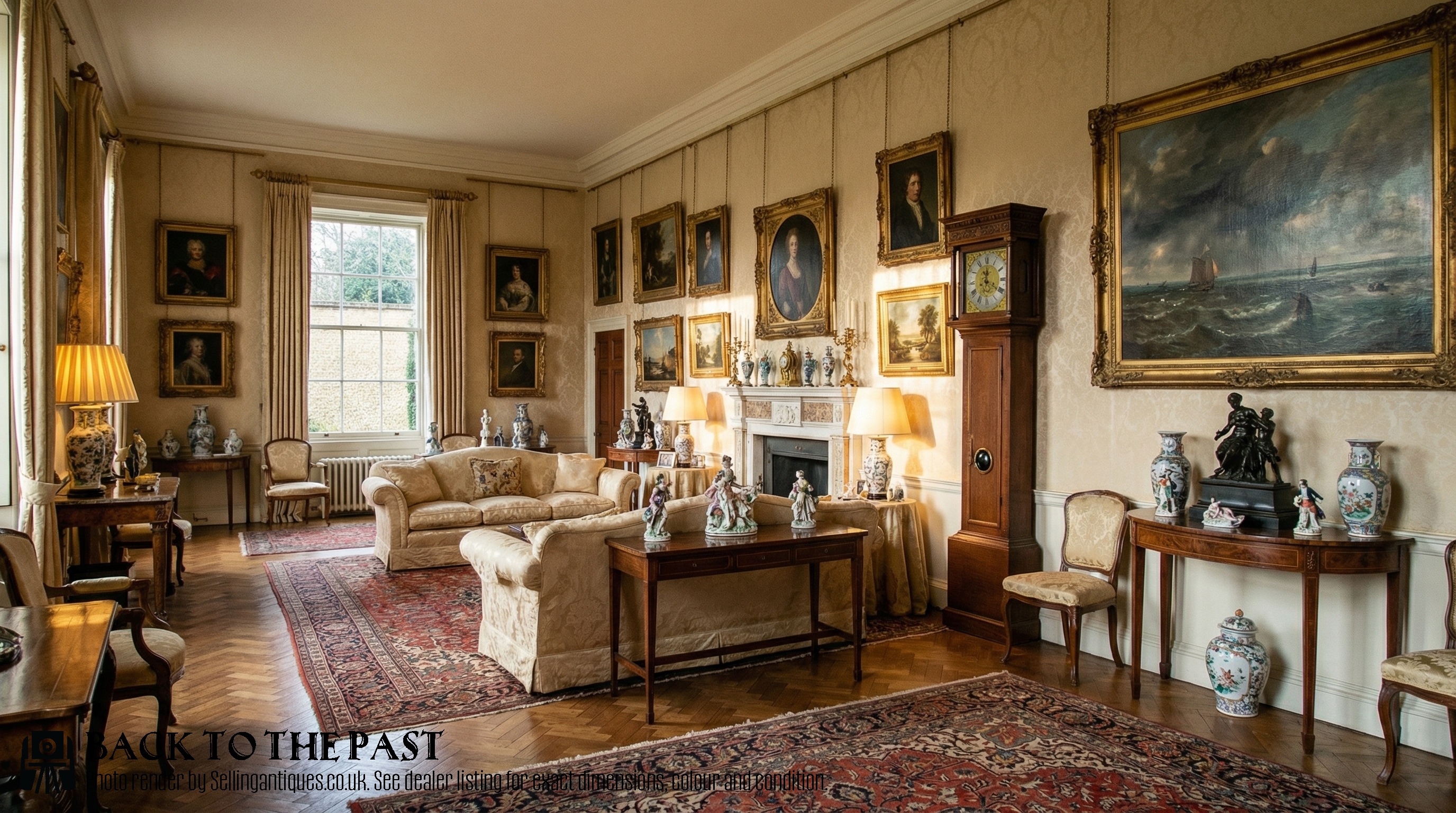
Allow enough clearance around the hood or door for easy access when winding and setting the time. Placing the clock in a hallway or landing showcases its height and allows the chime to resonate through the home.
What is the difference between a grandfather and grandmother clock?
A grandfather clock is the standard full-size longcase timepiece, usually standing over six feet tall with substantial proportions and heavy weights. A grandmother clock is a scaled-down version of the same form, built with a narrower and shorter case.
Grandmother clocks gained popularity in the twentieth century for homes with lower ceilings where a standard longcase would overwhelm the room. Despite the smaller size, many house complex movements and musical chimes.
How do I tell an 18th-century clock from a 19th-century one?
Eighteenth-century examples frequently feature oak or walnut cases with square brass dials and simpler hood designs. The cabinetwork often displays regional craftsmanship and solid timber construction.
Nineteenth-century pieces commonly utilise mahogany with arched painted dials, moon rollers, and more elaborate veneer work. Case styles from this later era also reflect Victorian revival movements and industrial manufacturing techniques.