




Floor Standing Cupboard
A floor standing cupboard brings height and storage to neglected room angles, taking the form of corner cabinets and display units shaped by centuries of cabinet making.
Floor Standing Cupboard
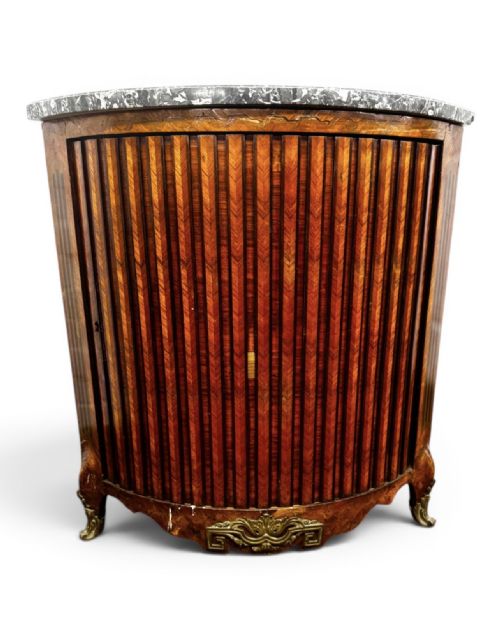
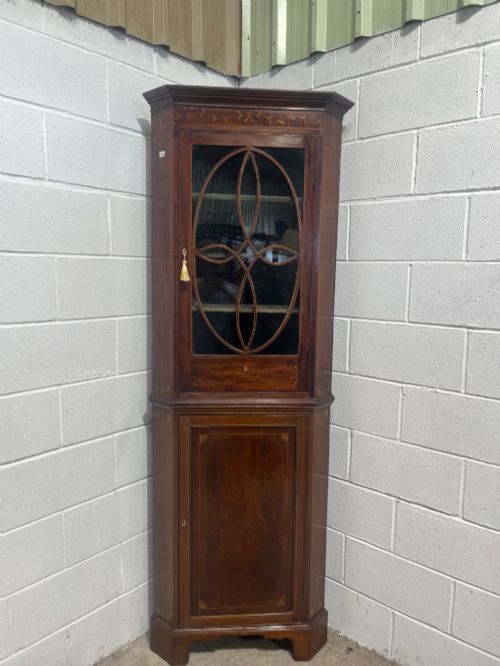
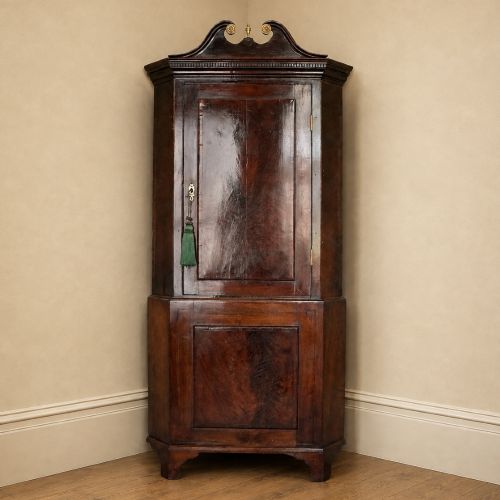
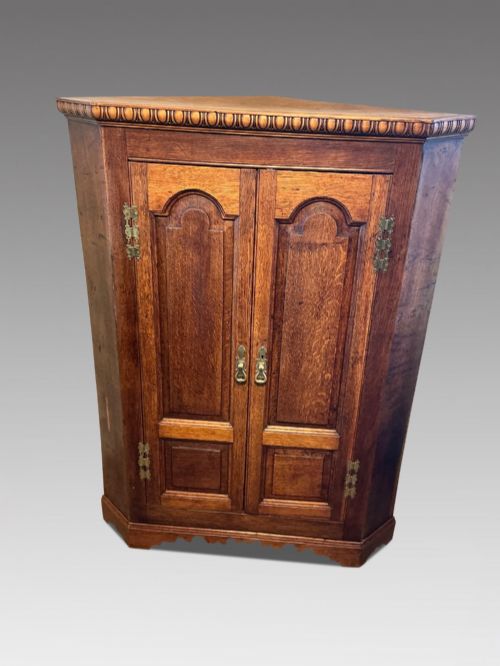
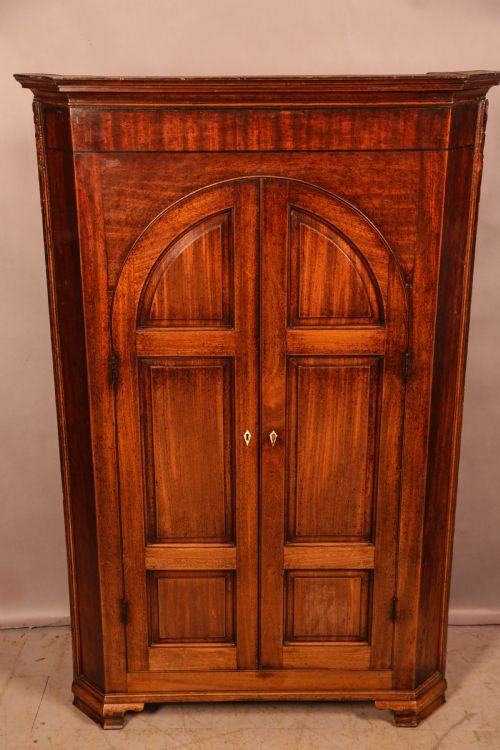
A floor standing cupboard most commonly appears as a standing corner cabinet designed to utilise room angles efficiently. These pieces emerge predominantly from the Georgian and Victorian eras, alongside Edwardian and later twentieth-century examples.
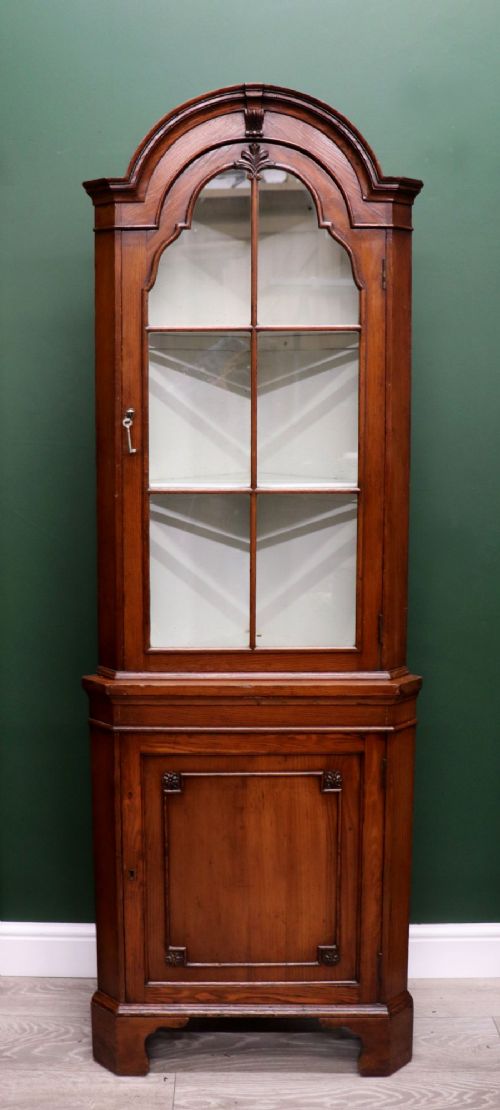
The inventory encompasses single and two-part designs, alongside book presses and glazed display cabinets. Oak and mahogany dominate the structural forms, supplemented by walnut, ash, pine, and yew wood.
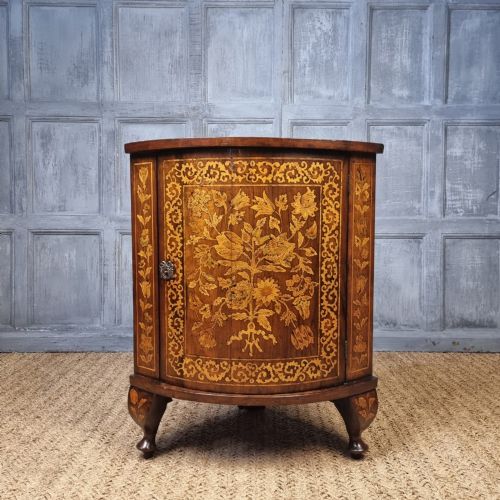
Geographic origins stretch across English country workshops, Welsh makers, Dutch marquetry traditions, and traditional Chinese craftsmanship. Buyers encounter everything from robust country oak pieces to formal inlaid mahogany standing cupboards.
Materials and Construction
Cabinet makers built these pieces using dense hardwoods like oak and mahogany, often applying marquetry, inlay, or flame veneers in walnut, satinwood, and boxwood. Brass hardware secures doors and internal fittings, while glass panels define display variants.
Construction methods range from single-piece upright bodies to substantial two-part cupboards joined on stands. Joiners shaped doors with bow fronts, fretwork, or glazed frames to house books and china.
Floor Standing Cupboard Retail Price Guide 2026
Typical asking prices for floor standing cupboard among the pieces listed under this phrase on Sellingantiques today, from the lower quarter to the upper quarter. They describe what is for sale here now, not the wider market.
Periods represented stretch from the eighteenth century through the Georgian, Victorian, and Edwardian eras into the 1930s.
Gradations in Execution
Quality separates standard utilitarian storage from ambitious regional or urban cabinet work through the precision of timber selection and decorative execution. Elaborate marquetry, choice mahogany veneers, and delicate inlay signal higher workshop ambition.
Proportion and architectural presence dictate distinction, particularly in large double-door or two-part examples. The integration of original brasses, sound glazing bars, and intact internal shelving preserves the integrity of the piece.
The Floor Standing Cupboard Glossary
- Bow front
- A convex curved cabinet front that projects outward from the corner or walls. This shape required skilled joinery to bend timber or shape solid wood blocks.
- Marquetry
- Inlaid patterns formed from different coloured wood veneers fitted into a background panel. Dutch makers frequently applied floral and pictorial designs in this technique.
- Book press
- A heavy timber screw mechanism housed within a cabinet to flatten papers or bind volumes. These functional pieces double as upright storage furniture.
- Two-part
- A cabinet constructed in separate upper and lower sections stacked together. This method simplified transport for large corner cupboards and double units.
- Fretwork
- Openwork ornamentation cut from thin wood panels in geometric or figurative patterns. Makers applied this technique to friezes and door panels for decorative ventilation.
Floor Standing Cupboard: Frequently Asked Questions
Where should I place a floor standing cupboard?
These pieces suit empty room corners or wall junctions where standard rectangular furniture wastes space. Their upright proportions draw the eye upward without blocking circulation routes.
Positioning them away from direct sunlight and heat sources protects historical timber and veneer surfaces from drying out.
How do I identify a Georgian corner cupboard?
Look for timber choices like heavy native oak or figured mahogany combined with traditional hand-cut dovetails and pegged joints. Eighteenth-century proportions often feature architectural cornices and panelled doors.
Inspect the interior shelving and hardware for signs of period hand-working rather than modern machine production.
What is a two-part corner cupboard?
A two-part corner cupboard consists of an upper cabinet resting directly upon a lower base unit. This sectional design aided transport and installation in domestic rooms.
The horizontal dividing line typically sits at counter height, concealed by moulding where the two halves meet.
Can I store books in these cabinets?
Many surviving pieces function effectively as bookcases or display units, particularly those fitted with glazed doors or open upper shelving. Shelves inside corner configurations accommodate octavo volumes and display items.
Verify that shelf depths match your intended collection before loading heavy book loads onto historical supports.