
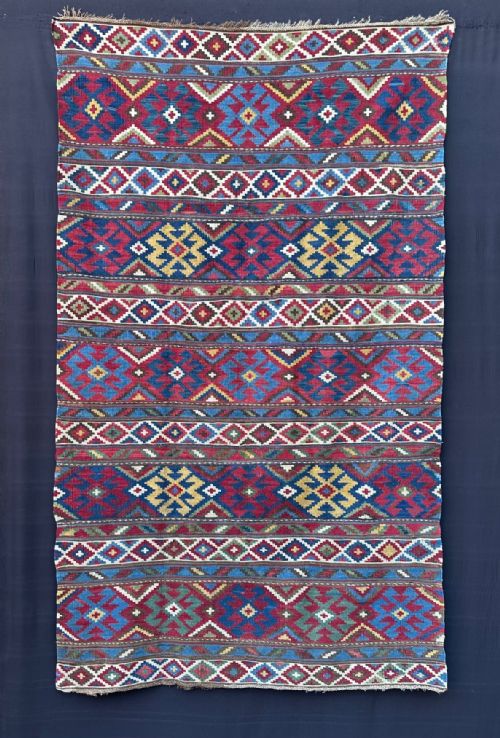
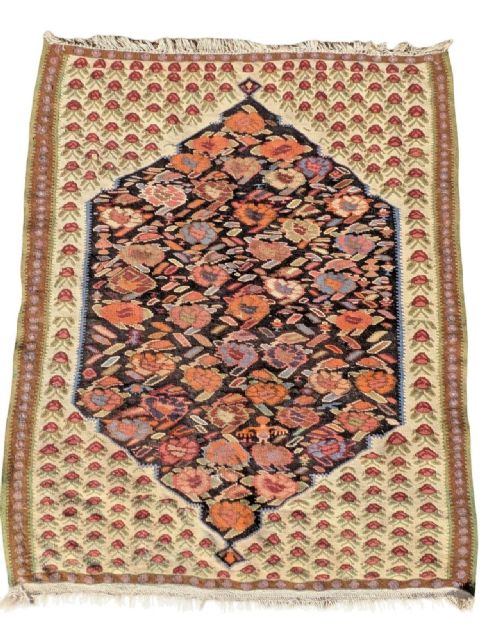
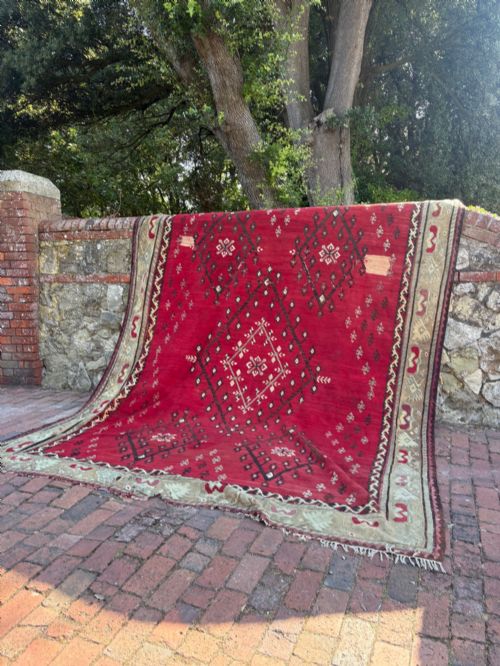
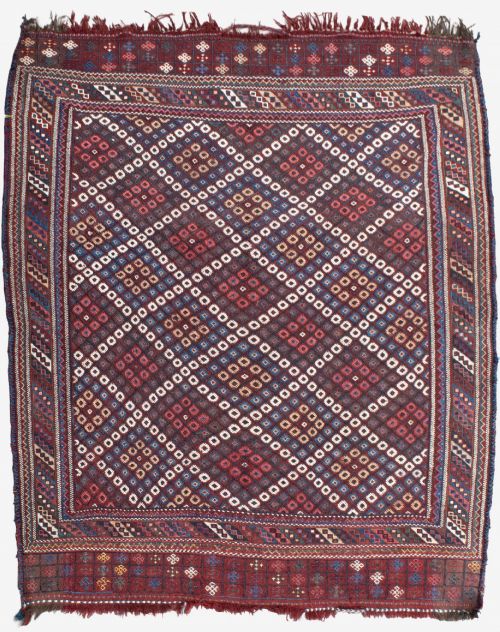


Flatwoven Tribal Area Rug
When you search for a flatwoven tribal area rug, you encounter textiles carrying the bold geometric language of nomadic weavers from Persia, the Caucasus, Anatolia, and Central Asia.
Flatwoven Tribal Area Rug
A flatwoven tribal area rug comprises textiles produced without a knotted pile, created instead by interweaving warp and weft threads to form flat geometric surfaces. These pieces emerge from regions such as the Caucasus, Anatolia, Persia, and Central Asia, reflecting distinct regional weaving traditions.
The selections available span multiple decades bridging the late nineteenth and early twentieth centuries, encompassing formats from small mats to large room-sized carpets and runners. Forms include regional kilims, soumaks, and specialised tribal flatweaves such as sofreh and verneh rugs.
Nomadic and village groups including the Qashqai, Afshar, Baluch, and Yomut Turkmen produced these textiles for utilitarian floor coverings, animal trappings, and household storage. Their visual vocabulary relies on traditional motifs passed down through generations of weavers rather than written patterns.
Materials and construction methods
Construction relies primarily on wool spun by hand, occasionally supplemented by cotton for foundations and specialised animal fibres like camel hair for natural grounds. The foundational warp and structural weft yarns provide a stable base for the flat, tapestry-woven or brocaded surface.
Weaving techniques vary across regions, encompassing slit-weave kilims where colour changes create small vertical gaps, alongside soumak techniques that wrap weft threads over warps for a textured face. Certain larger examples are woven in two separate sections and joined along a centre seam to achieve broader room dimensions.
The listed pieces span the period from 1870 to 1930, utilising wool, cotton, and camel hair across regional styles from Persia, the Caucasus, Anatolia, and Central Asia.
Factors determining quality
Quality in these flatweaves stems from the tightness of the weave and the precision of the geometric layout, where finer structural density allows for sharper graphic definition. The sophistication of the dye palette, whether utilising rich saturated hues or warm natural camel hair grounds, dictates visual depth.
Condition and structural integrity remain central to assessing surviving examples, distinguishing pieces with original long kilim ends and minimal historic intervention from those requiring extensive restoration. The presence of scarce regional designs or particularly fine, balanced structures elevates individual pieces above standard village production.
The Flatwoven Tribal Area Rug Glossary
- Kilim
- A flatwoven textile produced without a pile, common across Anatolia, the Caucasus, and Persia. These pieces utilise a tapestry weave where the weft threads are beaten tightly down to conceal the warp entirely.
- Soumak
- A flatweaving technique utilising a brocading wrap over warp threads that leaves trailing threads on the reverse side. This method creates a thicker, more durable fabric with a textured surface.
- Sofreh
- A specialised tribal spread or cloth used during meals or flour preparation by nomadic groups. They frequently feature distinct central field layouts bounded by geometric borders.
- Warps
- The vertical foundational threads stretched taut on a loom before weaving begins. Weft threads are passed alternately over and under these structural lines.
- Brocading
- A supplementary decorative weaving technique where additional ornamental weft threads are introduced across specific sections of the design. This creates raised patterns on the face of the textile.
Flatwoven Tribal Area Rug: Frequently Asked Questions
What is a flatwoven tribal area rug?
A flatwoven tribal area rug is a pileless textile created by nomadic or village weavers using interlocking or wrapping techniques on a vertical loom. These functional floor coverings and domestic textiles rely on geometric motifs and regional colour palettes.
Originating from areas spanning Persia, the Caucasus, Anatolia, and Central Asia, they represent centuries of traditional craft passed through tribal groups. Their flat structure makes them distinct from plush pile carpets.
How were these rugs used originally?
Nomadic and village communities utilised these textiles as floor coverings, tent furnishings, blankets, and storage bags for daily nomadic life. Specialised flatweaves like sofreh served specific domestic roles during communal meals and food preparation.
Because they were lightweight and portable, they suited the seasonal migrations of tribes such as the Qashqai, Baluch, and Yomut Turkmen. Their construction allowed them to withstand heavy daily use within tribal tents and village homes.
How do I care for an antique flatweave?
Care for an antique flatweave involves gentle vacuuming without a rotating power brush and professional cleaning when necessary. Keeping the textile out of direct sunlight prevents the natural dyes from fading over time.
Using a quality rug underlay beneath the piece prevents slipping and reduces friction between the flatwoven fibres and the floor. This support helps preserve the structural integrity of older wool and cotton foundations.
How do I identify different regional styles?
Identifying regional styles requires examining the specific geometric vocabulary, colour combinations, and structural techniques characteristic of different weaving groups. Caucasian pieces often display sharp, crystalline medallions, while Anatolian kilims frequently employ bold, graphic tribal symbols.
Persian tribal weavings like those from the Afshar or Qashqai tend to incorporate intricate repeat patterns and rich saturated hues. Comparing the weave density and end finishes helps link a piece to its specific geographic origin.