


Flared Rim Ceramic Vase
These flared rim ceramic vases bring striking silhouettes and rich decorative depth to any interior.
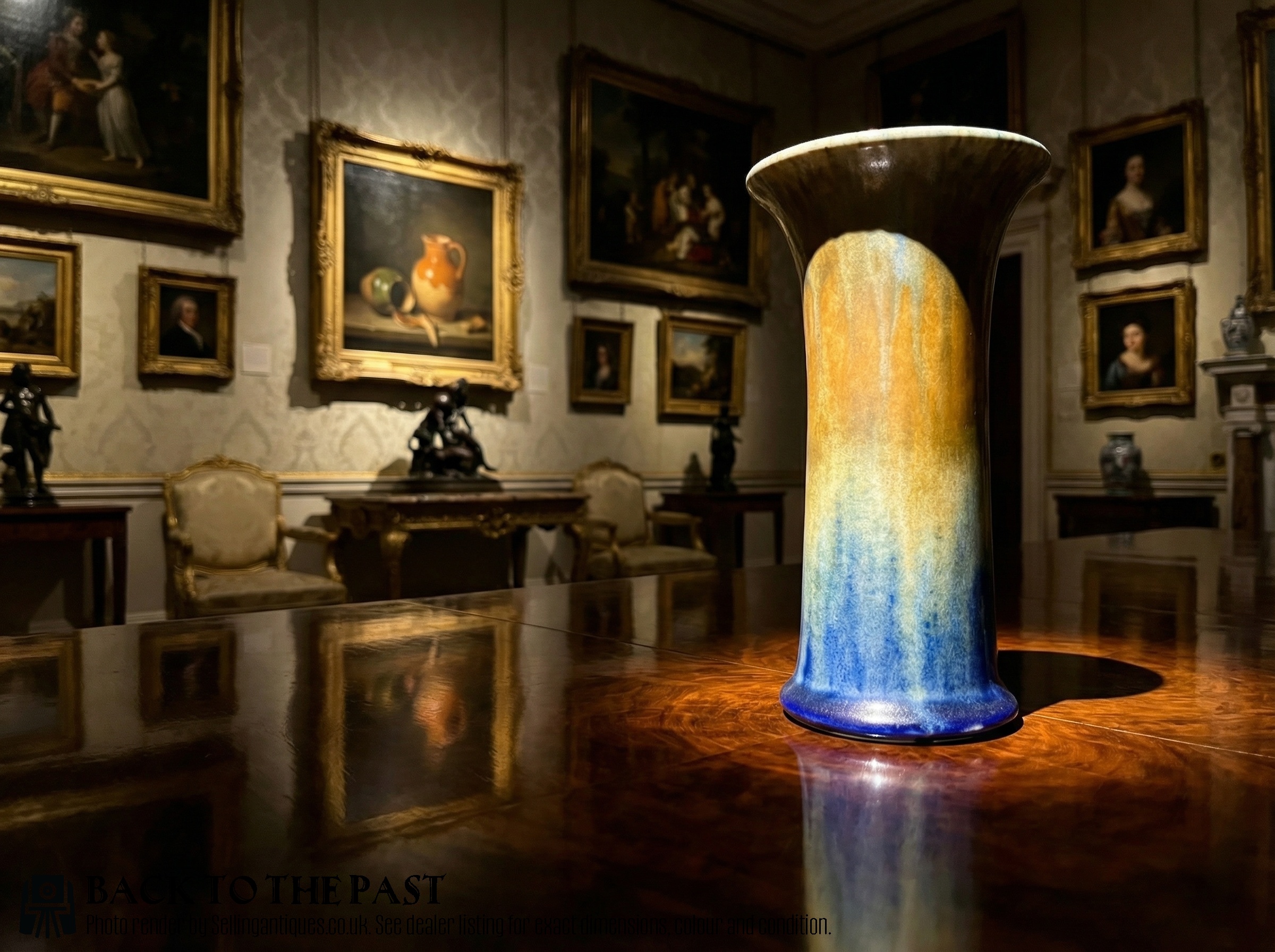
Flared Rim Ceramic Vase
A flared rim ceramic vase presents an open, sweeping mouth that widens dramatically from the neck, creating a distinct profile designed to display arrangements or stand alone as a decorative object. When you search for a flared rim ceramic vase, you meet examples ranging from nineteenth-century Japanese porcelain and earthenware to English Regency and twentieth-century British studio pottery.
The pieces listed here span the nineteenth century, including Japanese Meiji period Imari and Kutani wares, alongside Regency country house porcelain and crystalline glazed earthenware from Ruskin Pottery. Japanese forms dominate the selection, offering hexagonal shapes, koi motifs, and intricate enamel painting over lacquer.
Materials and construction
Makers shaped these vessels from porcelain and earthenware, applying surface treatments such as glaze, enamel, paint, gold leaf, and lacquer over black paint. Japanese pieces frequently combine porcelain bodies with detailed hand-painted designs and glossy glazes.
English Regency and later twentieth-century pieces utilise traditional ceramic fabrication methods, with Ruskin Pottery employing specialised crystalline glazes that form unique pattern effects during firing.
Listings feature ceramics from the 19th Century, Regency period, and 1930, utilising porcelain, earthenware, lacquer, and crystalline glazes.
Judgements of quality
Quality rests in the precision of the form, the crispness of the hand-painted enamel or glaze, and the depth of surface embellishment such as lacquer and gold leaf. Superior examples display balanced proportions, particularly where the flared neck meets the body of the vase.
The sophistication of the glaze chemistry, evident in the controlled flow of crystalline surfaces on twentieth-century pieces or the intricate panel work on nineteenth-century Japanese imari, marks the distinction between standard production and exceptional manufacture.
The Flared Rim Ceramic Vase Glossary
- Flared rim
- A mouth that curves outward from the neck of a vessel. This shape creates a wide opening suited for expansive floral arrangements.
- Crystalline glaze
- A ceramic finish containing specific chemical compounds that form visible crystal structures during the cooling process of the kiln. Ruskin Pottery utilised this technique to create distinctive blue and yellow visual patterns.
- Imari
- A style of Japanese export porcelain characterised by a palette of underglaze blue, iron red, gold, and supplementary colours. These wares were produced in Arita and shipped through the port of Imari.
- Kutani
- A style of Japanese coloured porcelain and earthenware originating from Kaga province. These pieces are known for dense, pictorial decoration often incorporating rich enamels.
Flared Rim Ceramic Vase: Frequently Asked Questions
What is a flared rim ceramic vase?
A flared rim ceramic vase is a vessel featuring a mouth that expands outward from the neck. This design provides an open profile that enhances the display of the piece and its contents.
Such vessels appear across various periods and traditions, from nineteenth-century Japanese export wares to twentieth-century British studio pottery.
How do I identify Japanese Imari pottery?
Japanese Imari pottery is typically recognised by its distinctive palette, which combines underglaze blue, iron red, and gold leaf. The decorative schemes often feature complex panels and floral motifs.
These pieces were produced for export and valued for their vibrant ornamentation.
What is crystalline glaze?
Crystalline glaze is a specialised ceramic finish where crystal formations grow within the glaze layer during the kiln firing. This creates unique, flower-like patterns across the surface of the pottery.
Potteries like Ruskin utilised this technique to achieve dynamic visual effects on their vases.
How were nineteenth century Japanese vases decorated?
Nineteenth-century Japanese vases often combined porcelain or earthenware bodies with hand-painted enamel, gold leaf, and occasionally lacquer over black paint. Motifs ranged from natural subjects like koi to detailed geometric borders.
These varied techniques created textured, highly coloured surfaces that caught the light.