
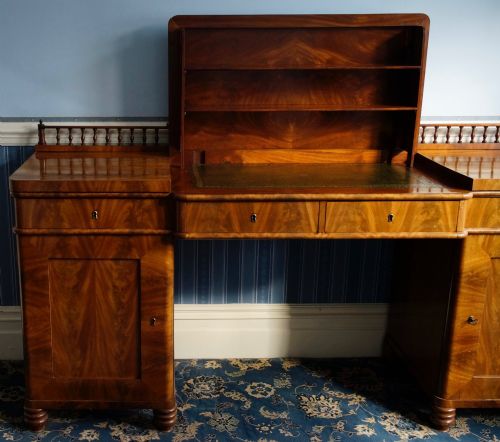

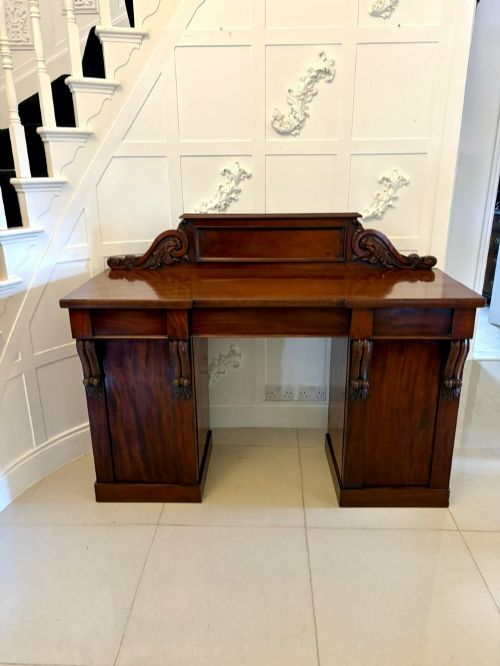
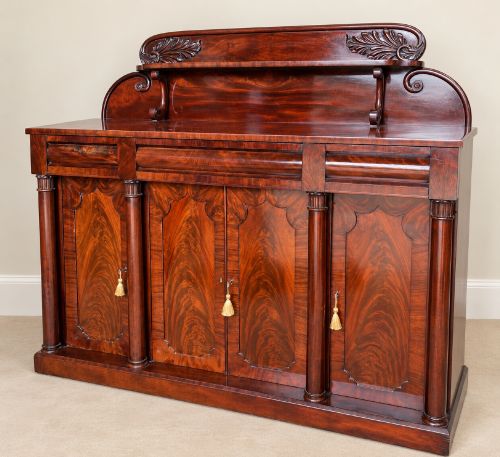
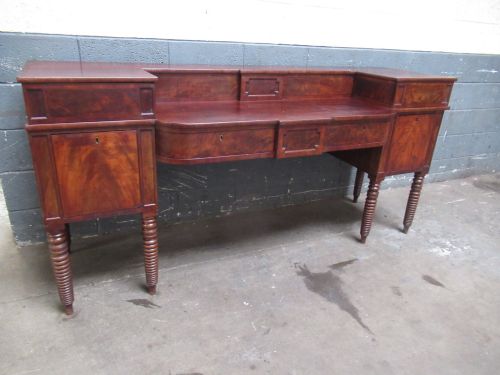
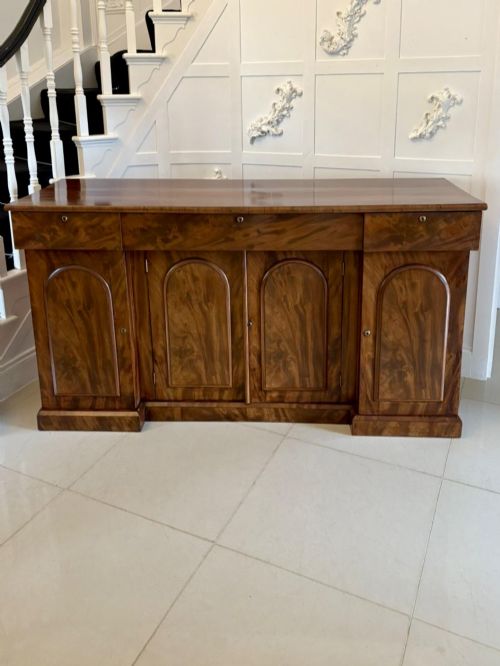
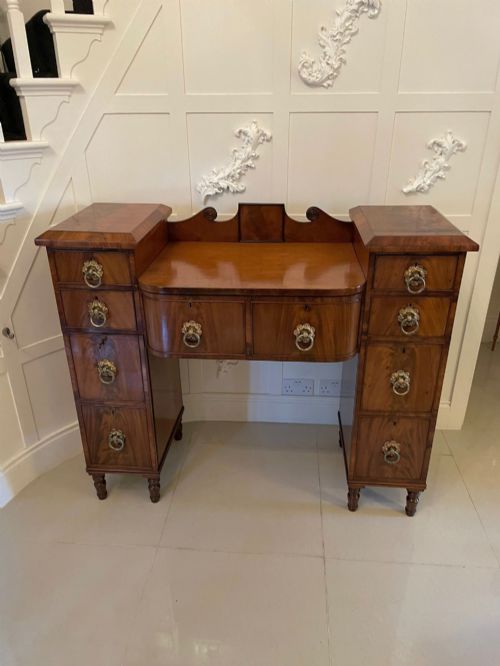
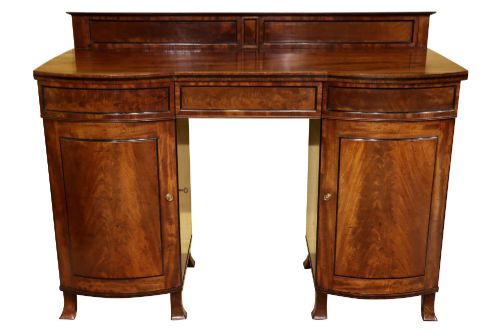
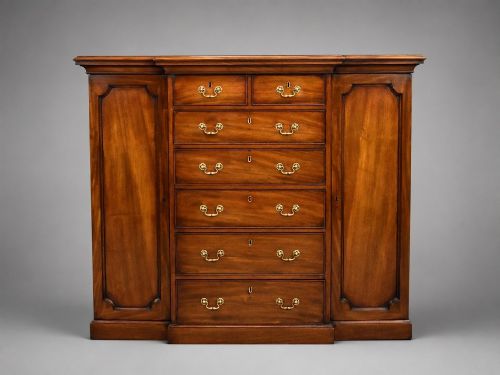

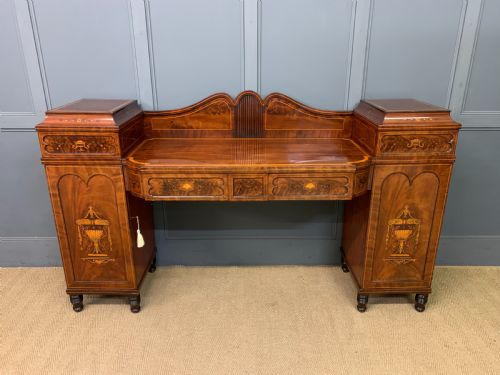


Flame Mahogany Pedestal Sideboard
A flame mahogany pedestal sideboard brings architectural presence and rich grain to a room, offering grand storage through flanking pedestals and a central table base.
Flame Mahogany Pedestal Sideboard
A flame mahogany pedestal sideboard provides a commanding dining room focal point, combining two substantial pedestals linked by a central section. These pieces emerge primarily from Georgian, Regency, and Victorian periods, carrying substantial weight and presence.
The layout generally places cupboards or cabinets on either side of a central console, occasionally featuring stage backs, mirrors, or brass galleries. This form serves dining spaces effectively by housing linens, silver, and serving dishes.
How they were made
Cabinet makers utilised solid mahogany and applied flame mahogany veneer to create striking, figured grain patterns across large surfaces. Additional materials such as boxwood stringing, brass fittings, and glass elements appear as structural and decorative accents.
Construction techniques involve heavy timber framing, meticulous veneer laying, and hand carving, particularly evident in the scrolls and pillars of William IV and Victorian examples.
Listings span the 18th, 19th, and 20th centuries, covering Georgian, Regency, William IV, and Victorian periods in solid mahogany and flame veneer.
What varies in quality
The visual impact rests heavily on the choice and matching of the timber veneers, where intensely figured flame mahogany creates a more dramatic surface than plain grain. Finer examples display superior hand carving on brackets, pedestals, and gallery mounts.
Gillows
The Flame Mahogany Pedestal Sideboard Glossary
- Flame mahogany
- A veneer cut from the fork of the mahogany tree, producing a distinctive fire-like grain pattern. This figure is prized for its dramatic visual movement.
- Pedestal
- A structural pillar or cupboard base supporting one side of the sideboard. These units often contain cellarets or shelving.
- Brass gallery
- A metal rail mounted on the rear of the sideboard surface. It prevents serving items from sliding off.
- Chiffonier
- A low cabinet or sideboard variant with shelving or enclosed storage. These pieces share the mahogany vocabulary of the main server forms.
- Stage-back
- A raised tier at the rear of the sideboard top. This feature provides additional display space for plate.
Flame Mahogany Pedestal Sideboard: Frequently Asked Questions
Where do I put a pedestal sideboard?
These large pieces suit dining rooms or grand hallways where wall space allows them to sit comfortably without dominating the circulation.
Ensure the room has sufficient depth to accommodate the projecting pedestals and the clearance needed to open cupboard doors.
How do I care for flame mahogany veneer?
Keep the timber away from direct sunlight and heat sources to prevent the veneer from drying out or lifting over time.
Apply a traditional beeswax polish occasionally to nourish the grain and maintain a soft lustre.
What is the difference between Regency and Victorian sideboards?
Regency versions lean towards architectural restraint, often featuring brass inlay, classical pedestals, and clean mahogany surfaces.
Victorian iterations introduce heavier carved details, mirror backs, and deeper mouldings that reflect later 19th-century tastes.
Can I use a sideboard for modern storage?
The deep cupboards and pedestal compartments provide ample space for contemporary dining ware, glassware, and table linen.
Internal shelving and drawers often retain their original configurations for organising smaller items.