

Flame Mahogany Glazed Cabinet
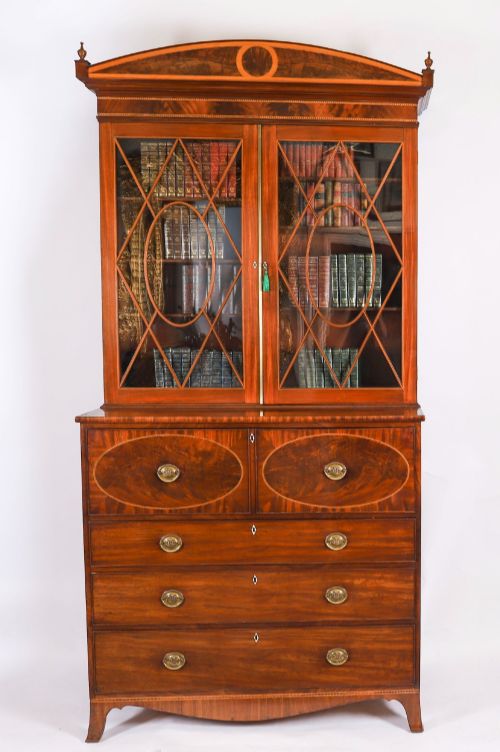
A flame mahogany glazed cabinet brings striking grain and clear display space to a room, holding books and collections behind glass.
Flame Mahogany Glazed Cabinet
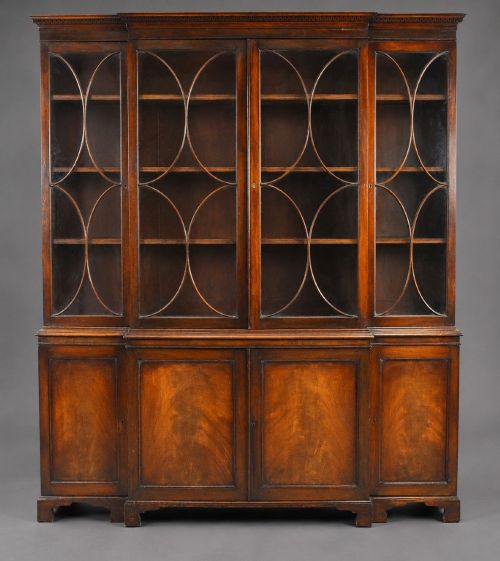
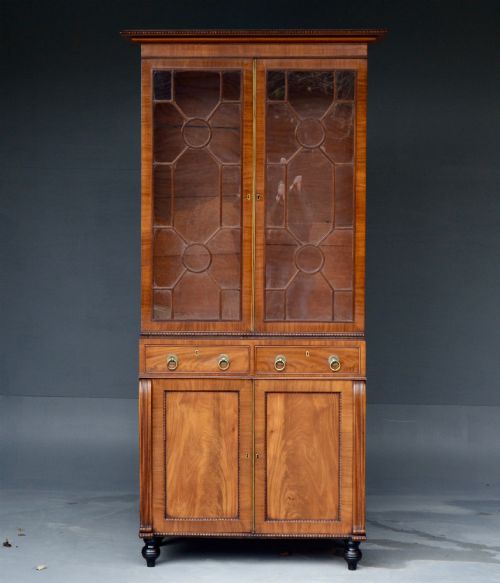
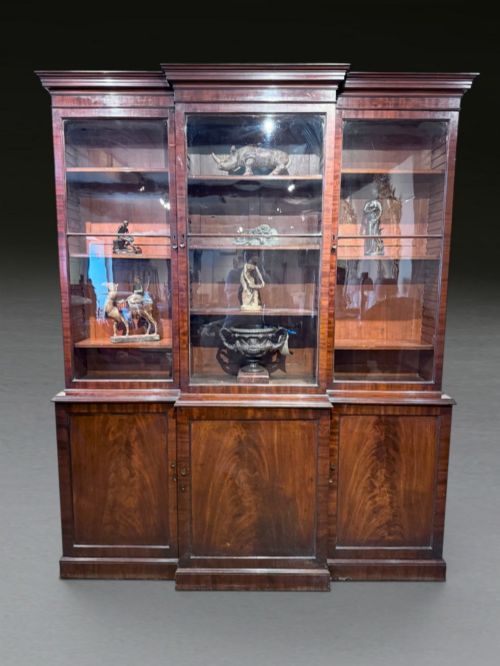
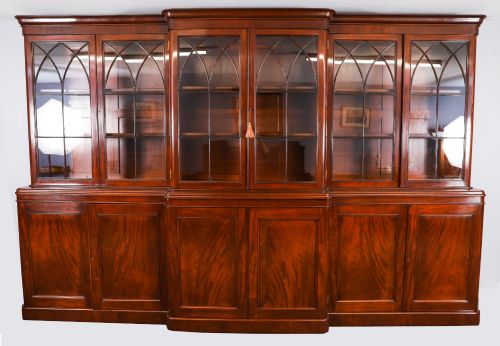
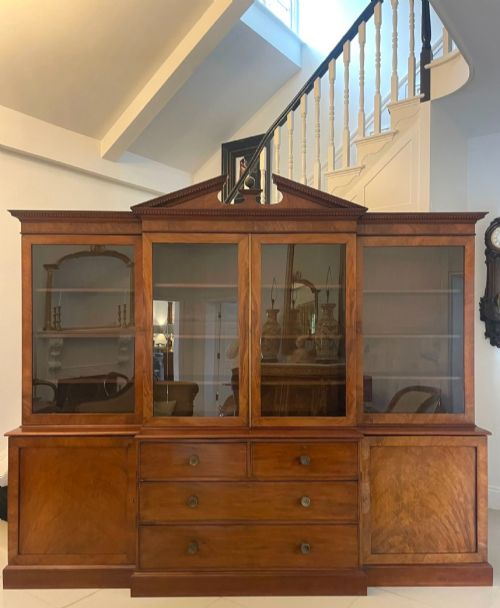
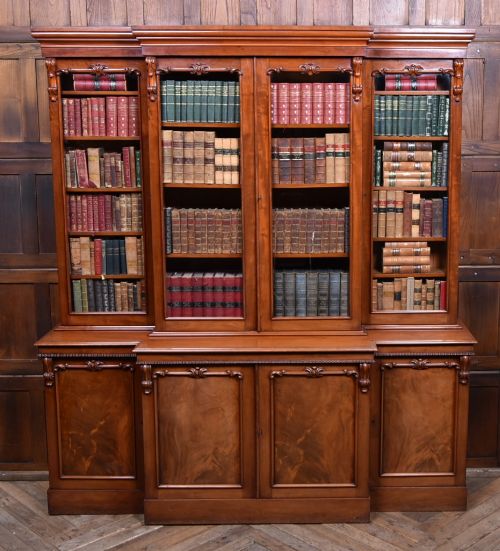
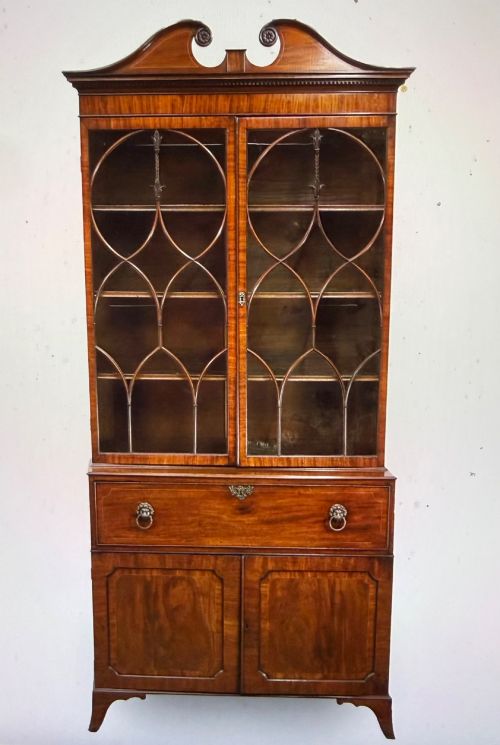
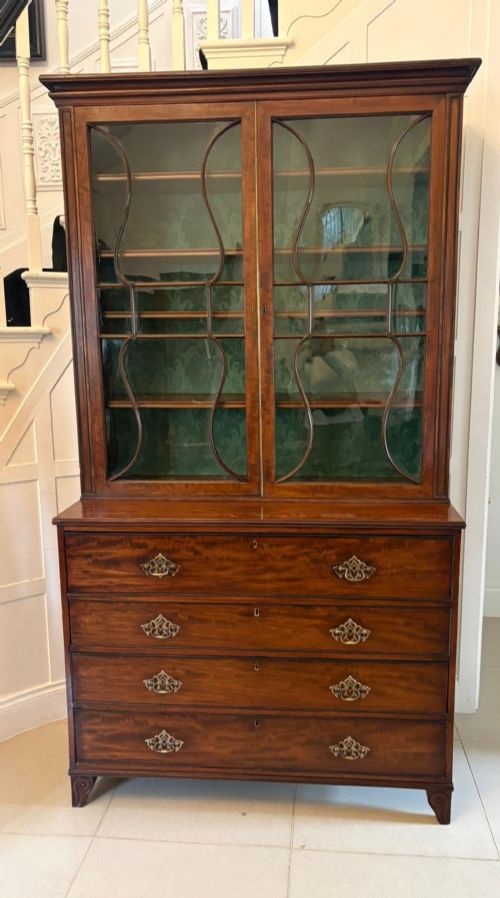
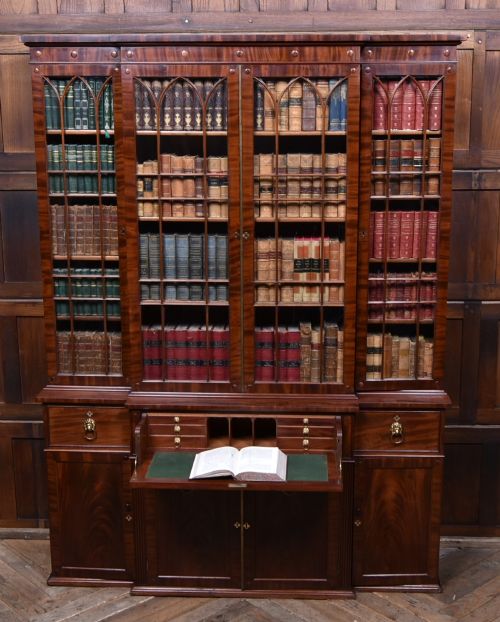
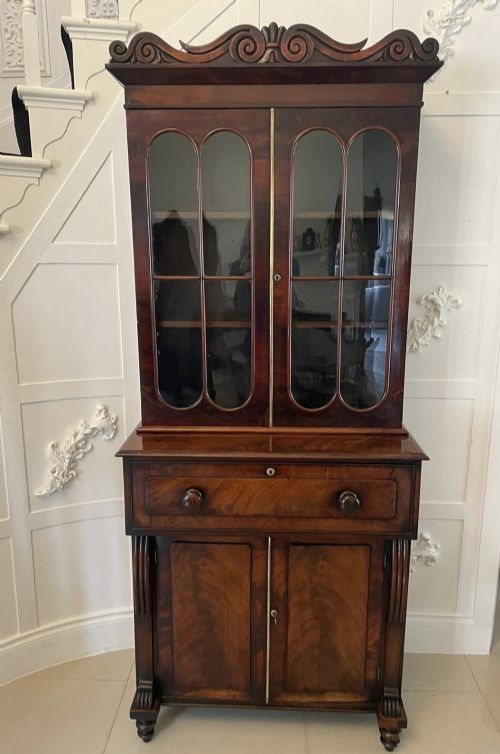
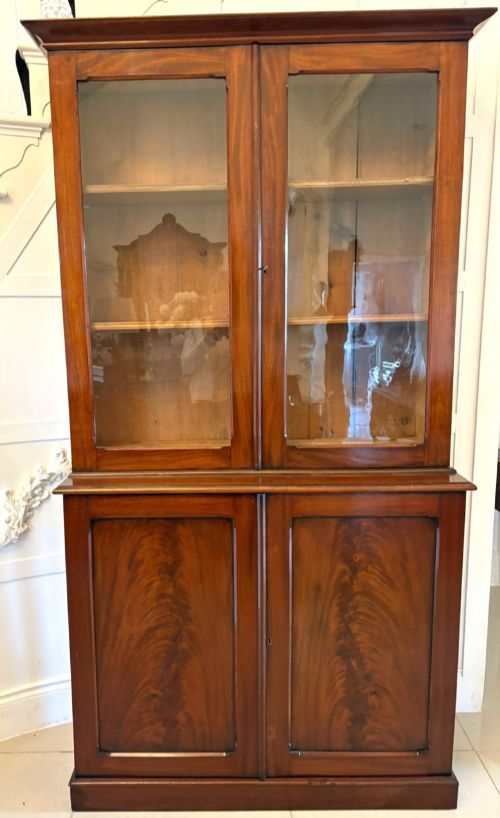
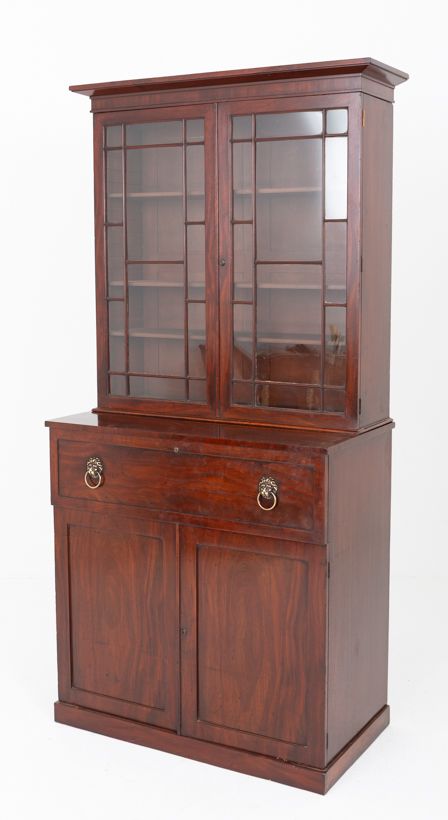
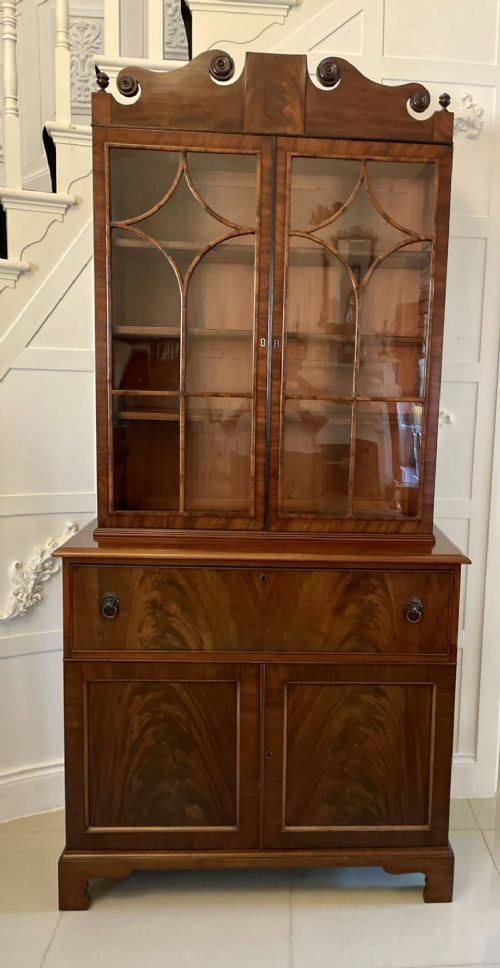
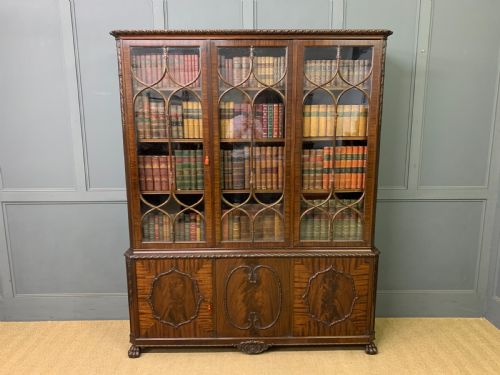
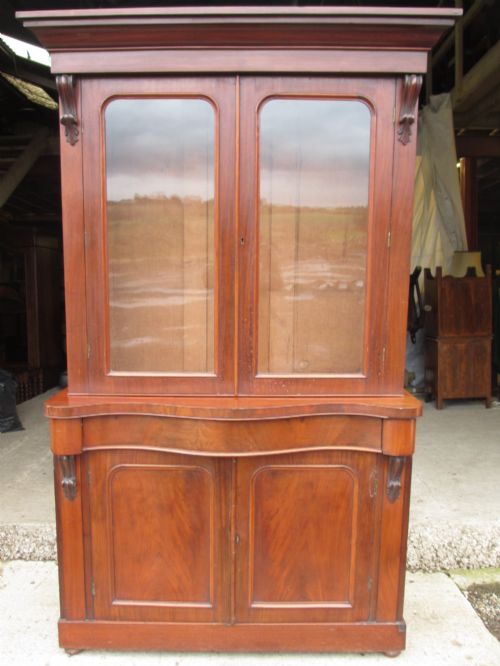
A flame mahogany glazed cabinet combines large display space with fitted storage, appearing across Georgian, Regency, William IV and Victorian periods. These pieces take forms such as breakfront bookcases, secretaire bookcases, display cabinets and library bookcases.
The most common examples on this page date from the nineteenth century and the Georgian era, built as tall two-door or breakfront bookcases with glass panel doors. Many include a secretaire drawer containing a fitted writing desk with small drawers and pigeonholes.
Makers and workshops of the eighteenth and nineteenth centuries constructed these cabinets for libraries and drawing rooms, using glass to protect bound volumes and display collections from dust.
Construction and materials
Cabinet makers applied flame mahogany veneer over solid timber foundations, selecting wood cuts that produce distinctive rippling flame patterns. Details often include satinwood stringing, brass hardware and wire mesh panels alongside clear glass.
Glazing bars divided the glass into geometric or astragal patterns, requiring precise joinery to support large expanses of glass. Carved mouldings, bracket feet and plinths finished the architectural structure of the larger breakfront and library bookcases.
Flame Mahogany Glazed Cabinet Retail Price Guide 2026
Typical asking prices for flame mahogany glazed cabinet among the pieces listed under this phrase on Sellingantiques today, from the lower quarter to the upper quarter. They describe what is for sale here now, not the wider market.
Many secretaire drawers hide tiny secret compartments behind miniature pigeonholes where owners tucked away private letters.
Evaluating quality
Quality rests on the selection and matching of the flame mahogany veneer across the front drawers and doors, where symmetrical grain alignment distinguishes finer pieces. The crispness of the hand-carving on mouldings and the weight of the brass fittings also signal workshop standards.
Proportion and structural integrity matter greatly, particularly in large breakfront and secretaire bookcases where internal drawer construction and original glass panes preserve the historical integrity of the cabinet.
Gillows·Wylie and Lochhead
The Flame Mahogany Glazed Cabinet Glossary
- Flame mahogany veneer
- A thin slice of mahogany taken from the fork of the tree where the branch meets the trunk. This cut yields a distinctive flame-like figure prized by cabinet makers.
- Secretaire drawer
- A pull-out drawer containing a drop-front writing surface and internal pigeonholes. It transforms a bookcase into a compact writing desk.
- Breakfront
- A piece of furniture with a central section projecting forward from the flanking sides. This architectural arrangement creates depth in large library bookcases.
- Astragal
- A small moulding used to divide glass panes within a cabinet door. These wooden bars form geometric or curved patterns across the glazed panels.
- Satinwood
- A pale yellowish wood utilised for contrasting inlay and stringing on mahogany furniture. Cabinet makers used it to frame panels and drawers.
Flame Mahogany Glazed Cabinet: Frequently Asked Questions
How do I date a mahogany cabinet?
Dating relies on the architectural style, timber choice and construction methods visible in the drawers and backboards. Georgian pieces often display simpler astragal glazing, while Victorian examples frequently utilise heavier proportions and figured mahogany veneers.
Periods span from the eighteenth century through the Victorian era and into later revival styles.
What is flame mahogany?
Flame mahogany is a specific wood veneer cut from the branch junctions of the tree. The grain swirls in patterns resembling flickering flames, creating high visual contrast.
Cabinet makers reserved these highly figured veneers for the most prominent surfaces on doors and drawer fronts.
Where were these cabinets used?
These large pieces stood primarily in libraries, studies and drawing rooms of substantial houses. The glass doors protected valuable leather-bound books and collected curiosities from dust and handling.
Today, they function similarly in domestic spaces to display books and porcelain collections.