
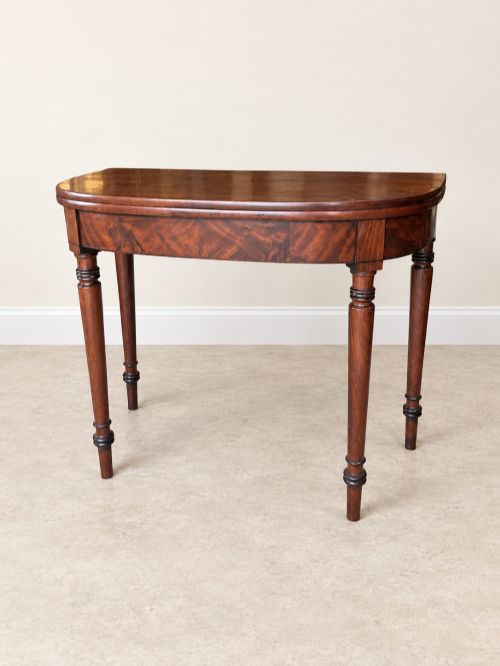
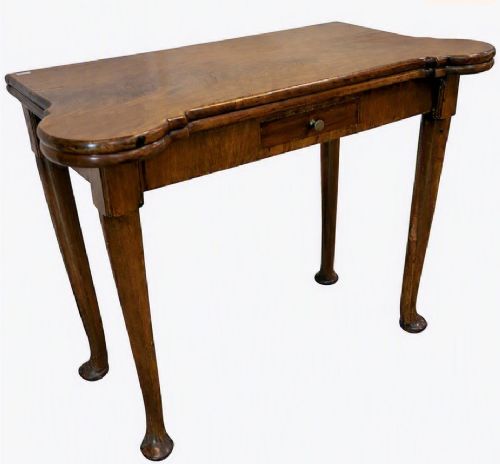
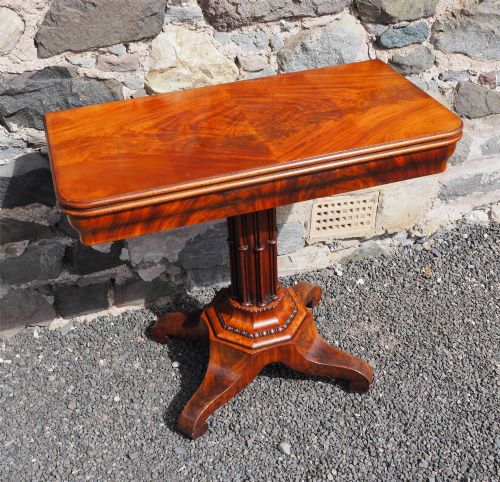
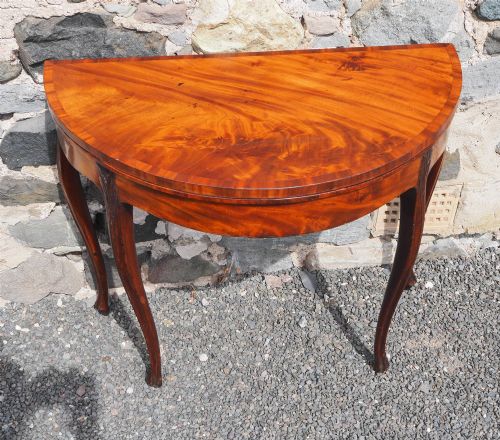
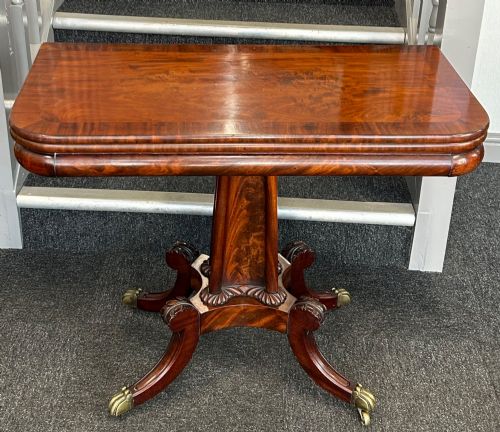


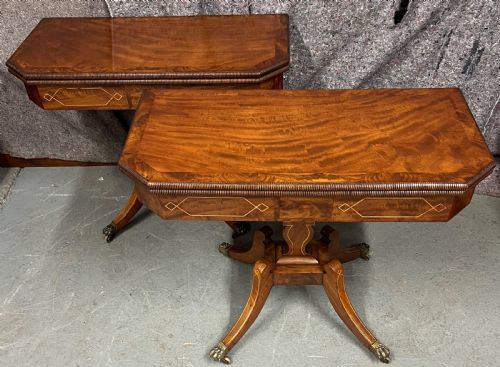

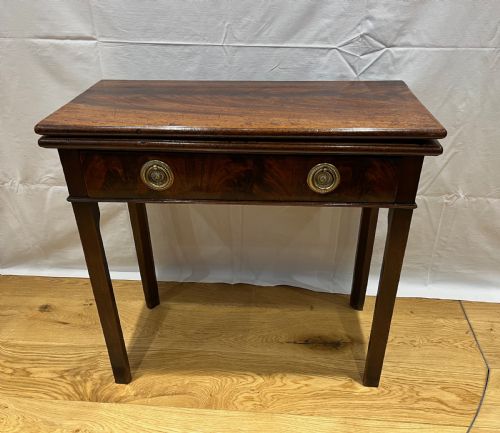
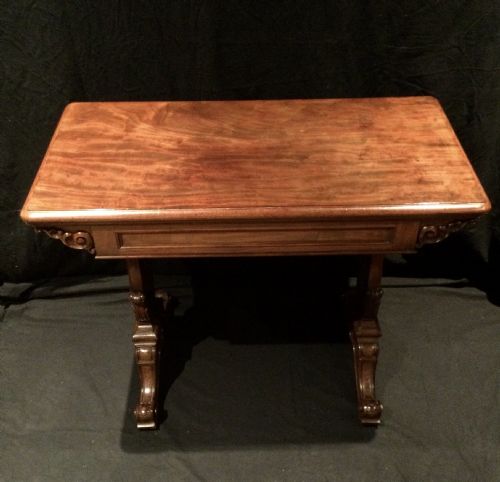
Flame Mahogany Games Table
A flame mahogany games table brings rich grain and practical surface area together, offering a folding top for cards or social evenings.
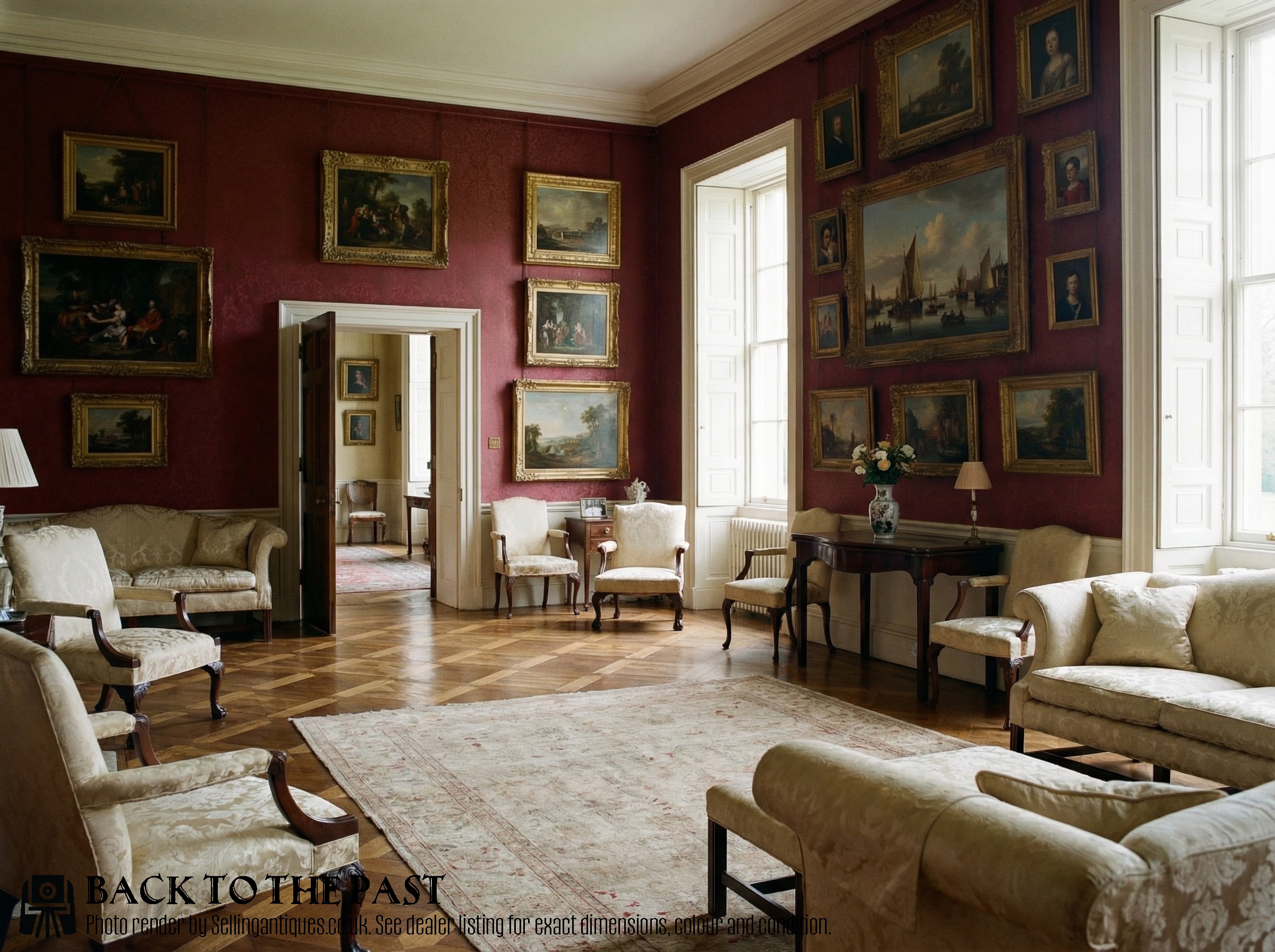
Flame Mahogany Games Table
A flame mahogany games table combines timber with striking figure patterns and a clever folding mechanism designed for card playing and social use. Buyers search for this phrase to find versatile furniture that functions as a console or side table when closed and opens up to reveal a baize-lined playing surface.
The selections span the eighteenth and nineteenth centuries, including Georgian, Regency, and William IV eras. Formats range from D-end and demi-lune shapes to pedestal styles and fold-over parlour tables.
English and French examples appear across the inventory, reflecting cabinet-making traditions that favoured figured wood veneer surfaces. Most pieces function primarily as card tables, tea tables, or occasional side tables.
What varies in quality
The intensity and symmetry of the wood grain across the folding top dictate much of the visual appeal. Superior pieces display book-matched flame patterns that mirror each other precisely when the table opens.
The integrity of the hinge mechanism and the stability of the pedestal or leg joints separate robust specimens from those requiring structural intervention. Finer examples also feature crisp moulding details, subtle inlay work, and well-preserved original timber surfaces.
Listings feature woods such as mahogany, flame mahogany veneer, and boxwood accents across Georgian, Regency, and Victorian periods.
The Flame Mahogany Games Table Glossary
- Flame mahogany
- A timber veneer featuring a ripple or fire-like grain pattern created by cutting across the branch junctions of the tree. This highly decorative cut was prized for principal display surfaces.
- Fold-over
- A hinged tabletop design that doubles the surface area when opened, commonly found on card and tea tables. The swivel or pivot action allows the leaf to rest securely on the frame.
- Demi-lune
- A half-moon shape used for tables designed to sit flush against a wall when closed. These pieces expand into a full circle or oval when the top unfolds.
- Stringing
- A narrow inlay of contrasting wood, such as boxwood, set into the primary timber surface to create linear borders. This technique highlights the geometric outlines of the table top or legs.
- D-end
- A table configuration featuring semicircular ends that resemble the letter D. When placed together or opened, they form a balanced rectangular or oval silhouette.
Flame Mahogany Games Table: Frequently Asked Questions
How do you open the top?
Most pieces feature a hinged leaf that pivots or flips open to reveal a larger surface, often lined with baize or felt for card games.
The supporting frame or rear leg swings out simultaneously to hold the unfolded leaf steady and bear the weight during use.
Were these only used for cards?
While primarily designed for card playing, these pieces served multiple functions in period drawing rooms and parlours.
When closed, they operated as side tables, console tables, or tea tables against the wall, adapting easily to daily domestic life.
How do I tell Regency from Georgian?
Georgian pieces often display Hepplewhite or Chippendale influences with straighter lines, simpler pillar supports, and restrained use of inlay.
Regency and William IV examples tend to introduce bolder architectural motifs, such as heavy pedestal bases, carved paw feet, and more dramatic brass mounts.
How do I care for the veneer?
Keep the wood away from direct sunlight and dramatic temperature shifts to prevent the thin veneer from drying out or lifting at the edges.
Apply a traditional wax polish occasionally and buff gently with a soft cloth to maintain the lustre of the figured grain.