

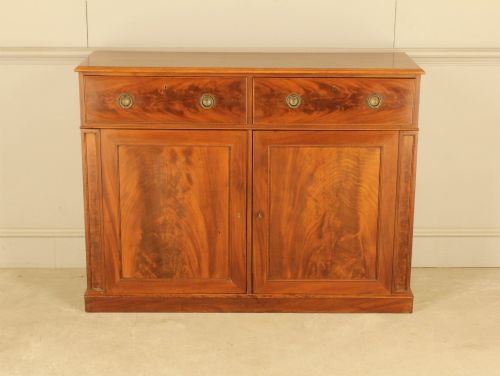
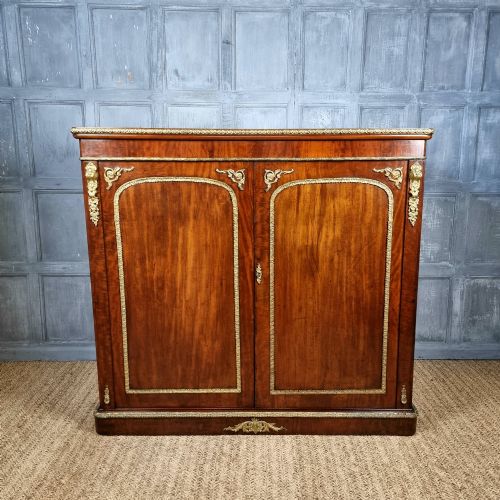
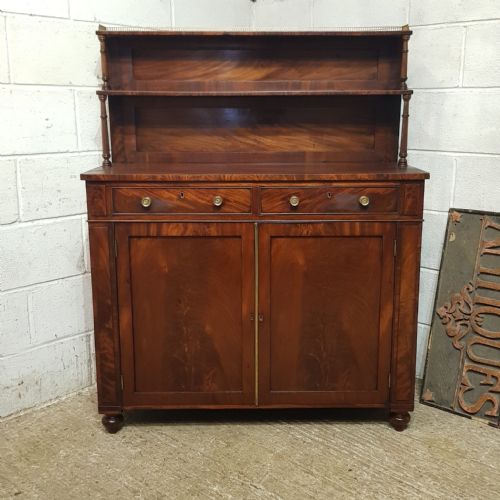
Flame Mahogany Door Sideboard
Flame mahogany door sideboard furniture combines striking grain patterns with practical storage, offering a sophisticated focal point for a traditional dining room.
Flame Mahogany Door Sideboard
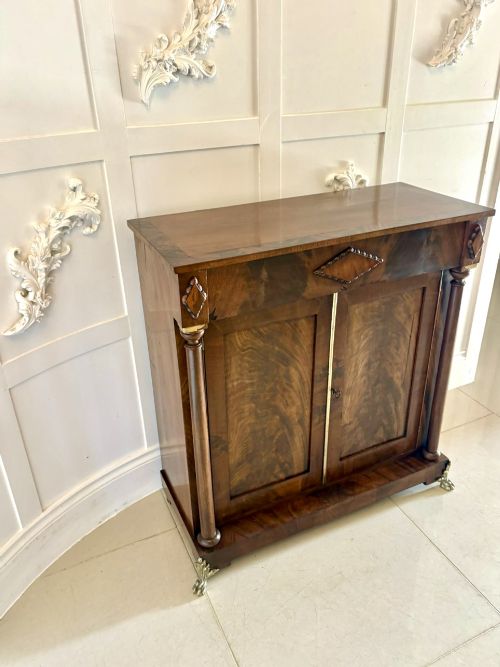
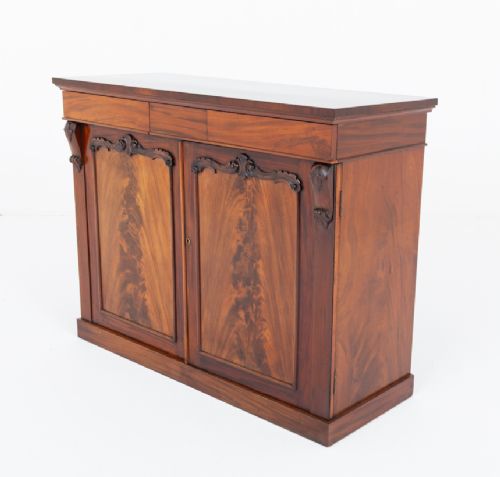
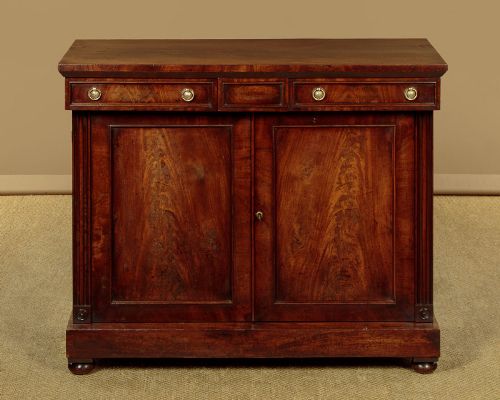
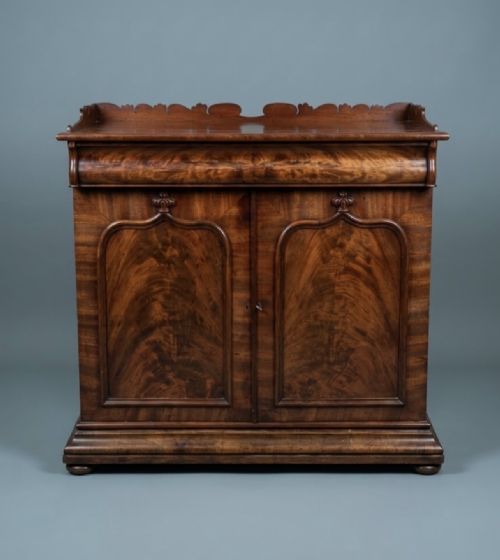
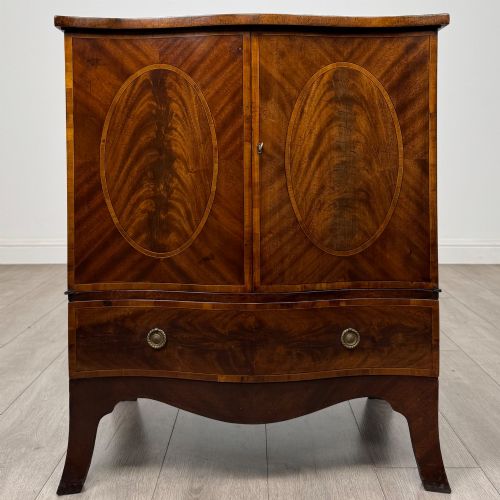
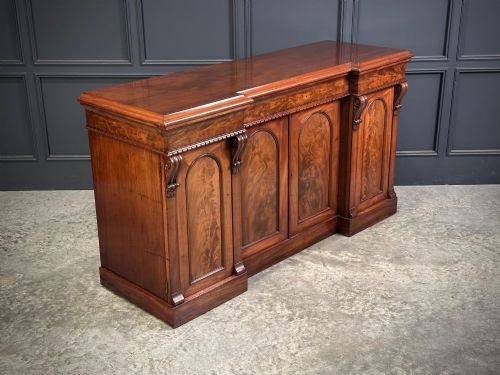
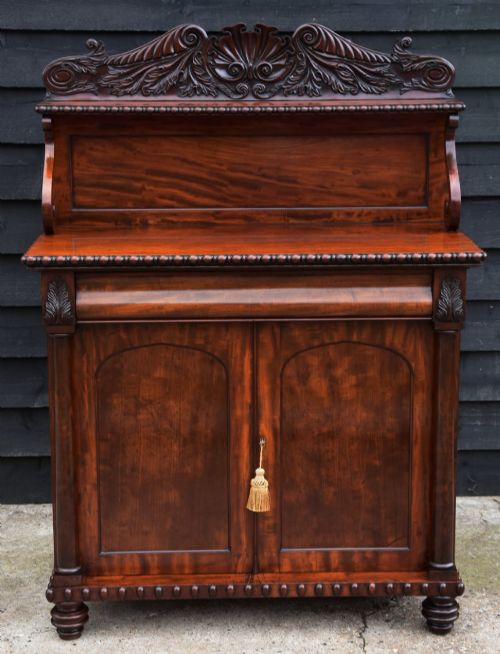
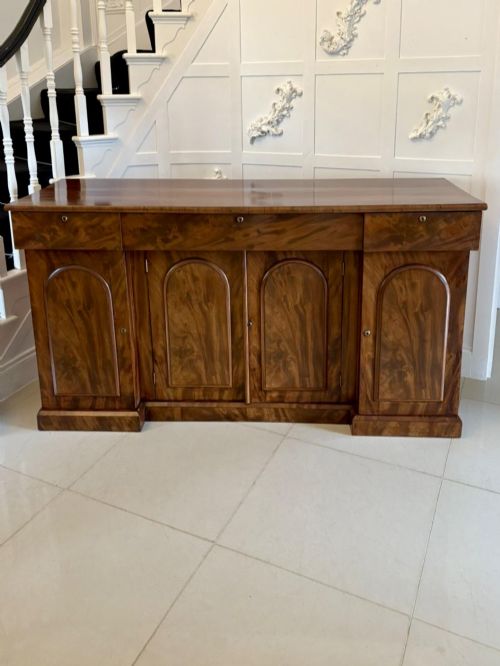
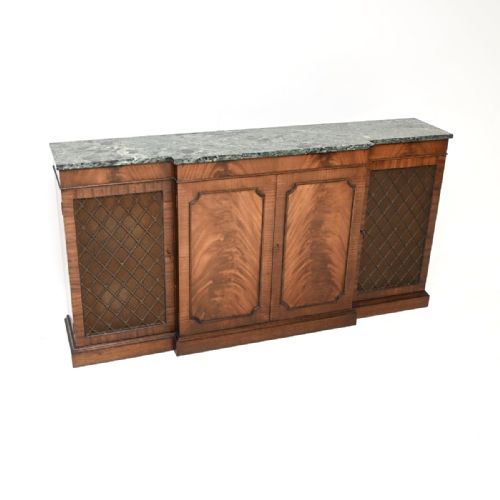
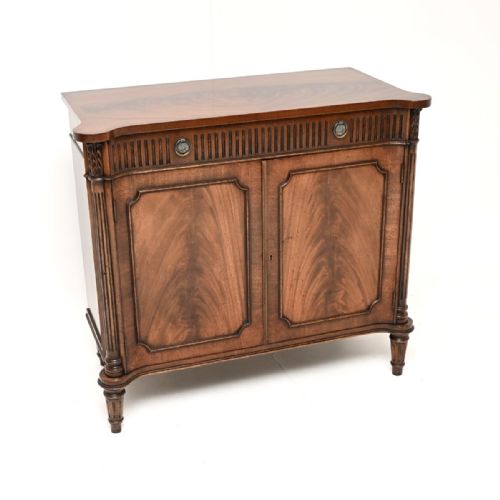
A flame mahogany door sideboard is a substantial dining or living room storage piece distinguished by the intense, flickering figure of its wood veneer. These items emerge primarily from the Georgian, Regency, Victorian, and Edwardian periods, manifesting in forms that range from compact chiffoniers to grand breakfront sideboards.
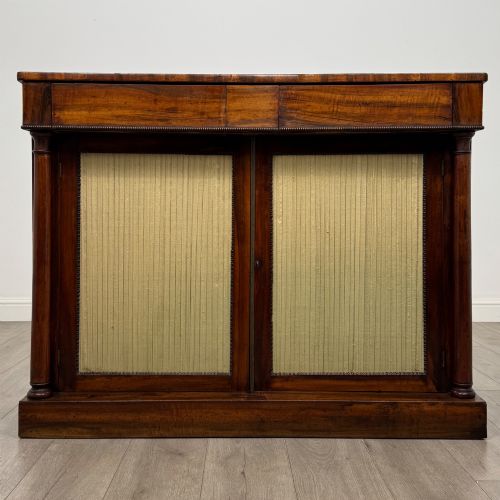
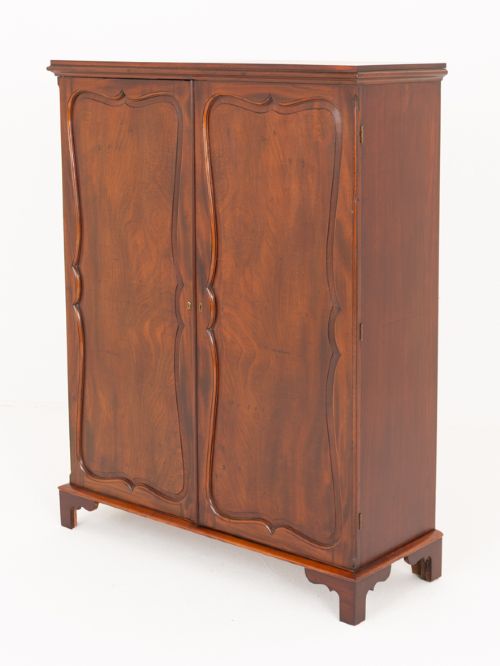
The pieces on this page appear across the 18th, 19th, and early 20th centuries, reflecting shifts in taste from austere Georgian lines to the elaborate carvings of the Victorian era. Cabinets with two or four doors predominate, alongside related side cabinets and chiffoniers featuring glass, fabric, or solid wood panels.
Materials and construction methods
Cabinet makers utilised solid mahogany for structural frames while applying thin sheets of flame mahogany veneer to the primary surfaces. This technique allowed craftsmen to display symmetrical, highly figured grain patterns across the front doors without exhausting scarce timber resources.
Secondary woods such as pine or oak frequently form the interior carcass, drawers, and back panels. Brass hardware, including handles, hinges, and sometimes grill fronts, complements the dark reddish-brown tones of the polished wood.
The furniture forms on this page include sideboards, chiffoniers, breakfront cabinets, and press cupboards with wood, glass, or fabric panels.
Evaluating construction and finish
Quality rests significantly on the selection and matching of the veneer. Superior examples display mirrored or book-matched flame patterns across the doors that catch the light evenly, whereas lesser pieces show mismatched grain or heavy patching.
The integrity of the internal joinery and secondary timber selection also distinguish fine workshops from mass production. Well-fitted doors, original brasses, and stable carcases indicate higher manufacturing standards during the Regency and Victorian periods.
Gillows·Heals·Harrods
The Flame Mahogany Door Sideboard Glossary
- Flame mahogany
- A decorative veneer cut from wood where the branch meets the trunk, producing a rippling, flame-like pattern. This figured timber was favoured for prominent furniture doors.
- Chiffonier
- A low sideboard or cabinet developed in the early 19th century, often fitted with shelves or a raised back. It serves smaller dining spaces.
- Breakfront
- A cabinet design where the central section projects forward from the flanking cupboards. This arrangement creates depth and visual rhythm on large sideboards.
- Veneer
- A thin layer of choice wood applied over a sturdier secondary timber base. Cabinet makers used this method to create elaborate surface designs economically.
Flame Mahogany Door Sideboard: Frequently Asked Questions
What is a flame mahogany door sideboard?
A flame mahogany door sideboard is a large storage unit built with doors displaying the fiery, rippling grain pattern characteristic of high-grade mahogany veneer. These pieces function as both serving surfaces and storage cabinets in traditional dining rooms.
Craftsmen produced them across the Georgian, Regency, and Victorian eras, resulting in diverse proportions and door configurations tailored to formal domestic interiors.
How do I date a mahogany sideboard?
Dating relies on examining the overall style, construction methods, and secondary timbers used inside the carcass. Georgian and Regency pieces typically show simpler, classical proportions, whereas Victorian examples often incorporate heavier moulding and elaborate carving.
Hardware styles, dovetail construction, and the type of veneer backing also provide reliable clues for establishing the period of origin.
Where were these sideboards placed?
These sideboards traditionally occupied dining rooms, positioned against a main wall to hold silverware, linen, and serving dishes during meals. Their decorative front doors ensured they remained attractive focal points when not in active use.
In modern homes, they translate well into living rooms, hallways, or large kitchens as statement storage credenzas.