
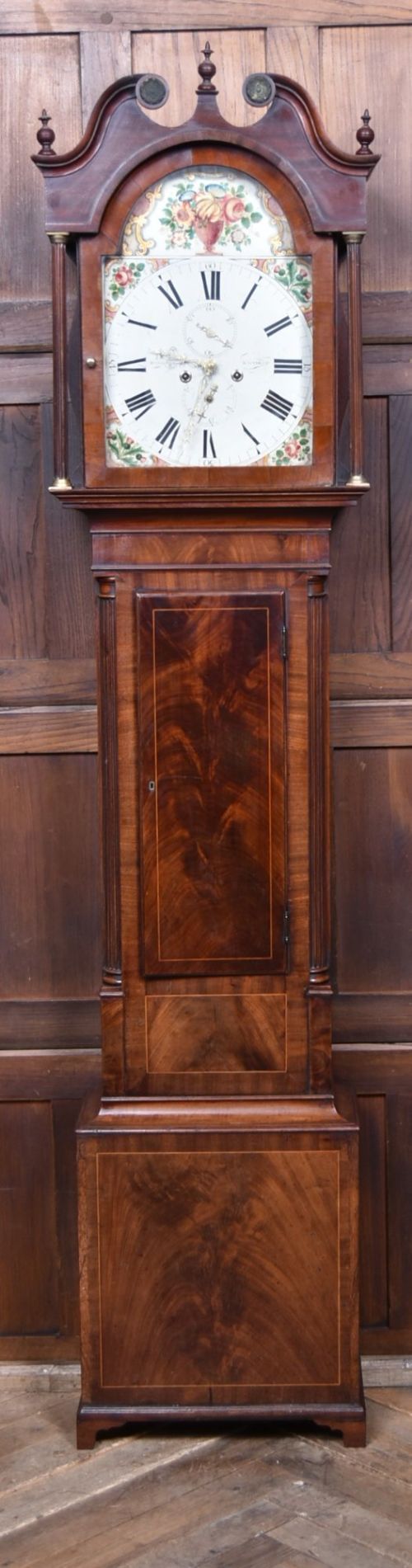
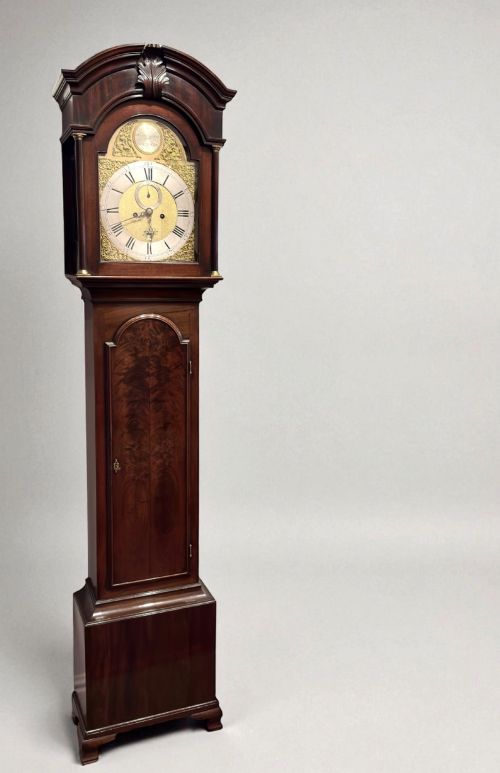
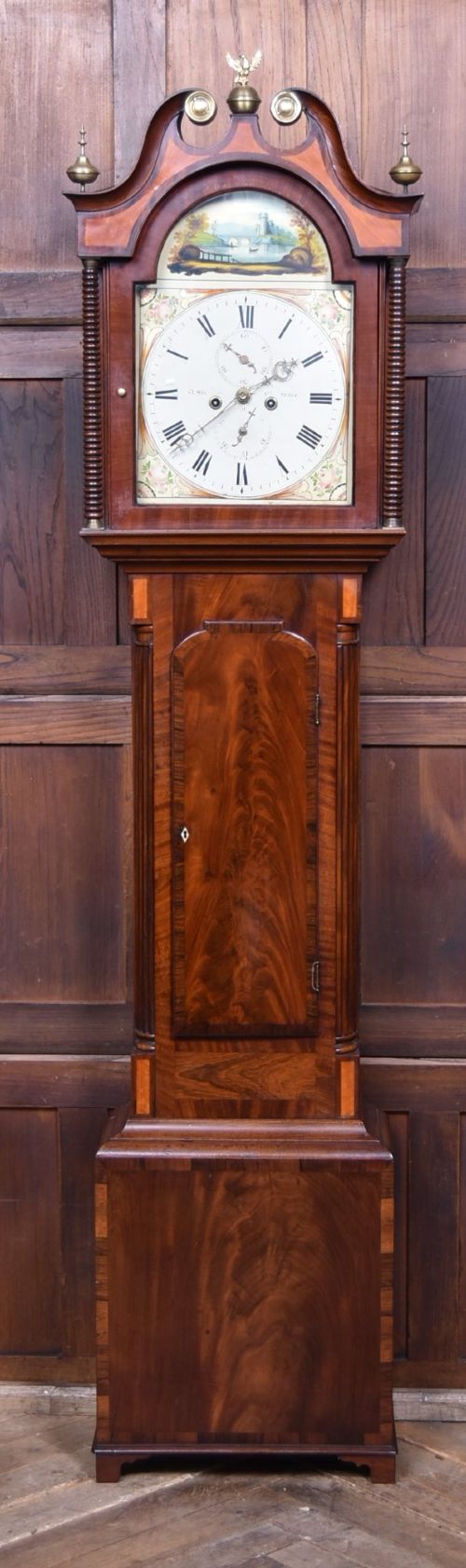

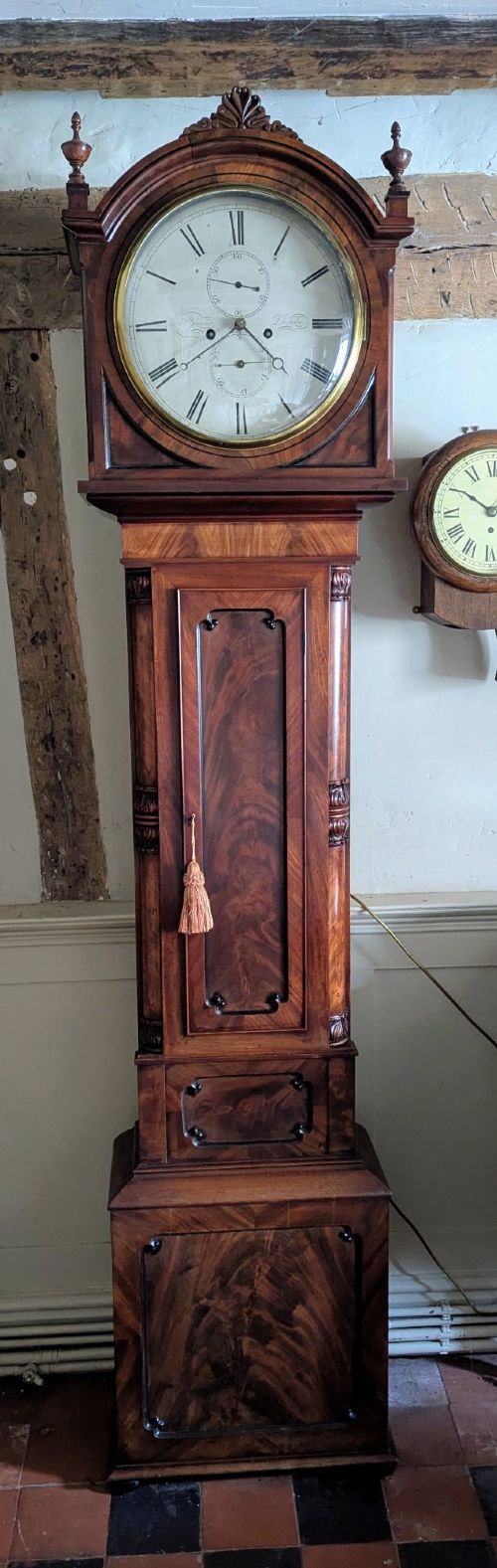
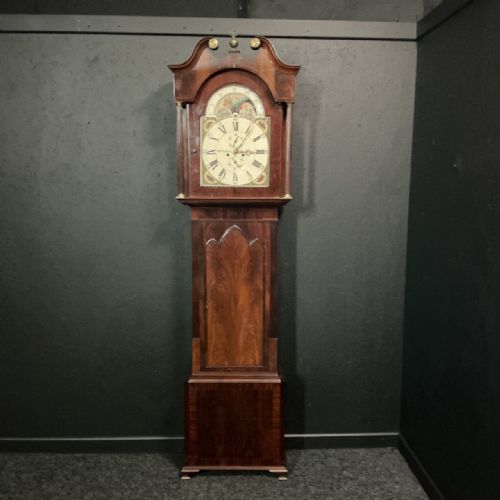
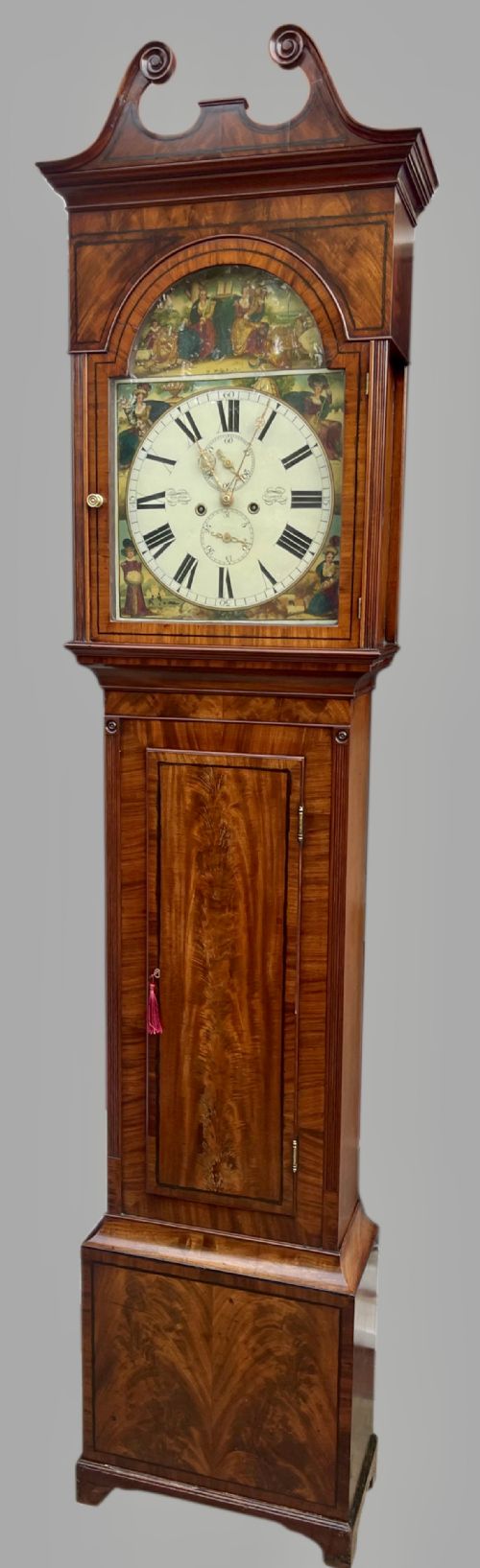
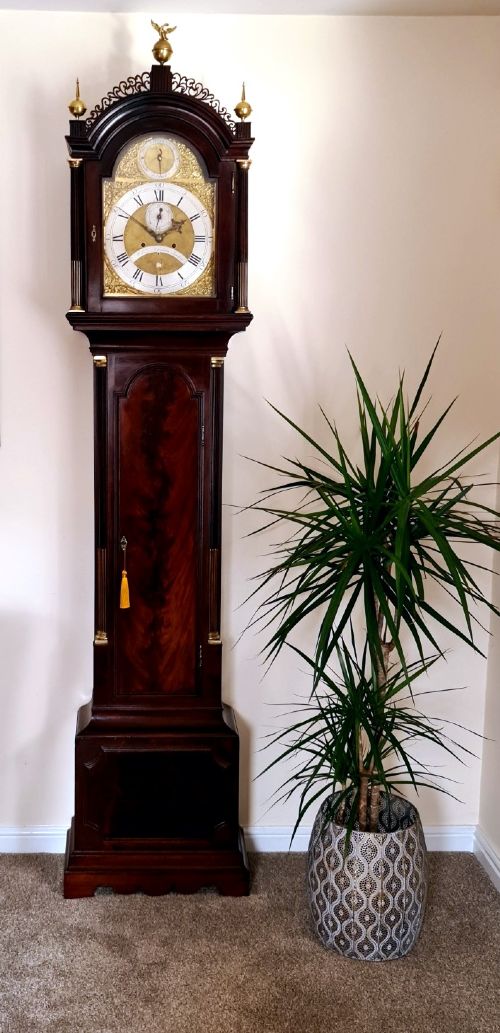
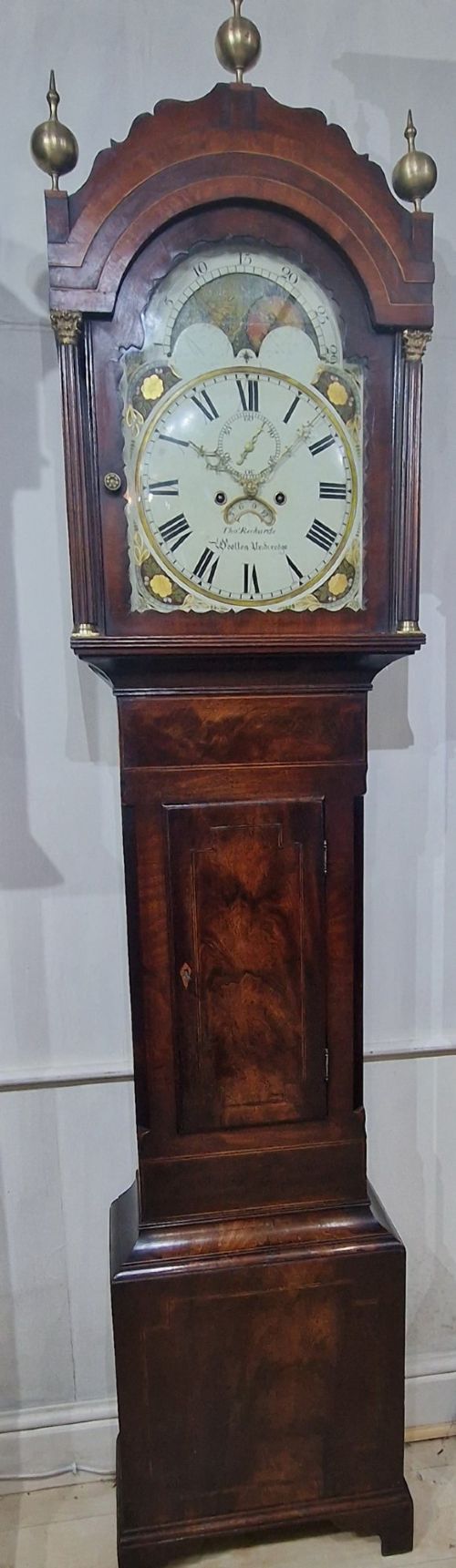

Flame Mahogany Clock Case
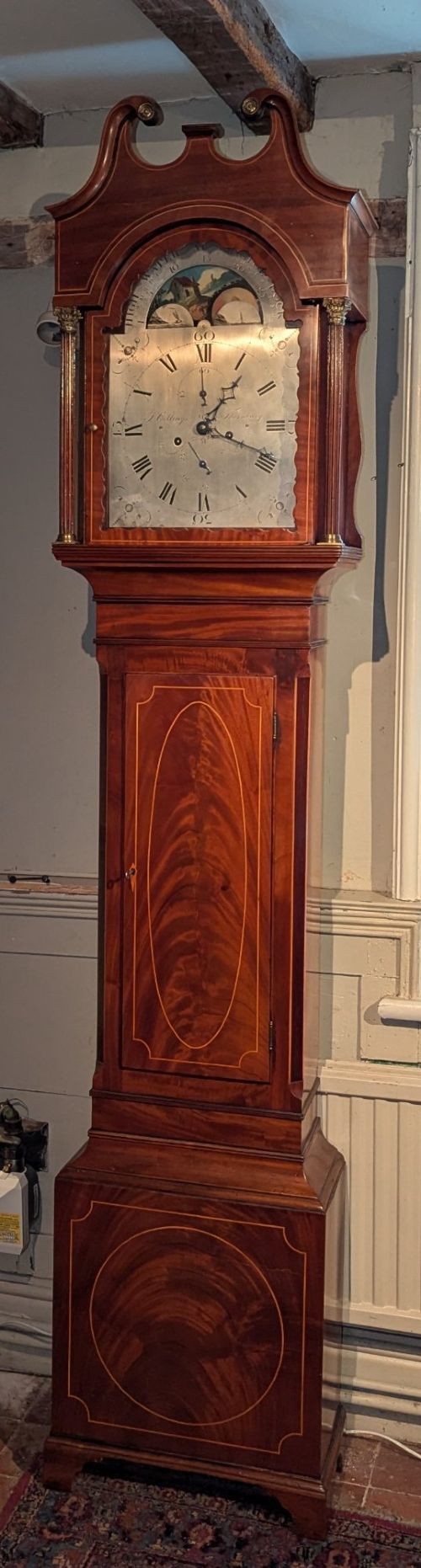
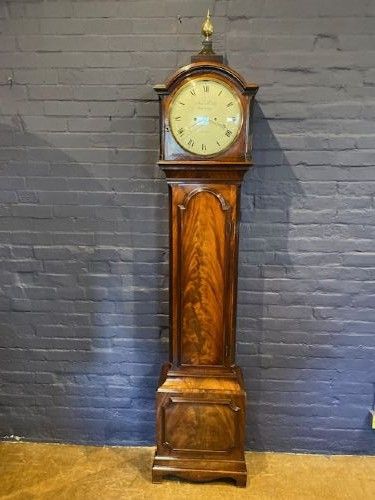
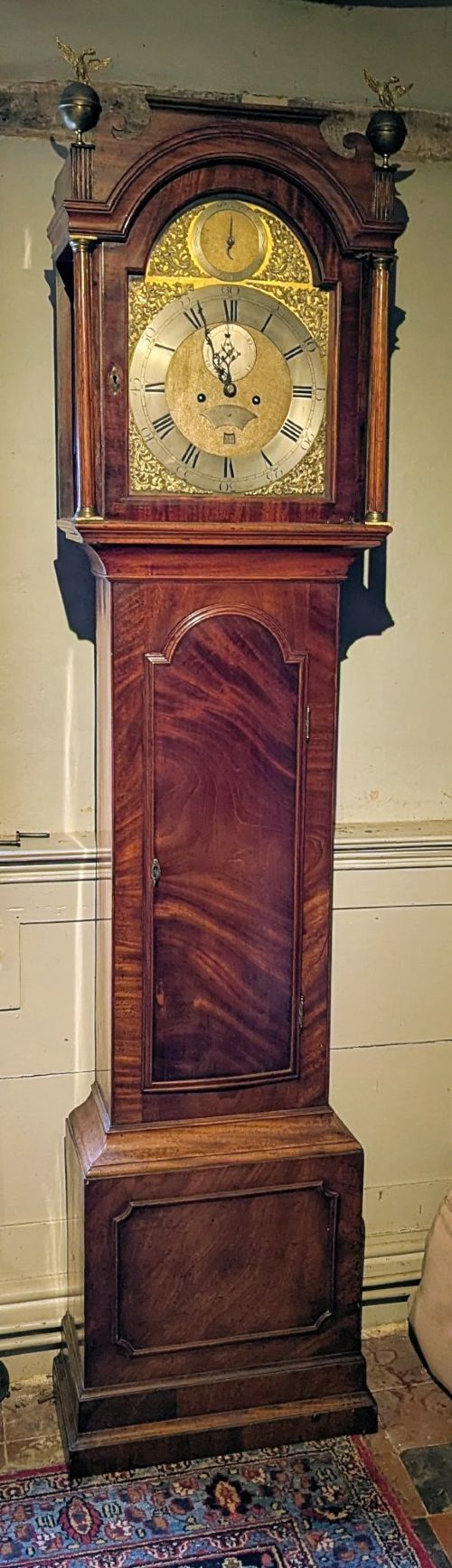
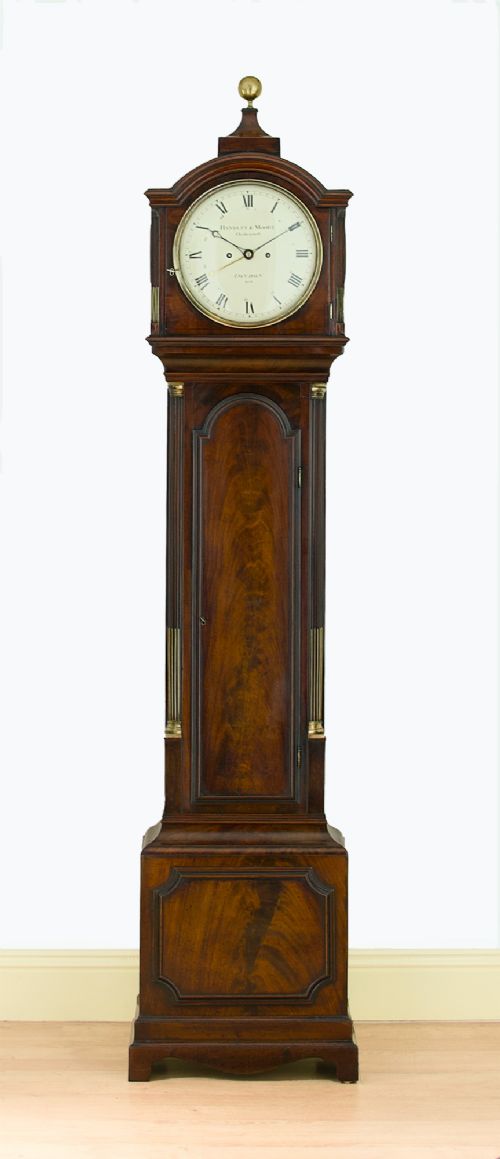
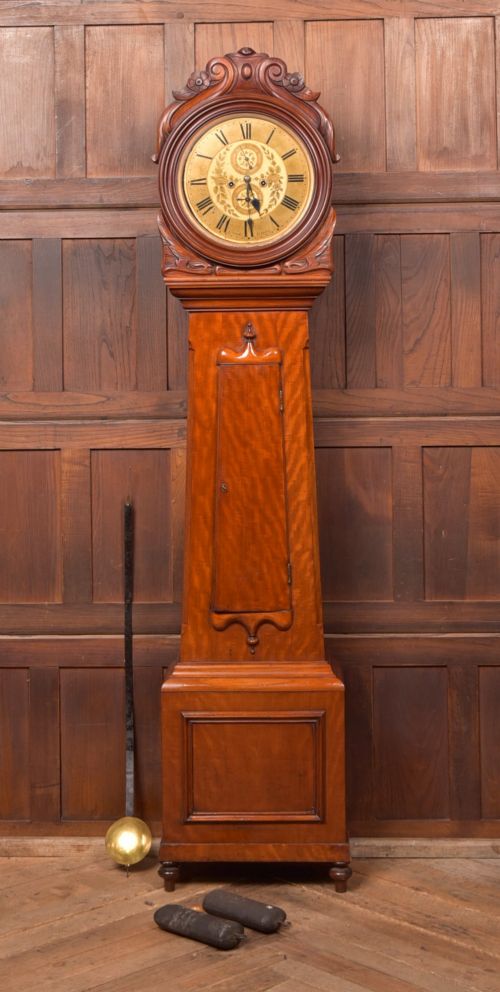
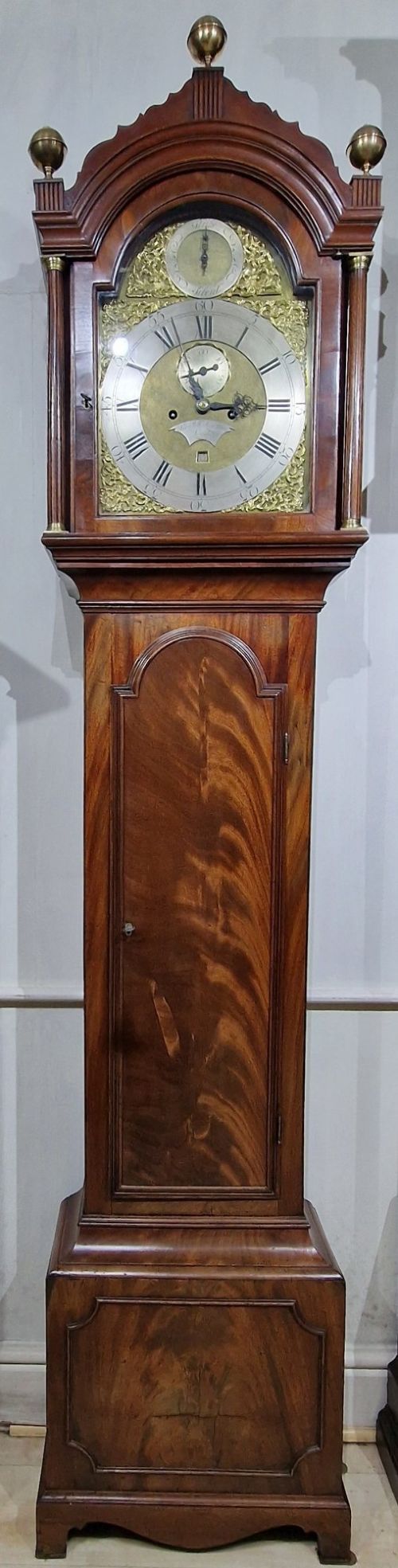
A flame mahogany clock case houses tall timepieces in figured wood with rich grain patterns.
Flame Mahogany Clock Case
When searching for a flame mahogany clock case, buyers examine tall clock housings enclosing longcase or grandfather clocks. These enclosures protect the pendulum and weights while showcasing figured timber veneers.
The pieces appearing on this page stem primarily from Georgian, Regency, and Victorian periods. Scottish and English regional workshops produced many of the surviving examples seen here.
Most items combine a trunk, a base, and a hood featuring glass panels over painted iron or enamel dials. Tall proportions dominate the selection, standing upright to display the grain patterns of the wood.
How They Were Made
Craftsmen applied flame mahogany veneer over secondary wood carcases to create dramatic, swirling grain patterns on the trunk doors and base panels. Brass details, glass windows, and painted iron dials completed the assembly alongside internal brass movements.
Cabinetmakers selected timber pieces with natural figure variation, cutting veneers carefully to mirror the grain across the central door panels. Secondary woods provided structural stability behind the decorative mahogany surfaces.
Listings feature mahogany, flame mahogany veneer, brass, glass, and painted iron across Georgian, Regency, and Victorian periods.
What Varies in Quality
Quality rests upon the visual impact and symmetry of the veneer grain matching across the door panels. Finely figured timber with deep natural chatoyancy marks the higher end of the range.
Proportion and architectural detail dictate excellence, separating standard workshop output from exceptional cabinet work. Integrated brass fittings and well-preserved painted or enamel dials further distinguish the pieces.
Hendrie Ogg·Gordon of Aberdeen·D. Straiton·Tait·James McCabe·Handley & Moore·William Jourdain·Rickards·Priory of Dundee·Andrew Thom·Mclennan·William McEwan·Thwaites·William Allam·James Tregent·Thomas Goddard·Francis Perigal·Gillows·James Harvey·Upjohn·Wightman·Parkinson & Frodsham·James Wood·John Shelton·John Banks
The Flame Mahogany Clock Case Glossary
- Flame mahogany
- A timber veneer exhibiting distinctive, torch-like grain patterns created by slicing across intersecting branches. This figured wood forms the primary visual feature of the clock cases.
- Longcase clock
- A tall pendulum clock housed within a wooden case resting on the floor. These instruments are frequently termed grandfather clocks.
- Hood
- The upper section of the case enclosing the dial and movement, often featuring glass panels and architectural mouldings. Doors on the hood allow access to the clock face.
Flame Mahogany Clock Case: Frequently Asked Questions
How do I identify the period?
Dating relies on stylistic shifts in the hood design, dial materials, and cabinet proportions. Georgian examples often showcase architectural cornices and brass dial elements, while Victorian versions incorporate heavier mouldings and different wood finishes.
Examining the construction methods inside the trunk and the style of the painted iron or enamel dial offers further clues to the decade of creation. Maker signatures inscribed on the dial provide direct historical reference points.
Where were these clocks placed?
Historically, longcases stood in hallways, stairwells, or main living rooms where their chimes could mark the hours for the household. Their tall, upright proportions allowed them to occupy minimal floor space while remaining prominent.
Placing one today requires a stable, level floor and a location away from direct sunlight and rapid temperature fluctuations. Proper placement ensures the pendulum swings evenly and preserves the timber veneer.
What is a Scottish longcase?
A Scottish longcase refers to a tall clock manufactured by makers operating in Scotland, frequently featuring distinct regional dial designs and cabinet proportions. These pieces often display unique brass or painted iron dials distinct from London work.
Regional workshops in cities like Aberdeen, Dundee, and Edinburgh produced these variants during the Georgian and Victorian eras. Their case timber often displays rich mahogany grain configurations.