
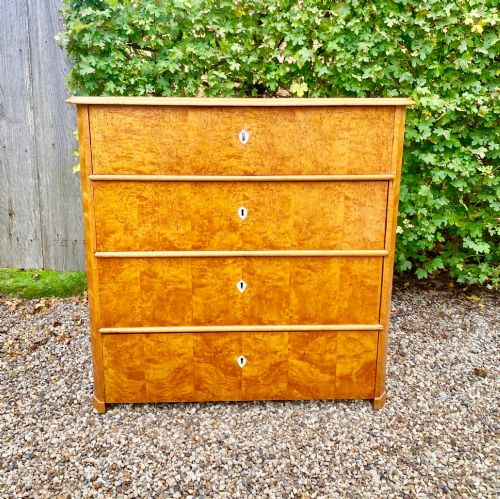
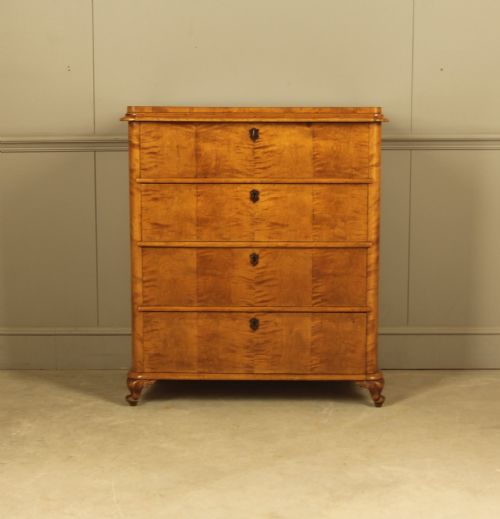
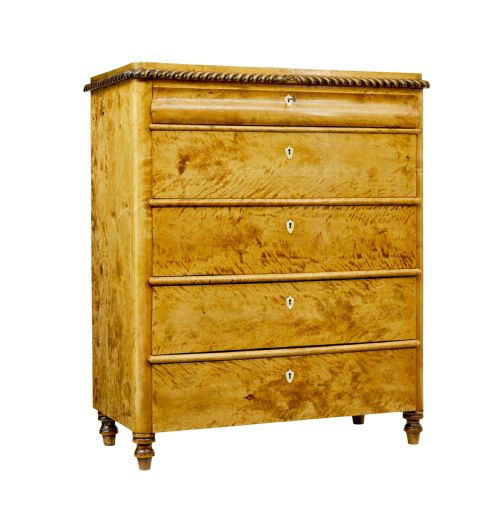

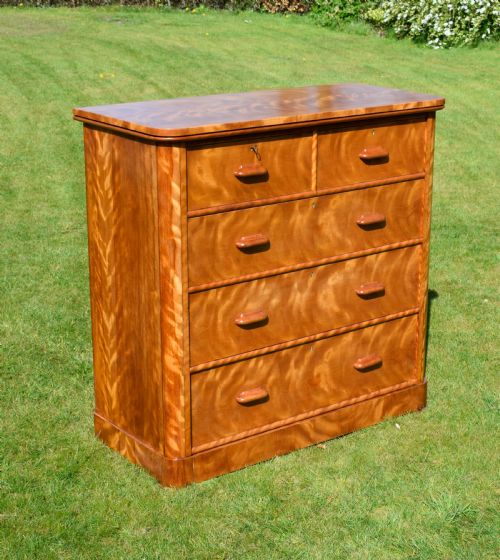


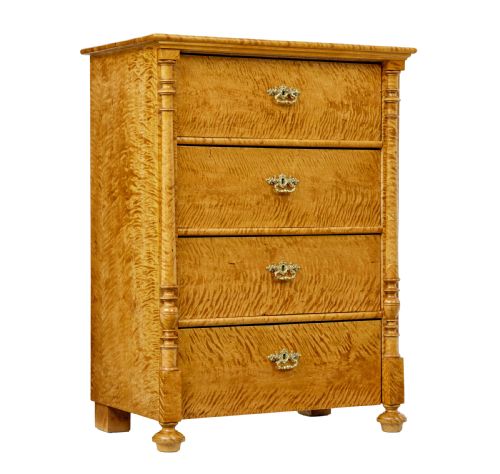


Flame Birch Chest
A flame birch chest brings a remarkable warmth to a room through dramatic wood grain.
Flame Birch Chest
A flame birch chest is a striking storage piece defined by the natural figuring of the timber, appearing most frequently in nineteenth-century Scandinavian and Swedish Biedermeier designs. Buyers seeking a flame birch chest encounter various drawer configurations, ranging from four straight drawers to secretaire chests with fitted drop-front writing compartments. These pieces originate predominantly from nineteenth-century workshops where cabinetmakers utilised native Scandinavian timbers to create bold domestic furniture.
Beyond standard chests of drawers, the category encompasses commodes and occasional pieces such as bedside tables in related birch veneers. The nineteenth-century examples often display deep horizontal proportions or upright facades designed to showcase the swirling patterns of the wood. Most options seen here reflect classical Scandinavian aesthetics, balancing architectural form with vibrant natural decoration.
Materials and construction
Cabinetmakers constructed these pieces using pine as a sturdy secondary wood for internal carcases and drawer linings, applying fine veneers to the visible exterior surfaces. Flame birch veneer and tiger birch create the characteristic patterned facade, cut carefully from specific sections of the log to maximise visual impact. Artisans sometimes incorporated contrasting details in bone or fitted decorative brass hardware to accent the drawers.
The joinery relies on traditional nineteenth-century techniques suited to veneered carcases, ensuring stability across wide drawer fronts. Surface preparation involved careful smoothing and polishing to bring out the natural chatoyancy of the birch grain without obscuring the timber. Inlaid elements appear on select models, demonstrating precise hand-cut positioning into the primary wood.
Assessing quality and craftsmanship
Quality in these pieces rests primarily on the selection and bookmatching of the veneer across the drawer fronts. Superior examples exhibit symmetrical flame patterns that flow continuously or mirror each other across the facade, whereas lesser pieces show disjointed grain alignment. The depth of the polish and the crispness of applied mouldings further distinguish exceptional cabinetmaking from standard production.
Structural integrity also separates individual pieces, particularly in the movement of large veneered surfaces over time. Well-preserved items maintain flat drawer fronts and smoothly operating timber runners without significant lifting in the veneer. The handling of secondary timbers like pine inside the drawers indicates the overall standard of the workshop.
The Flame Birch Chest Glossary
- Flame birch veneer
- A thin slice of birch wood cut to reveal a fiery, undulating grain pattern. This veneer forms the primary decorative surface on the front of the chest.
- Biedermeier
- A influential Central and Northern European design style spanning the nineteenth century. It prioritises clean architectural lines and polished wood over heavy ornamentation.
- Secretaire
- A cabinet or chest featuring a fitted writing drawer with a drop-front panel. It combines storage with a compact writing surface.
- Masur birch
- A natural growth variation in birch timber producing distinctive dark dashes and swirls. Cabinetmakers prized this wood for its rich texture.
- Commode
- A low chest of drawers originating from French furniture forms. The term often describes European pieces from the nineteenth century.
Flame Birch Chest: Frequently Asked Questions
How do I clean flame birch?
Dust the surface regularly with a soft, dry cloth to prevent dirt accumulation on the polished veneer. Avoid modern chemical sprays and moisture, which can penetrate older finishes.
Apply a traditional beeswax polish sparingly when the wood appears dry, buffing it gently to maintain the natural lustre.
What is tiger birch?
Tiger birch refers to timber featuring contrasting vertical stripes that resemble a tiger's pelt. This natural variation occurs in specific growing conditions and creates a striking striped effect.
Cabinetmakers utilised this figured wood on drawer fronts to add visual depth to nineteenth-century furniture.
How do I date a Biedermeier chest?
Examine the construction methods visible inside the drawers and along the backboards. Nineteenth-century pieces typically feature hand-planed secondary woods like pine and traditional joinery.
The presence of dense flame birch veneer and restrained classical proportions points directly to the nineteenth-century Scandinavian period.
Can I use a secretaire chest daily?
These pieces function well for everyday storage when handled with reasonable care. The drop-front writing compartment requires gentle support when opened to protect the internal hinges and stays.
Placing the chest away from direct heat sources and strong sunlight protects the nineteenth-century veneer from drying out.