

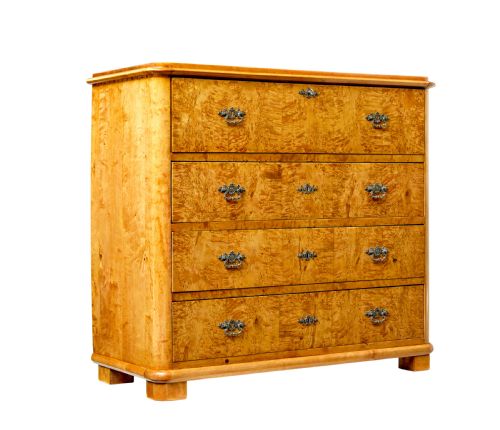
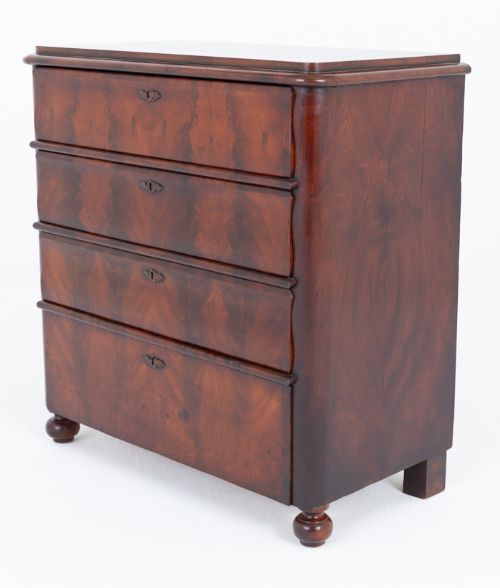


Biedermeier Chest
A biedermeier chest brings restrained continental elegance to a room, offering clean lines and rich timber grains that anchor a modern or traditional interior.
Biedermeier Chest
When you search for a biedermeier chest, you encounter solid and veneered storage furniture originating from nineteenth-century continental Europe and Scandinavia. These pieces emphasise functional simplicity and timber figure over excessive ornamentation.
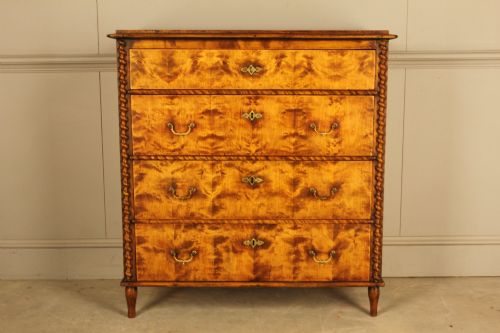
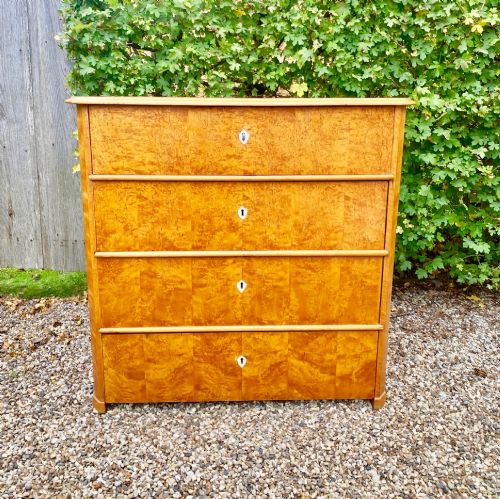
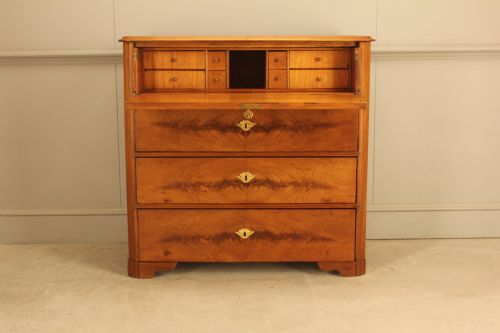
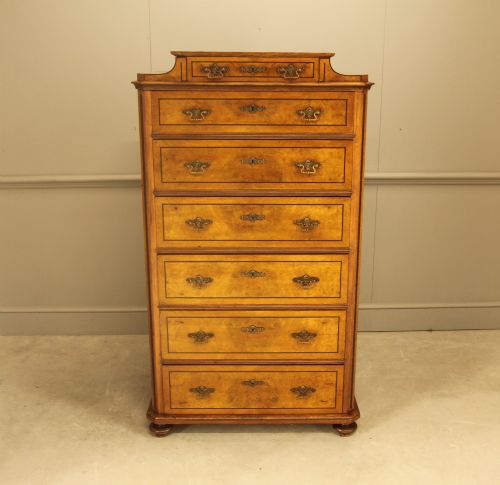
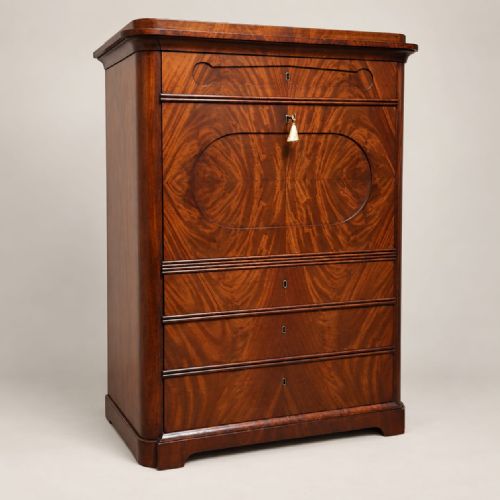
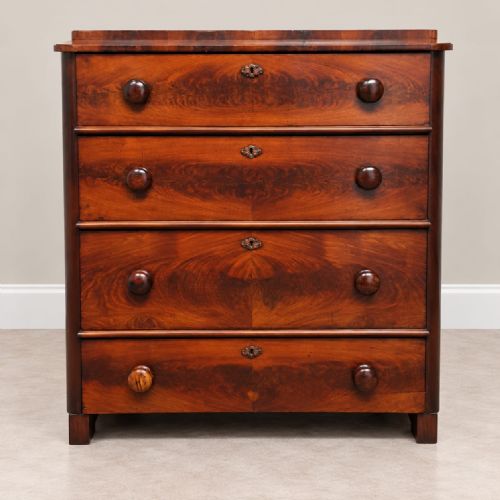
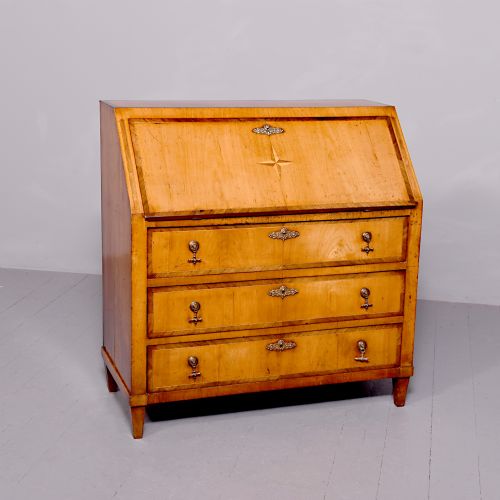
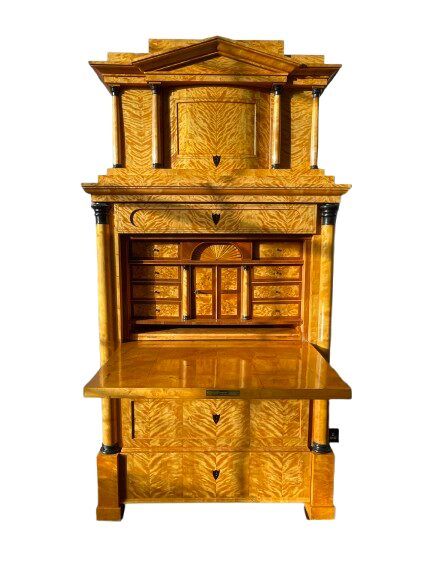
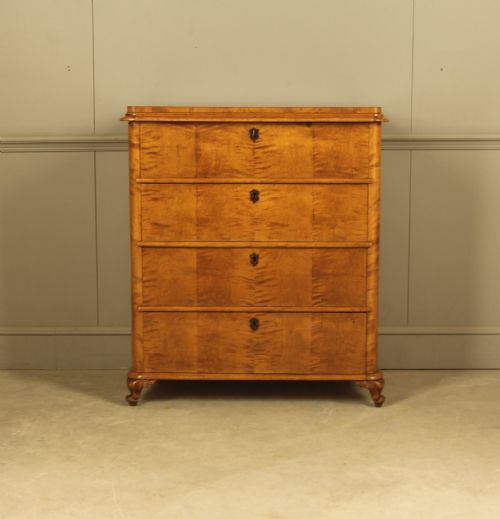
The most common examples on this page are Swedish and wider continental pieces constructed during the nineteenth century. They appear as straight-fronted chests, tall drawers, and secretaires featuring drop-down writing desks.
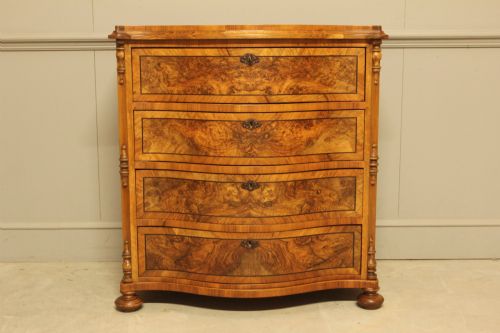
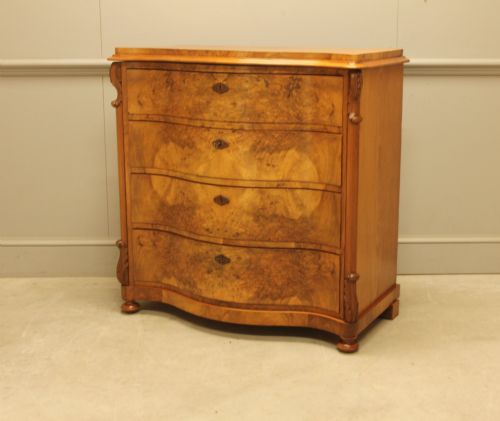
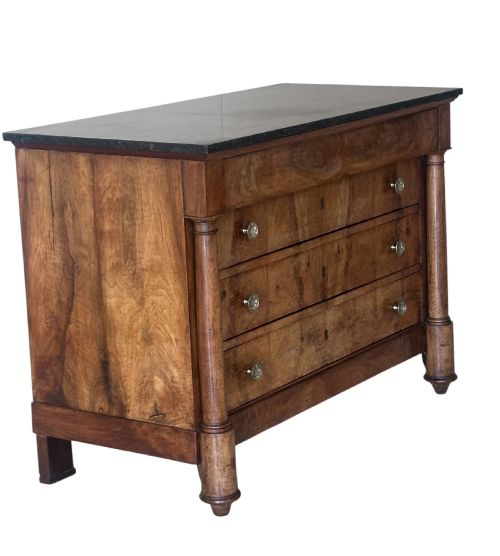
Makers utilised regional timbers to give each biedermeier chest its characteristic appearance. Birch, mahogany, walnut, and elm predominate, often chosen for dramatic burr, flame, or tiger grain patterns.
How They Were Made
Cabinetmakers constructed the carcase using pine or secondary woods as a stable base for fine hardwood veneers. Selecting symmetrical veneers created the striking book-matched patterns visible across drawer fronts.
Surface preparation involved skilled polishing to highlight the natural figure of birch, mahogany, or walnut without heavy stain. Metal mounts, bone inlay, and brass hardware provided subtle contrast to the warm timber tones.
Biedermeier Chest Retail Price Guide 2026
Typical asking prices for biedermeier chest among the pieces listed under this phrase on Sellingantiques today, from the lower quarter to the upper quarter. They describe what is for sale here now, not the wider market.
Listings feature nineteenth-century continental and Swedish origins, utilising birch, mahogany, walnut, elm, and pine.
What Varies in Quality
Quality rests principally on the choice of veneer and how symmetrically the grain is matched across the drawer fronts. Superior pieces display continuous, highly figured timber that flows seamlessly from one drawer to the next.
Construction integrity and the retention of original hardware also define the better examples. Smoothly operating drawers and intact internal writing compartments separate standard utility pieces from finer architectural commissions.
Gemla Fabrikers
The Biedermeier Chest Glossary
- Biedermeier
- A style of furniture and interior design developed in central Europe and Scandinavia during the nineteenth century, known for utility and clean forms. It discarded heavy classical ornament in favour of minimalist grace.
- Secretaire
- A chest of drawers incorporating a hinged writing flap that drops down to reveal fitted internal compartments. These versatile forms served both storage and writing functions.
- Flame Birch
- A decorative timber veneer displaying rippled, flickering grain patterns resembling tongues of flame. Cabinetmakers prized this figure for central panels and drawer fronts.
- Burr Walnut
- Timber taken from a tree growth or burl, yielding swirling, knotty grain patterns. It creates a highly textured surface on luxury case furniture.
- Commode
- A low chest of drawers or cabinet originating in France. The term frequently applies to continental drawer units designed for domestic bedrooms.
Biedermeier Chest: Frequently Asked Questions
What is a biedermeier chest?
A biedermeier chest is a nineteenth-century storage piece originating from central Europe or Scandinavia, defined by clean architectural lines and figured wood veneers.
These pieces prioritise the natural beauty of timber grains over carved decoration, making them enduringly popular for contemporary interiors.
What woods were used?
Cabinetmakers primarily used birch, mahogany, and walnut for these chests, often applying finely cut veneers over a pine carcase.
Varieties like flame birch, masur birch, and burr walnut provided decorative surface patterns.
How do I care for my chest?
Keep the wood conditioned by avoiding direct sunlight and maintaining steady room humidity to protect the delicate veneers.
Dust regularly with a soft dry cloth and occasionally apply a quality wax suited to antique furniture.