
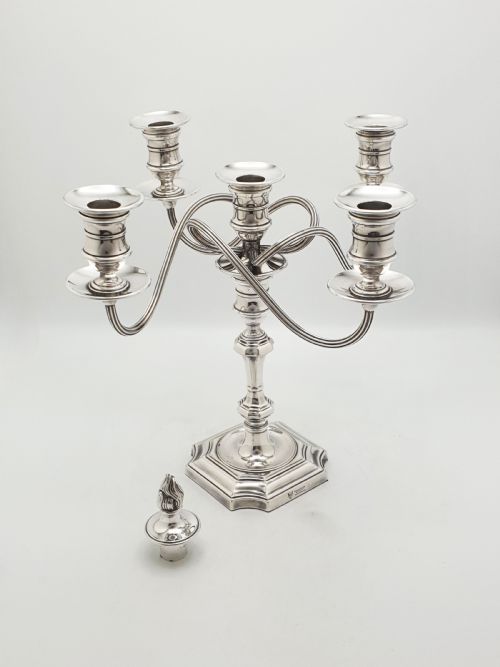
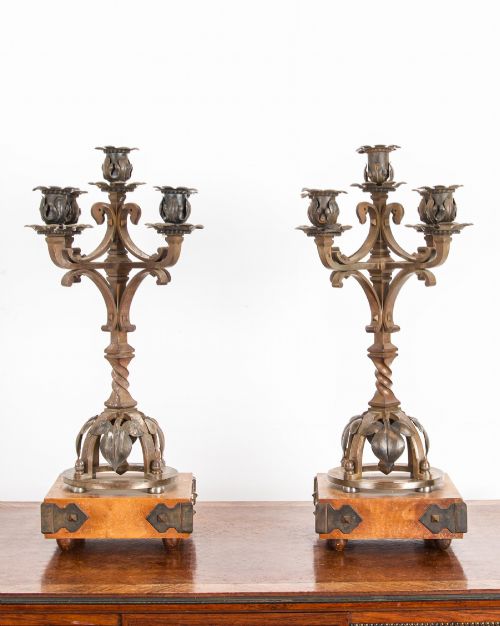


Five Light Candelabrum
A five light candelabrum brings commanding height and multiple branching candle holders to a dining table or mantelpiece.
Five Light Candelabrum
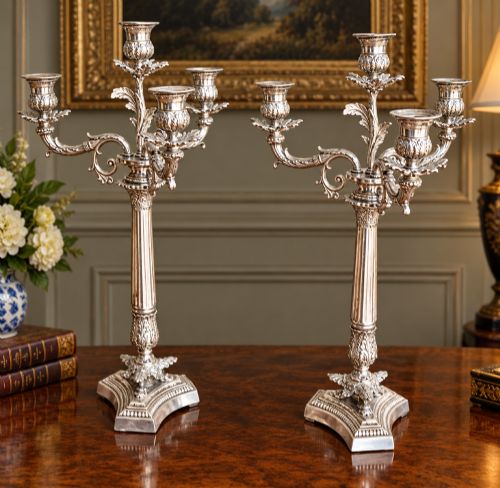
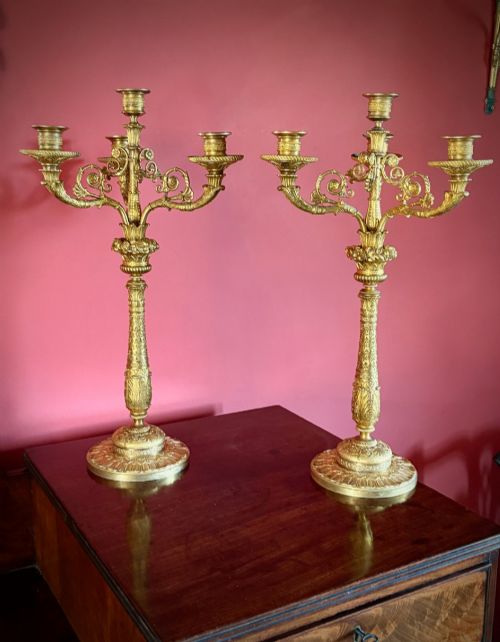
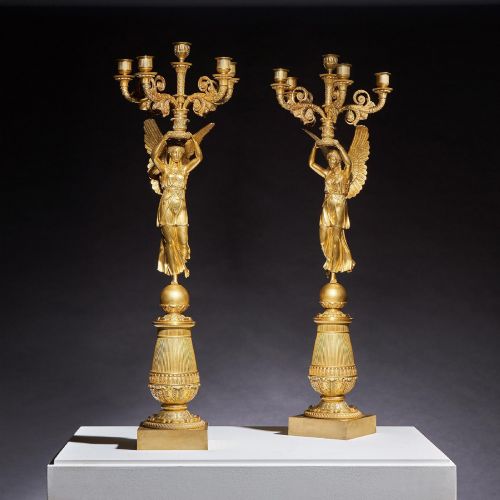
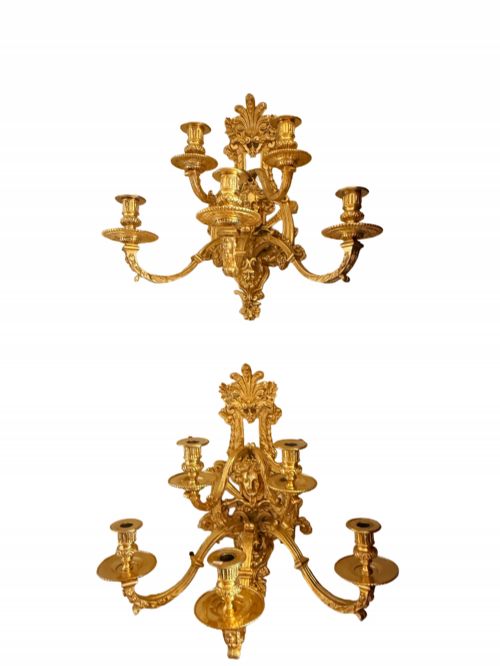
A five light candelabrum provides branch lighting for formal rooms, appearing predominantly as matched pairs dating from the nineteenth century. The form encompasses table candelabras with detachable sconces, heavy dining centrepieces, and wall sconces or wall lighting designed to mount directly onto panels.
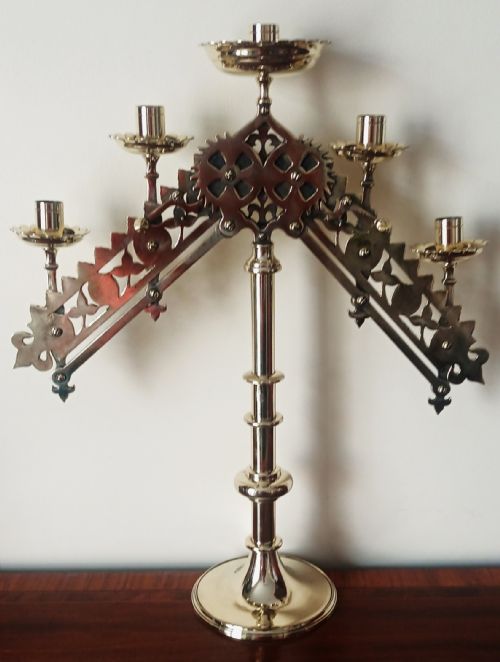
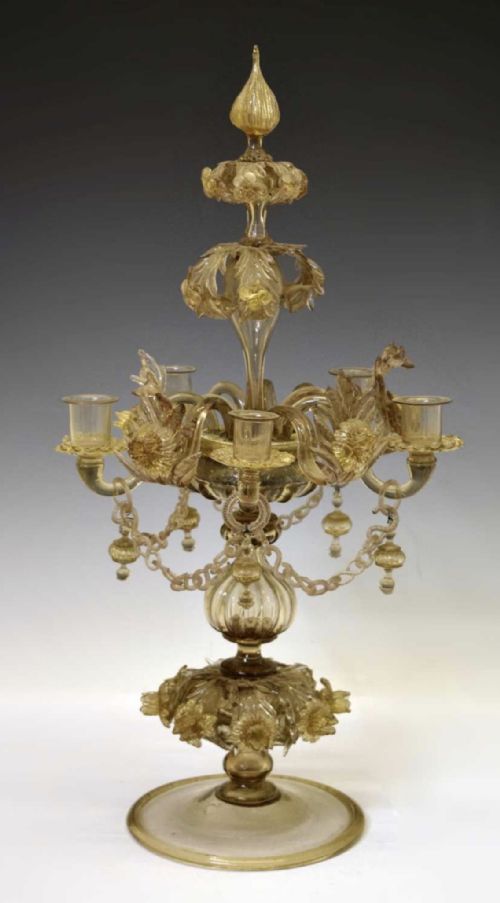
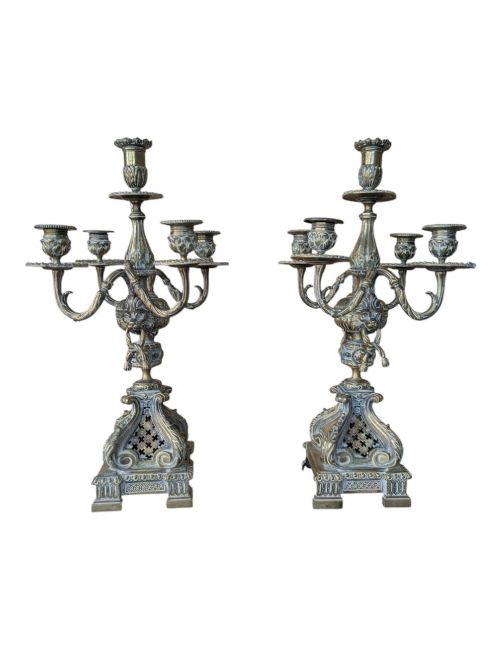
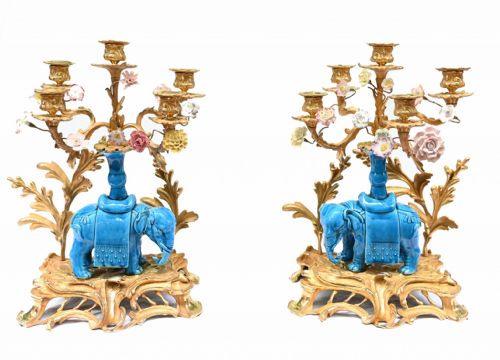
Makers produced these pieces across several distinct decorative movements, yielding French Empire, Rococo Revival, Gothic Revival, and Edwardian designs. Buyers frequently encounter variations that incorporate porcelain, marble bases, or crystal drops alongside the standard branching metal frame.
The objects serve both functional illumination and decorative symmetry, often forming part of larger clock garnitures or extensive silver plated dining suites. Their survival reflects sustained popularity across the Victorian and Edwardian eras for heavy table ornaments.
What varies in quality
The execution of secondary elements, such as articulated joints, tightly fitting detachable sconces, and balanced branching arms, separates masterwork productions from standard workshop output.
Listings feature pieces spanning the nineteenth and early twentieth centuries, constructed from gilt bronze, marble, brass, and silver plate in styles from Gothic Revival to Art Nouveau.
Pierre Philippe Thomire·AD Mougin Paris
The Five Light Candelabrum Glossary
- Ormolu
- A technique of applying finely ground high-carat gold to a bronze base using a mercury amalgam. This process creates a rich, matte yellow finish characteristic of French decorative arts.
- Sconce
- The socket or cup at the end of a candle branch designed to hold the candle upright. Detachable versions lift out to catch wax drips.
- Garniture
- A set of three or more matching ornamental objects, typically comprising a central clock flanked by candelabras or vases on a mantelpiece.
- EPNS
- Electroplated Nickel Silver, a process introduced in the nineteenth century that coated a base metal alloy with a thin layer of silver.
- Putti
- Depictions of plump, winged infant figures frequently cast in bronze or ormolu to support the branching arms of French candelabras.
Five Light Candelabrum: Frequently Asked Questions
How do I clean an ormolu candelabrum?
Dust the metal gently with a soft dry brush to prevent dirt accumulation in recessed chased areas. Avoid chemical dips or abrasive polishes that strip away the original mercury gilding.
Wash glass or porcelain components separately using warm soapy water, ensuring all parts dry thoroughly before reassembly.
Were these made as singles or pairs?
Makers produced most candelabras as balanced pairs to flank mantelpieces, sideboards, or dining tables in symmetrical nineteenth century interiors. Single surviving pieces also appear, often originating from larger garniture sets or dining suites.
Matching pairs command greater interest for formal display where symmetry governs room layout.
How do I date a nineteenth century candelabrum?
Examine the casting quality, fastening screws, and stylistic motifs to determine the period of manufacture. French Empire and Rococo Revival pieces rely on heavy cast bronze with distinct mercury gilding, while later Edwardian or silver plated examples show industrial manufacturing techniques.
Maker marks stamped onto the bronze base or backplate provide the most reliable chronological anchor.