



Five Light Candelabra Pair
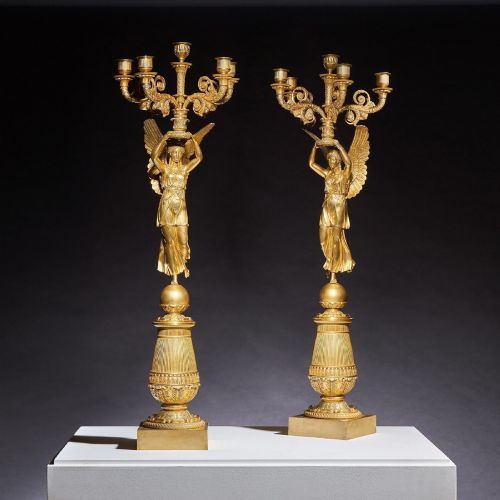
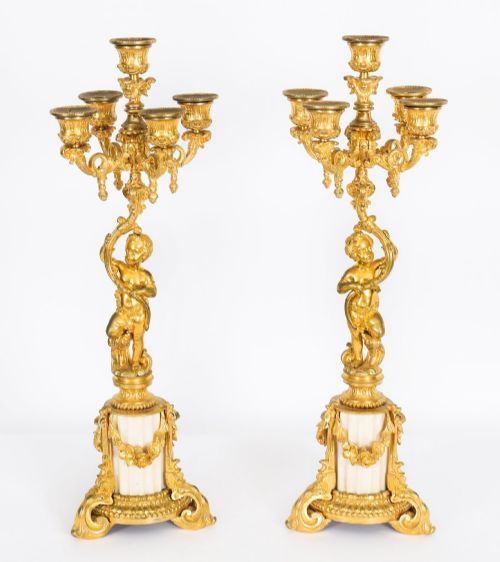
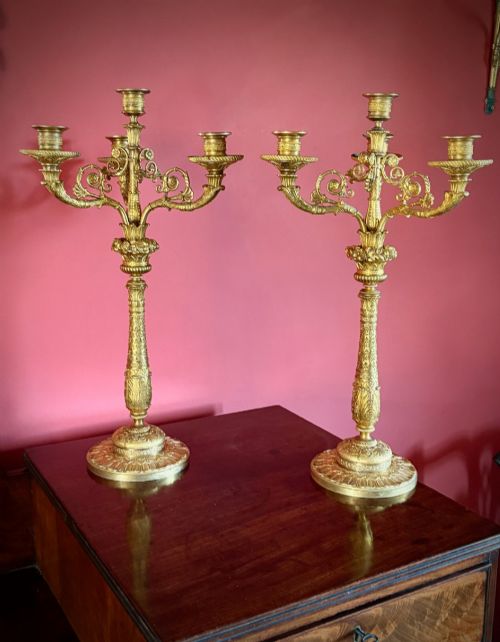
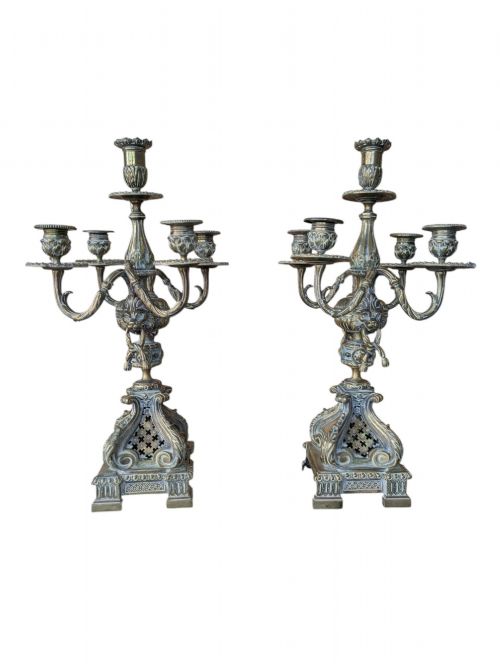
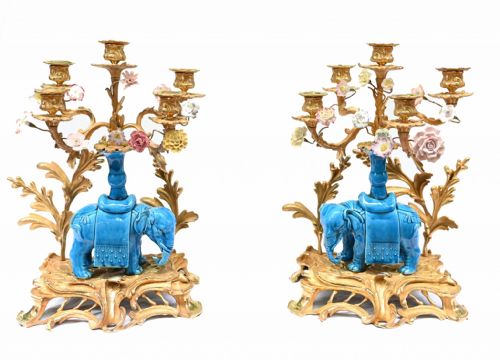
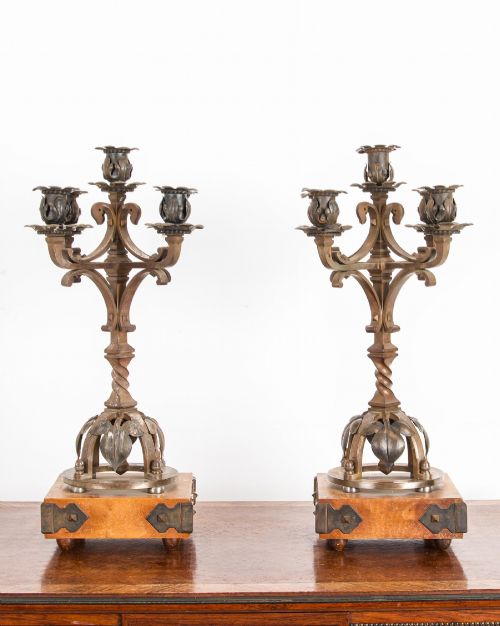
These five light candelabra pair selections bring monumental French and Victorian presence to a mantelpiece, offering five branching lights cast in heavy metal.
Five Light Candelabra Pair
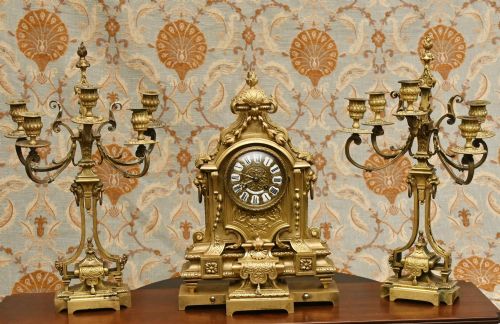
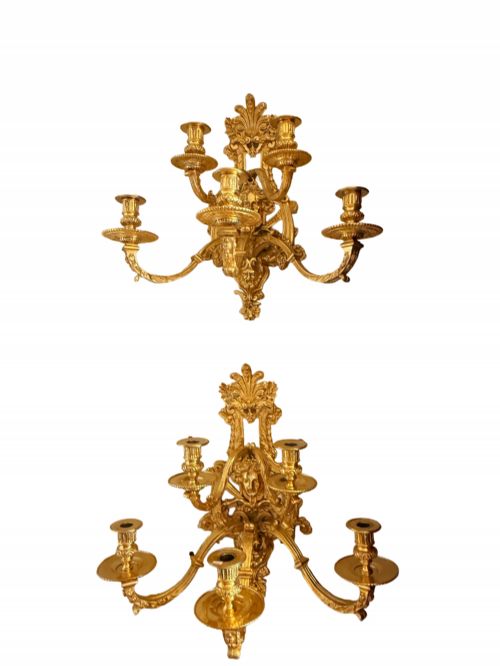
When you search for a five light candelabra pair, you encounter balanced sets of branched lighting fixtures designed for grand rooms from the nineteenth and early twentieth centuries. These pieces appear primarily as tall candelabras made in matched pairs, often accompanied by clock garnitures or configured as wall lights.
The selections on this page span several decades of production, heavily favouring nineteenth-century French designs alongside Victorian and early twentieth-century examples. You will frequently find pieces styled in the manner of Louis revival, French Empire, and Gothic Revival aesthetics.
Most items on show take the form of freestanding candelabras standing on heavy bases, though wall sconces also emerge within the inventory. Makers from this era typically utilised multiple branches radiating from a central stem to hold five candles simultaneously.
What separates the finest examples
The choice of secondary materials also dictates the tier of the piece, with solid marbles and heavy hand-finished bronzes occupying the upper range. Superior pairs demonstrate exact symmetry between the left and right components, maintaining structural balance across all five branches.
Five Light Candelabra Pair Retail Price Guide 2026
Typical asking prices for five light candelabra pair among the pieces listed under this phrase on Sellingantiques today, from the lower quarter to the upper quarter. They describe what is for sale here now, not the wider market.
Several heavy pairs enlist cheeky cherubs and putti to hold up the candle branches, ensuring your room is supervised by industrious mythological toddlers.
Pierre Philippe Thomire
The Five Light Candelabra Pair Glossary
- Ormolu
- Finely ground high-carat gold applied to a bronze base using a mercury amalgamation technique. This historic process creates a rich, warm golden surface that resists tarnishing over centuries.
- Garniture set
- A decorative grouping consisting of a central clock flanked by matching ornaments such as candelabras or vases. These sets were designed to sit harmoniously on a mantelpiece.
- Putti
- Depictions of chubby male toddlers, often winged, frequently sculpted into the bases or stems of nineteenth-century French candelabras. They derive from classical art and Renaissance sculpture.
- Patinated bronze
- Bronze that has been chemically treated to alter its surface colour, ranging from deep brown to dark green. This finish protects the metal and highlights sculptural details.
- Carrara marble
- A type of white or blue-grey marble quarried in the city of Carrara in northern Italy. It provides a dense, smooth foundation for bronze and ormolu mounts.
Five Light Candelabra Pair: Frequently Asked Questions
How do I clean an ormolu candelabra?
Dust the metal gently with a soft, dry brush to prevent dirt accumulation in the recessed chased details. Avoid harsh commercial metal polishes, which can strip away the thin layer of gold.
Water and harsh chemical cleaners will permanently damage the delicate surface of antique ormolu. If deeper cleaning is necessary, consult a professional conservator who specialises in nineteenth-century gilt bronze.
Were these candelabra originally wired for electricity?
These pieces were originally manufactured strictly for wax candles during the nineteenth and early twentieth centuries. Conversion to electricity often occurred later in their lifespan to suit modern domestic lighting needs.
Many collectors prefer to keep them in their original candle-holding state for authenticity. If wired, checking the internal fittings through a qualified electrician ensures safe operation.
How can I tell French styles apart?
French Empire pieces feature stark neoclassical symmetry, military motifs, and dark patinated bronze contrasts. Louis revival pieces lean towards asymmetrical scrollwork, floral abundance, and exuberant rococo curves.
Gothic Revival items introduce pointed arches, trefoils, and heavier ecclesiastical proportions. Examining the cast ornamentation usually reveals which period aesthetic inspired the maker.
Where should I place a candelabra pair?
These pairs work best as symmetrical centerpieces on deep mantelpieces, sideboards, or console tables. Their heavy marble and bronze construction requires a sturdy surface capable of supporting considerable weight.
Keep them away from direct heat sources and strong draughts to protect any wax residue and delicate stone bases. Ensure adequate surrounding clearance so the branching arms remain safe from accidental knocks.